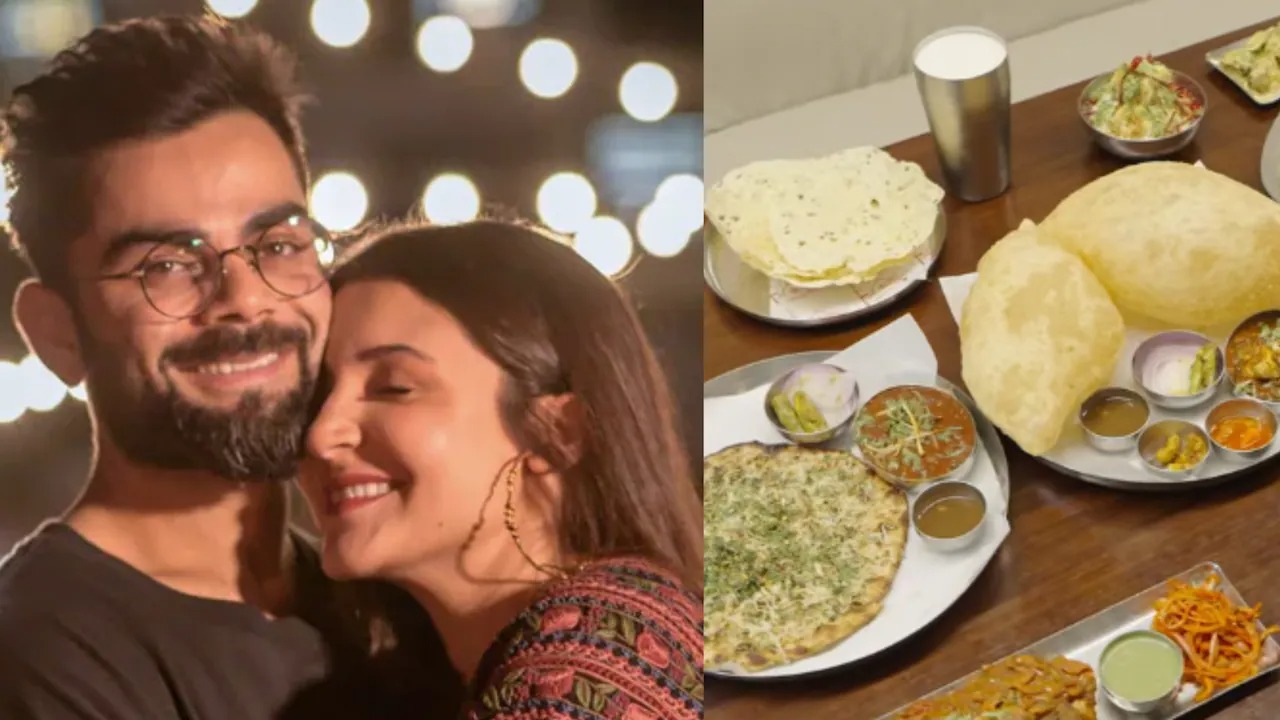
What connects a plate of chole bhature, a home-cooked dal, a street-side snack, and a glass of Scotch whisky? More than one might think.
During a recent conversation with Australian chef Sarah Todd and Stephanie Macleod, Master Blender at DEWAR'S, the discussion moved far beyond restaurants, recipes, and tasting notes. We spoke about travelling through India, eating in people's homes, cooking with instinct, the many cuisines of the Northeast, why street food can be as memorable as fine dining and how basic ingredients can create completely different whiskies.
At the centre of it all was one simple idea: Ingredients matter. But what people do with them matters just as much.
Sarah Todd Is Still Discovering India Through Food
Sarah Todd has travelled extensively across India and cooked with flavours from different parts of the country. But she says there is still plenty she wants to explore in the kitchen.
The Northeast, in particular, has left a strong impression on her. "I feel like I've started experimenting with most states and cuisine, except for the Northeast," she said.
She has travelled through the Seven Sisters and was struck by how different the food was from what she had encountered elsewhere in India. "There were things like bamboo shoots, fermented meats and fermented vegetables, and just such different cuisine," she said.
What interested her most was that the food was not simply one broad category that could be called Northeastern cuisine. When asked whether she could differentiate between the cuisines of the region, Sarah said she absolutely could. "Each state has very different dishes," she said. "I found it very, very unique."
She pointed out that you have to actually travel and eat the food where it belongs to understand the differences. From the outside, cuisines can look similar. On the plate, the differences become much clearer.
Sarah compared it to chaat. There can be small variations between dishes that may appear similar to someone unfamiliar with them. But when you actually eat them, she said, "It tastes quite significantly different." "There are definitely a lot of nuances in the dishes," she added.
Also Read: Nauheed Cyrusi Tries Viral Ice Cream Hack, Says It Tastes Just Like Salted Caramel
The Ingredient Can Tell You Where You Are
One of the biggest themes of our conversation was how deeply a cuisine is shaped by its surroundings.
I asked Sarah whether the produce available in a region plays a major role in defining its food. Her answer was immediate. "I think that defines the cuisine of any region around the world." She pointed to Italy as an example. "We go to Italy, and the tomatoes are incredible, and you don't really need to do anything to them. You literally just grate it and put it on a piece of toast, and it's delicious."
Sarah does not speak Hindi or the many languages and dialects spoken across India. But she says food helped her connect with people anyway. "I feel like I got to know so many people and the culture and just really connect with everyone there."
What India Taught Sarah Todd About Hospitality
Food may have helped Sarah understand India, but hospitality has also left a lasting impression.
Sarah recalled one of her earlier trips to the country, when a couple attending one of her masterclasses invited her to explore Chandni Chowk with them.
She had no idea what she was getting into. "They were like, we need to take you to Chandni Chowk," she recalled. "It was just absolute chaos in the best way possible."
The couple brought their two young children along and spent the day showing her around. "It was like a people jam," Sarah said, describing the crowded streets. "You're shoulder to shoulder with people."
What stayed with her was not just the market. It was the effort the family made to show her around. "They just took their whole day showing me around," she said. "To take that much time and effort, especially with two young kids, it was just wild." She says spending time in India taught her a great deal about hospitality. And food, she believes, is central to it.
Stephanie Macleod agreed. Her own experiences of being invited into Indian homes had left a strong impression on her too. "It's just so amazing when you go to someone's home," Stephanie said. "The welcome that you receive, it's just nothing like it."
The conversation turned to the Indian idea of Atithi Devo Bhava, the belief that a guest is treated like God. Stephanie said she could genuinely feel that warmth in India. "You feel it," she said.
French Precision, Indian Instinct
Sarah trained in French cooking, so I asked her a question that brought two very different culinary approaches together. What is one French cooking principle she would never want to lose? And what is one instinct from Indian cooking she would hold on to forever?
For French cooking, her answer was clear: Mise en place. "It's everything in its place," she explained.
For Sarah, preparation is not just about efficiency. It is part of the cooking process itself. It is a principle that has stayed with her throughout her career.
But when it came to Indian cooking, she chose something entirely different: intuition. "It's got to be cooking with your intuition and cooking with love," she said. "Onions taste different in India than they do in Australia," Sarah pointed out. "So you have to cook with intuition," she said. "You have to take it as it goes."
That instinct was also something she relied on during her MasterChef days.
Why Sarah Todd Thinks Butter Chicken Cannot Represent India
Perhaps the strongest part of our conversation came when we spoke about how Indian food is represented outside India. I asked Sarah what she would serve someone who claimed not to like Indian food. Her answer was not a single dish. In fact, she believes that is exactly the problem. "You need to try the diversity of India," she said. "Because you can't put India into one dish. It's just not possible."
People often ask her about her favourite Indian dish. But for Sarah, that question is almost impossible to answer. "I literally have two or three from every city I've been to. And they're so different."
That, she believes, is how Indian food should be represented.
Sarah believes that Indian food is often unfairly reduced to heavy restaurant-style dishes outside the country. But everyday Indian food tells a very different story. "When you eat everyday Indian food, you feel great," she said. "There are so many nutrients and variety. And it's so diverse."
And Then There Was Whisky
The conversation took an interesting turn when Stephanie Macleod joined the discussion around ingredients. The connection between cooking and whisky might not seem obvious at first. But Stephanie explained why it made perfect sense.
Whisky may begin with a small number of basic ingredients, but what happens afterwards creates enormous differences.
"You might say, well, whisky must all taste the same. It's just the ingredients. It's water, malt, barley and yeast," she said. "But it's completely different."
Stephanie explained that even distilleries located close to each other can create very different flavours. Then comes maturation. Different casks add another layer. And finally comes the challenge of bringing those flavours together.
"Combining these different flavours together to produce something that is the sum of its parts is just an incredible experience," she said.
That brought us back to food. During the DEWAR's Discoveries experience, Sarah's menu included a course that explored carrot seven ways.
"Through things like charcoal, through pickling, through adding different cooking styles and different methods, you can use one ingredient and show just how diverse that can be on a plate," Sarah explained.
The comparison with whisky was an obvious one. A few ingredients do not necessarily mean a simple result. How you treat them changes everything.
Stephanie Macleod On Indian Hospitality, Home-Cooked Food And Dal
Stephanie's relationship with India was not limited to exploring how whisky could work alongside Indian flavours. During our conversation, she also spoke about something much simpler and far more personal: Indian home cooking.
While the conversation was filled with discussions about blending, flavour and craftsmanship, Stephanie also revealed one of the Indian dishes she particularly loves: dal.
She spoke about making dal during lockdown and how much she enjoys cooking it. "Dal is always something that I am always looking forward to," she said. It was a refreshingly ordinary answer from someone whose professional life revolves around analysing and creating complex flavours.
Science Gives You The Rules. Instinct Helps You Create
I also asked Stephanie what is harder. Creating something that tastes good to her personally, or creating something that different people will enjoy. Her answer revealed something interesting about the work behind blending whisky.
Stephanie explained that the team regularly assesses the spirits to make sure the flavours are developing as expected. "You don't leave it to chance," she said.
But experience eventually takes over. Stephanie comes from a scientific and research background. Yet after years of working with whisky, she believes the process is not purely scientific.
"There is science, there is methodology behind what we do, but then the instinct and experience kick in."
Stephanie also shared a more personal side of that process. Despite spending years developing her palate, she sometimes takes samples home and gets her husband's opinion. "He's not an expert, but he knows the whisky," she said, explaining that he has become one of her "consumer palates".
It was an interesting reminder that creating a drink for people to enjoy cannot exist entirely inside the world of experts and tasting panels. Sometimes, the opinion of someone who simply enjoys drinking whisky matters too.
Stephanie also admitted that creating something new can still make her nervous. She recalled anxiously watching people taste a whisky for the first time, hoping they would enjoy it. "I was really worried," she admitted. After years of experience, that feeling still remains. You can test, assess and refine a whisky for years. But eventually, someone has to take the first sip.
Sarah agreed that food can also be overthought. "If it's good, if it tastes good, everyone around the world is going to like it," she said.
Two Different Crafts, One Shared Instinct
By the end of the conversation, the connection between the chef and the whisky blender felt much clearer.
Sarah Todd spoke about mise en place and instinct. Stephanie Macleod spoke about science and experience. Sarah talked about how onions taste different in India and why a recipe cannot always tell you exactly what to do. Stephanie explained how the same basic whisky ingredients can lead to completely different results.
Both, in their own ways, were talking about the same thing.
You can start with a formula, but you cannot stop there. Cooking needs instinct, and so does blending.