



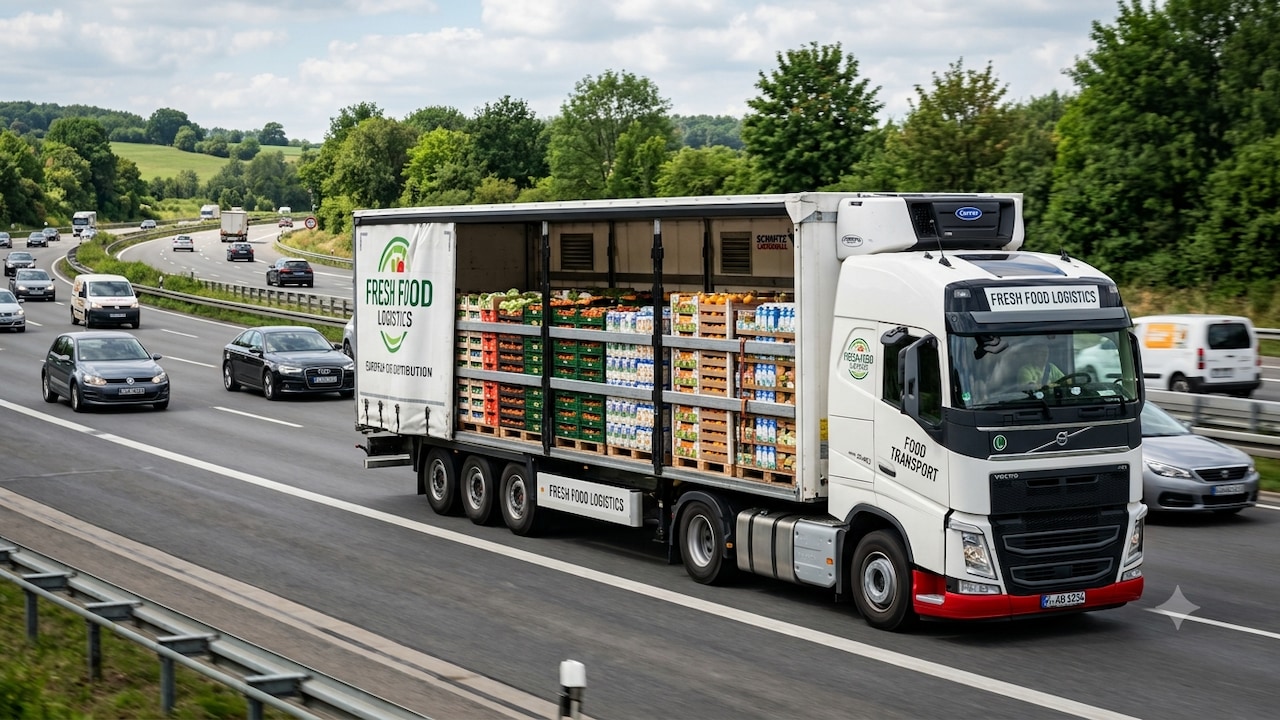
India loses a significant amount of perishable food before it can even reach our plates. And many times, the food that reaches us has already started to rot, which can lead to food poisoning and stomach infections. Fruits, vegetables, dairy products, ice cream and frozen foods often travel long distances, and keeping them cold throughout the journey remains a major challenge. Now, a 25-year-old IIT Delhi graduate and her team may have found a smarter way to tackle one part of this problem.
Shaivee Malik, a biotechnology graduate from the Indian Institute of Technology Delhi, has developed a refrigeration unit for trucks that works without depending on the vehicle's engine. According to a post on X by user 'Sann', Malik worked with two members of her team, Vivek Mahindrakar and Dharmik Bapodara, on the idea after the three decided to work on a climate-related problem. Their research led them to India's cold chain issues.
The problem with conventional trucks is that the refrigeration system depends on the truck's engine. This means the engine may need to keep running to maintain the required temperature, even when the vehicle is stuck in traffic or standing still. Naturally, this burns more diesel and adds to the cost of transporting perishable goods.
Their product is a separate refrigeration unit powered by its own lithium-ion battery. It can keep working whether the truck's engine is running or not, and can also continue cooling the goods if the vehicle breaks down. The unit is designed to run for six to eight hours on a single charge.
But perhaps the biggest draw is the potential saving. According to the post, the technology can cut refrigeration running costs by around 75%. Depending on how it is used, each unit could also avoid between 3 and 36 tonnes of carbon dioxide emissions a year.
About 1 in every 3 tonnes of fruit, vegetables and milk produced in India never reaches anybody. It rots on the way, because there was no cold storage and no refrigerated truck.
The trucks that do have a fridge run it off the engine. So the engine has to keep running, burning… pic.twitter.com/ktAyogwpAJ— Sann (@san_x_m) August 22, 2026
The technology is now being used by paying customers. The post claims that they include distributors associated with Amul ice cream and McCain frozen foods.
For a country where food spoilage during transportation continues to be a costly problem, an engine-independent truck fridge could help businesses save on fuel, reduce emissions and, most importantly, keep more perishable food from going to waste before it reaches consumers.
About Neha GroverLove for reading roused her writing instincts. Neha is guilty of having a deep-set fixation with anything caffeinated. When she is not pouring out her nest of thoughts onto the screen, you can see her reading while sipping on coffee.