



Every Indian winter meal has that familiar pause around raita. The yoghurt comes out of the fridge. Someone hesitates. Someone else says it is fine if the vegetable is cooked. The conversation ends where it always does, with raita either watered down or skipped altogether. The assumption that curd is unsuitable for winter has travelled through generations, yet the issue has never been yoghurt itself. It has always been context.
Also Read: 8 Indian Breads You Should Learn To Make At Least Once In Your Life
When curd is combined with cooked seasonal vegetables, gentle spices, and proper tempering, it stops feeling cold and starts feeling grounding. Winter raitas are not raw side dishes meant to cool the body. They are slow, soft, and deliberately prepared to support digestion during a season of heavier food. They bring balance to rich dals, festive pulaos, and everyday rotis, while adding iron, fibre, and probiotics at exactly the right time of year.
Before choosing a raita, it helps to understand what your winter meals need most.
How To Choose The Right Winter Raita
| If your winter meals feel | Choose this raita |
| Heavy and rich | Lauki, Palak |
| Low on greens | Bathua |
| Repetitive | Mooli, Gajar |
| Festive and indulgent | Chukandar |
| Slow on digestion | Shalgam |
Each of the raitas below fits naturally into winter cooking, not as an afterthought, but as part of how seasonal meals are meant to work.
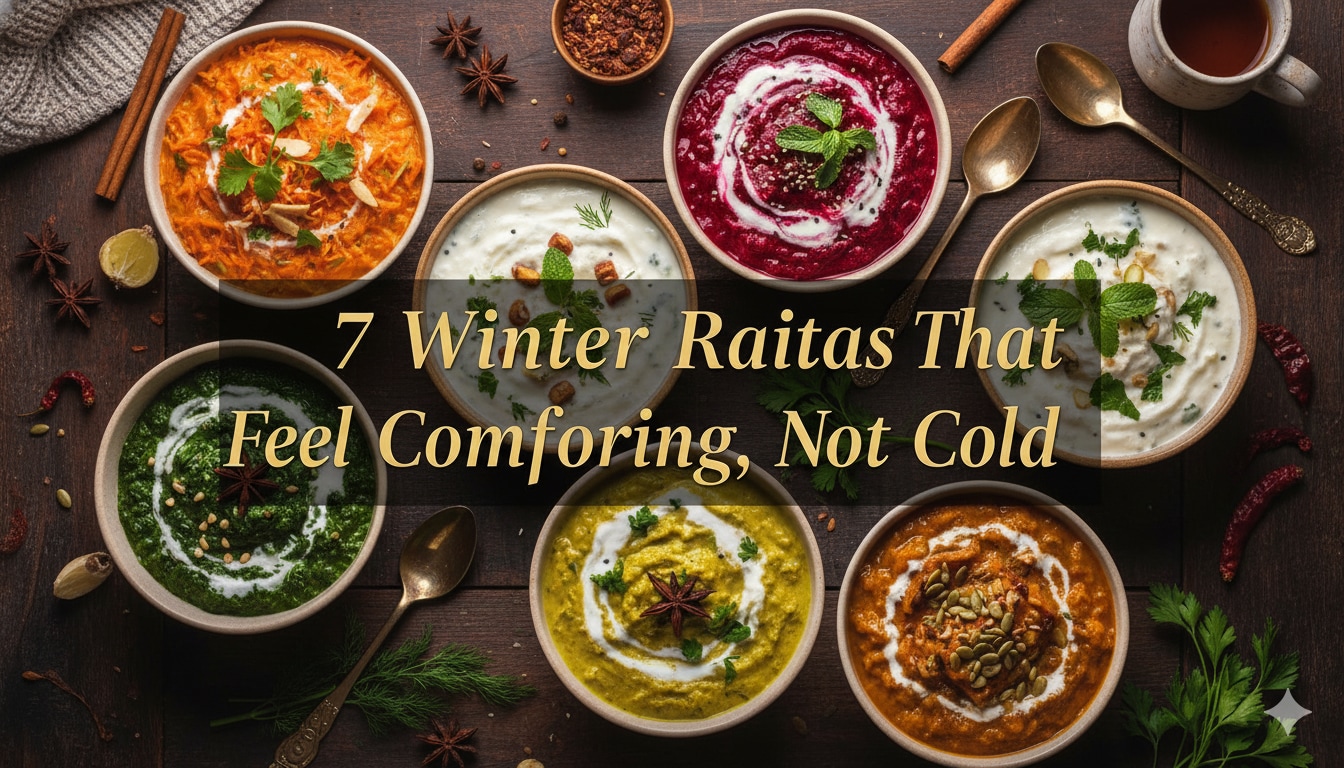
Here Are 7 Winter Raita Recipes Using Seasonal Indian Vegetables:
1. Bathua Raita

Bathua appears briefly in Indian markets during winter and disappears just as quietly. Earthy and mildly nutty, it is one of the most valued seasonal greens. In raita form, bathua becomes gentle, warming, and deeply nourishing.
Why this works in winter:
Bathua is traditionally eaten when the body feels sluggish and heavy. Cooking it first makes it easier to digest than raw greens, while yoghurt adds balance without weighing the meal down.
Ingredients:
- Fresh bathua leaves
- Thick yoghurt
- Roasted cumin powder
- Black pepper
- Salt and optional rock salt
How to make it work well:
Blanch the bathua until completely soft before blending. Whisk the yoghurt thoroughly before combining. A simple cumin and dried chilli tempering adds warmth without overpowering the green.
Bathua raita pairs especially well with plain dal and rice, where its iron content and gentle texture feel restorative rather than heavy.
2. Lauki Raita
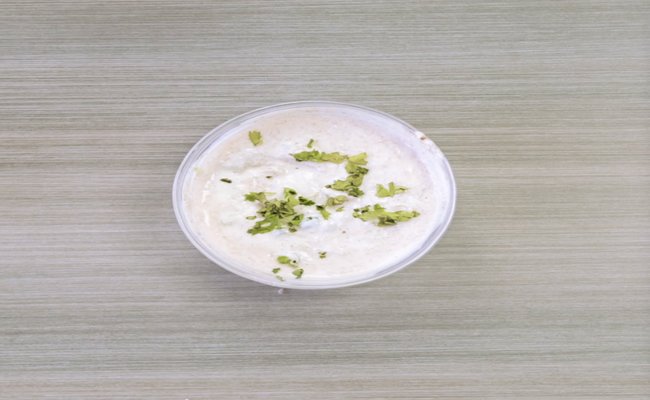
Lauki is often overlooked because of its mild flavour, but that same quality makes it ideal for winter raitas. Once cooked, it turns creamy and absorbs seasoning beautifully.
Why this works in winter:
Cooked lauki hydrates the body without the sharp chill that raw vegetables sometimes bring during colder months.
Ingredients:
- Bottle gourd peeled and diced
- Thick yoghurt
- Roasted cumin powder
- Black pepper
- Green chillies
- Ghee optional
How to make it work well:
Boil the lauki until it breaks easily when pressed. Drain thoroughly and allow it to cool before mixing with yoghurt. Keep the seasoning restrained. Lauki carries flavour quietly.
This raita works best alongside heavier winter meals like rajma, chole, or khichdi.
3. Gajar Raita

Winter carrots are naturally sweeter and more aromatic. Gajar raita uses that sweetness to soften spice and bring brightness to everyday meals.
Why this works in winter:
Carrots support immunity during colder months, while ginger adds warmth without making the raita aggressive.
Ingredients:
- Finely grated carrots
- Thick yoghurt
- Fresh ginger
- Roasted cumin powder
- Red chilli powder
- Green chillies
How to make it work well:
Grate the carrots finely and squeeze lightly. Avoid overdressing with spices. Let the vegetable remain the focus.
This raita feels especially comforting with simple dal chawal or plain rotis.
4. Palak Raita
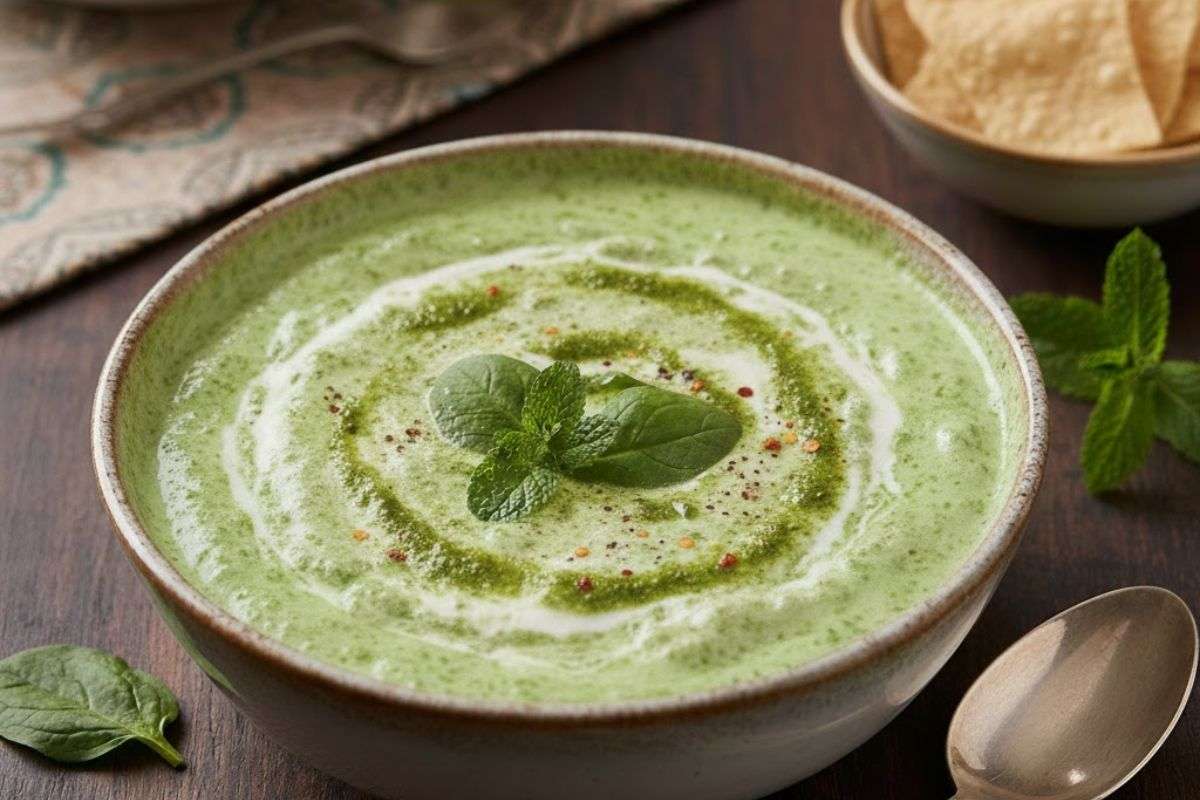
Palak raita is one of those dishes that quietly does its job. It looks simple, tastes familiar, and supports the body without demanding attention.
Also Read: Why Desi Khand Is Quietly Taking Over Festive Dessert Menus This Year
Why this works in winter:
Blanched spinach becomes soft and easy to digest, while yoghurt supports nutrient absorption during a season when iron needs increase.
Ingredients:
- Fresh spinach
- Thick yoghurt
- Garlic and ginger paste
- Black pepper
- Green chillies
How to make it work well:
Blanch the spinach thoroughly and squeeze out excess water before blending. The raita should be smooth, evenly green, and lightly seasoned.
Palak raita fits seamlessly into everyday winter meals and works well with both rice and roti.
5. Chukandar Raita

Beetroot raita stands out immediately because of its colour, but its appeal runs deeper. Earthy sweetness balances rich winter cooking beautifully.
Why this works in winter:
Beetroot supports circulation and warmth, making it particularly suited to festive or indulgent meals.
Ingredients:
- Cooked and grated beetroot
- Thick yoghurt
- Roasted cumin powder
- Black pepper
- Ginger and green chillies
How to make it work well:
Cook the beetroot whole to retain flavour. Grate once completely soft and mix gently with yoghurt to avoid thinning the texture.
This raita pairs well with pulao, biryani, and celebratory winter spreads.
6. Mooli Raita
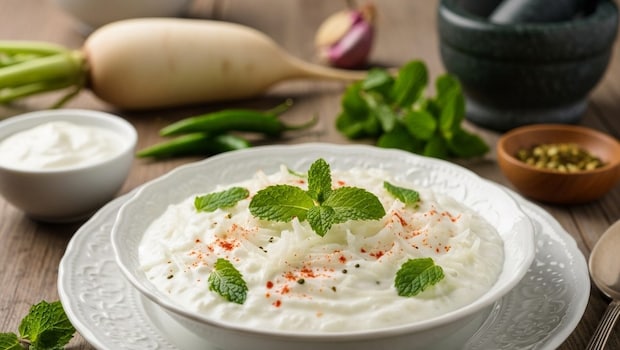
Mooli raita brings texture back to winter plates. Crisp, peppery, and lively, it balances creamy curries and slow-cooked dishes.
Why this works in winter:
Radish supports digestion and adds sharpness that keeps heavy meals from feeling overwhelming.
Ingredients:
- Finely grated radish
- Thick yoghurt
- Roasted cumin powder
- Black pepper
- Ginger optional
How to make it work well:
Squeeze the radish lightly to control moisture. Temper generously. The heat from the tempering softens the raw edge.
This raita works best when served chilled alongside rich winter curries.
7. Shalgam Raita

Turnip is rarely celebrated, yet it has long been part of winter kitchens. When cooked, it turns mild, creamy, and deeply comforting.
Why this works in winter:
Shalgam is gentle on digestion and naturally suited to colder weather.
Ingredients:
- Turnip peeled and diced
- Thick yoghurt
- Roasted cumin powder
- Black pepper
- Ginger and green chillies
How to make it work well:
Cook the turnip until very soft. Allow it to cool completely before mixing with yoghurt to maintain creaminess.
This raita feels old-fashioned in the best way, quietly nourishing and deeply satisfying.
Practical Tips For Better Winter Raitas
- Always whisk yoghurt before mixing
- Cook vegetables until fully soft
- Season lightly and adjust gradually
- Do not skip tempering
- Serve at room temperature
- Make raitas fresh for best texture
Also Read: How To Make Beetroot Pulao For A Quick And Healthy Winter Dinner
Winter raitas are not seasonal compromises. They are thoughtful, time-tested responses to how the body eats during colder months. Each raita plays a different role, from easing digestion to supporting immunity, from balancing rich meals to adding quiet nourishment. Together, they show how seasonal Indian cooking has always worked with the body rather than against it.
Start with one raita that feels familiar. Make it part of your weekly meals. Then add another. Over time, these stop feeling like recipes and start feeling like how winter food is meant to be eaten.