


Chongqing is famous for hot pot. While the city's restaurants may grab attention with giant dining rooms and tables packed with diners, a much bigger operation happens behind the scenes.
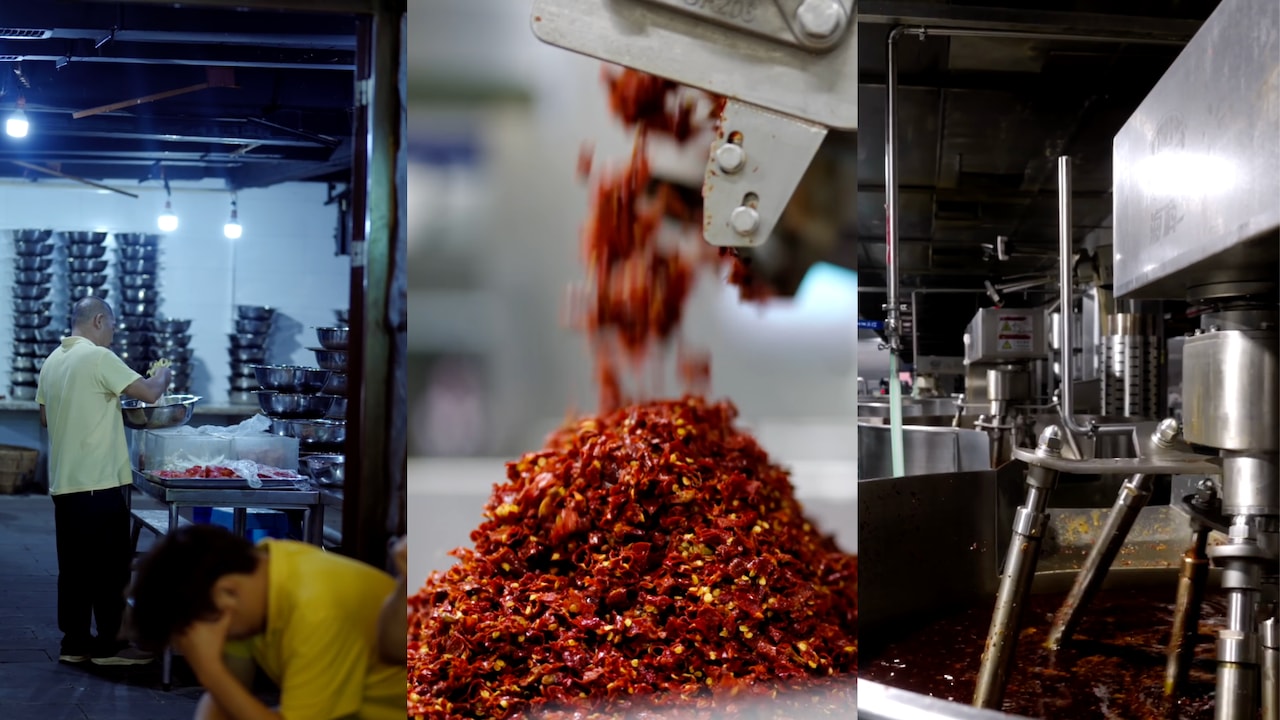
A massive factory produces around 80,000 pounds of hot pot base every day.
YouTuber Christopher St. Cavish recently explored Chongqing's hot pot culture, visiting both one of the city's enormous restaurants and a factory that produces the spicy base that gives the dish its distinctive flavour.
The restaurant's scale is remarkable. Loquat Garden, located near central Chongqing, has 5,851 seats and holds a Guinness World Record. But the factory offers an entirely different glimpse into just how big the hot pot business has become.
Inside The Factory Producing Hot Pot Base At Massive Scale
The factory may be considered only a medium-sized business by its owner, but its production numbers are anything but small.
It can produce around 80,000 pounds of hot pot base a day. At full capacity, that works out to tens of millions of pounds over a year.
The production process starts with seriously large quantities of ingredients.
Workers use two types of meat fat sourced from different provinces in China. They combine them to create the particular aroma, texture, and richness expected from Chongqing-style hot pot.
Then come the chillies and other ingredients that give the base its characteristic colour, fragrance and heat.
The scale of the cooking equipment is just as striking.
According to St. Cavish, individual cooking pots at the factory can hold more than 2,000 pounds of meat fat.
An industrial production process then moves the finished hot pot base through the facility.
Once prepared, the mixture goes through a series of pipes up to the third floor, where it is cooled and packaged before being transported back downstairs for shipping.
Even the ingredients stored inside the facility show the scale involved.
St. Cavish noted that the raw materials visible in the warehouse would be enough for only about two to three days of production.
The Industry Behind Chongqing's Hot Pot Obsession
The factory is only one piece of a much larger ecosystem.
Chongqing has developed a deep culinary connection with hot pot, particularly its spicy, rich style built around ingredients such as beef and various cuts of meat.
The city's history also helps explain the dish's roots. Beef and different parts of the animal were historically accessible to workers and boatmen along the river. Less expensive cuts and ingredients such as tripe, liver and blood could be cooked together in a spicy broth, eventually becoming part of the hot pot culture Chongqing is known for today.
That food tradition has now grown into a huge commercial industry.
And the numbers coming out of this factory offer a glimpse of what that means in practice.
80,000 pounds of hot pot base every day.
Thousands of pounds of meat fat going into individual cooking pots.
Industrial pipes moving the finished product through multiple floors.
And tens of millions of pounds of hot pot base potentially leaving a single facility every year.
So while a 5,851-seat restaurant may be the more obvious spectacle, the factory reveals something even more interesting: the enormous supply chain that keeps Chongqing's hot pot culture simmering.