




Ask most people to name an Indian bread and you will hear the same three answers: naan, roti, paratha. Maybe puri if they are feeling adventurous. And that is the end of the conversation. But India's bread culture is one of the most staggering and under-documented food traditions in the world, a vast, regional, grain-obsessed universe where almost every state, and sometimes every district, has its own bread that it makes differently from everyone else. There are steamed breads from the Himalayas, fermented rice breads from the coasts, millet flatbreads from the Deccan plateau, and leavened sourdough-style breads from the hills of Himachal. Most of these never make it onto restaurant menus. You will not find them trending on Instagram reels. But they exist, they are remarkable, and they deserve your full and undivided attention.
Here Are Eight Regional Breads Of India
1. Siddu
From: Himachal Pradesh (Kullu, Mandi, Shimla, Rohru)
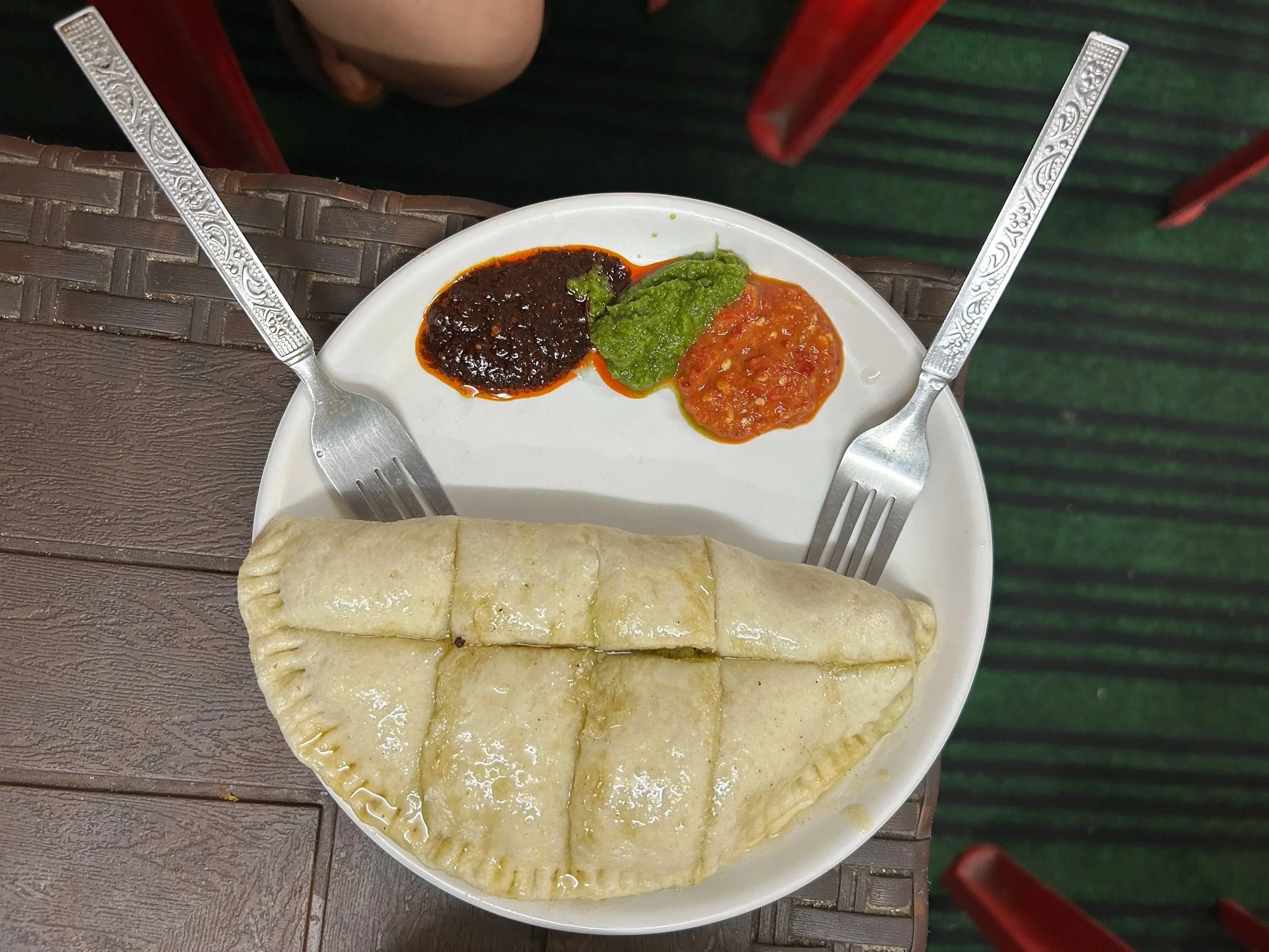
Siddu is a unique Indian steamed bun, similar to a Chinese bao but distinct in flavour and culture. Made from whole wheat flour and yeast, often using Mallat, the dough ferments for hours before being stuffed with fillings like ground poppy seeds, walnuts, or apricot stones. In Shimla, it's spiced with ginger and chilli, while Kullu uses hemp seeds. Traditionally served hot with desi ghee, Siddu was historically made by shepherds for warmth. The name likely derives from the Tibetan ‘Tse-doe,' meaning steamed bread.
Ingredients:
- 2 cups whole wheat flour
- 1 teaspoon instant dry yeast
- 1 teaspoon sugar
- Salt to taste
- 1 teaspoon ghee
- Warm water to knead
- For filling: 1/2 cup walnuts (lightly roasted and coarsely ground), 2 green chillies, 1 inch ginger, 2 garlic cloves, salt, a teaspoon of oil
Method:
- Mix flour, yeast, sugar, salt, and ghee. Add warm water gradually and knead into a soft, smooth dough. Cover and rest in a warm spot for 2 to 3 hours until doubled.
- Grind walnuts, chillies, ginger, and garlic into a coarse, dry paste. Season with salt.
- Divide dough into lemon-sized balls. Flatten each into an oval disc, place a generous spoonful of filling in the centre, and seal the edges by pinching firmly. Shape into a half-moon or oval bun.
- Place in a momo steamer or any steamer basket and steam on high heat for 15 to 18 minutes until the surface is firm and springy.
- Slice open immediately and pour melted desi ghee over the top. Serve hot with mint chutney or dal.
2. Thalipeeth
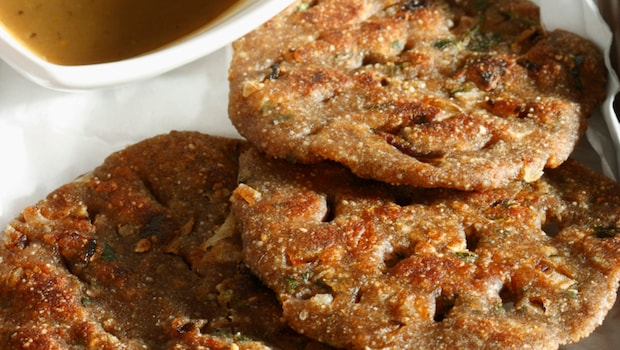
Photo Credit: iStock
From: Maharashtra
If you've visited a Maharashtrian home for breakfast, you might have enjoyed thalipeeth, a thick, savoury multigrain flatbread. It serves as bread, a complete meal, a pantry cleaner, and a nutrient powerhouse. The key is bhajani flour, made from roasted grains and lentils like wheat, jowar, bajra, rice, chana dal, and urad dal. This flour has a unique aroma and flavour. Thalipeeth dough includes onions, chillies, coriander, garlic, and sometimes vegetables, patted by hand on a griddle. Cooked with ghee or oil, it's served with butter and pickle, and bhajani flour stores well.
Ingredients:
- 1/2 cup whole wheat flour
- 1/4 cup jowar flour
- 1/4 cup bajra flour
- 2 tablespoons besan (gram flour)
- 1 medium onion, finely chopped
- 2 green chillies, finely chopped
- A handful of fresh coriander, chopped
- Salt, cumin seeds, red chilli powder to taste
- Ghee or oil for cooking
Method:
- Mix all the flours together. Add onion, green chilli, coriander, and spices. Add enough water to make a soft but not sticky dough.
- Take a portion of the dough, place it on a greased flat surface or directly on a greased tawa. Pat it out gently with your fingers into a circle roughly 6 to 7 inches in diameter. Make a small hole in the centre (this helps it cook evenly).
- Cook on a medium flame with ghee until both sides are golden brown and cooked through.
- Serve hot with white butter and green chilli pickle.
3. Akki Roti
From: Karnataka
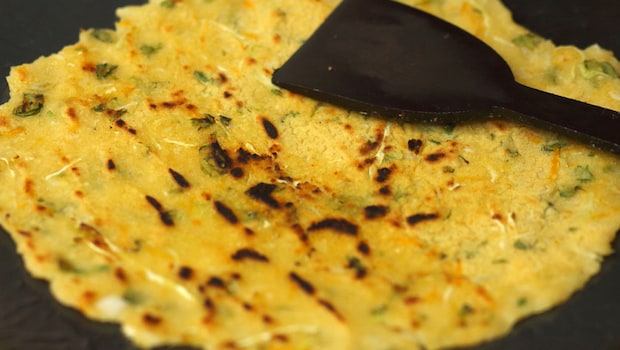
Akki roti, a Kannada flatbread, is made from rice flour, spiced with green chillies, curry leaves, and coconut. Unlike wheat roti, it's slightly crisp at the edges and soft in the middle, with a nutty flavour. Pat the dough onto a banana leaf or greased plate, then flip it onto a tawa. Served with coconut chutney, it's a gluten-free breakfast staple in Karnataka.
Ingredients:
- 2 cups rice flour
- 1/2 cup freshly grated coconut
- 2 green chillies, finely chopped
- 1 small onion, finely chopped
- A sprig of curry leaves, roughly torn
- A small handful of fresh coriander, chopped
- Salt to taste
- Oil or ghee for cooking
- Hot water to bind
Method:
- Mix rice flour, coconut, onion, chillies, curry leaves, coriander, and salt together. Add hot water gradually and mix into a soft dough. Do not over-mix — rice flour dough is more delicate than wheat dough.
- Take a ball of dough, place it on a greased banana leaf or a greased plate, and pat it out into a thin, roughly circular flatbread with your fingers.
- Heat a tawa on medium flame and grease lightly. Flip the banana leaf over the tawa so the roti lands face-down, then peel the leaf away.
- Drizzle oil around the edges and cook until the bottom is golden and spotted. Flip and cook the other side.
- Serve immediately with coconut chutney.
4. Pathiri
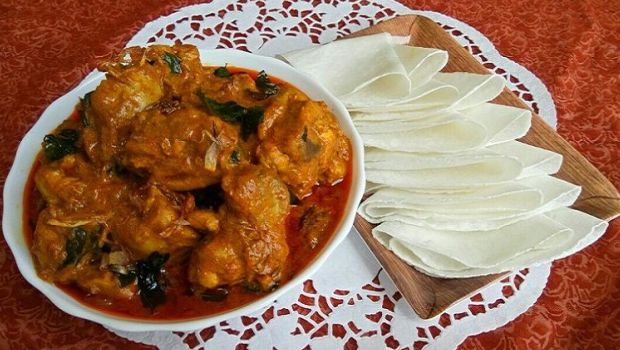
From: Malabar coast, Kerala
Pathiri is a paper-thin rice flour flatbread, essential to the Moplah community in Kerala. Unlike appam, it's unleavened, cooked dry on a tawa without oil. The dough, made by briefly cooking rice flour in boiling water, allows it to be rolled nearly translucent. Pathiri pairs well with meen curry, mutton stew, or sweetened coconut milk.
Ingredients:
- 2 cups rice flour
- 2 cups water
- Salt to taste
Method:
- Bring water and salt to a boil. Add the rice flour all at once and stir vigorously until it comes together into a thick, smooth dough. Remove from heat.
- Let it cool slightly, then knead the warm dough until soft and smooth. Cover with a damp cloth.
- Divide into small balls. Roll each ball very thin (roughly 2 to 3mm) on a lightly floured surface.
- Cook on a hot, dry tawa for about 30 seconds per side. The pathiri should stay white and not brown.
- Stack them as they cook and cover with a cloth to keep soft. Serve with coconut milk or a rich curry.
5. Poi

From: Goa
Most visitors to Goa know about fish curry and bebinca, but few mention poi. This small, hollow, crusty whole wheat bun is Goa's bread, bought hot from local bakeries each morning. Goans fill it with omelette, chourico, leftover sabzi, or butter. Poi, with Portuguese origins, has been part of Goan life for centuries. Made with whole wheat flour, wheat bran, and maida, it's leavened with yeast and baked in a wood-fired oven. Fresh and hot, it's a must-try.
Ingredients (makes about 8 buns):
- 1.5 cups whole wheat flour (atta)
- 1/2 cup maida (refined flour)
- 2 tablespoons wheat bran (optional but traditional)
- 1 teaspoon instant dry yeast
- 1 teaspoon sugar
- Salt to taste
- 1 tablespoon oil
- Warm water to knead
Method:
- Mix all the dry ingredients. Add oil and enough warm water to make a soft, slightly sticky dough. Knead well for 8 to 10 minutes.
- Cover and rest for 1.5 to 2 hours until doubled.
- Punch down and divide into 8 equal balls. Shape into slightly flattened oval or round buns.
- Place on a greased baking tray, cover, and let them proof for another 30 minutes.
- Bake at 220 degrees Celsius for 15 to 18 minutes until the crust is firm and lightly browned.
- Serve immediately, torn open with butter or any filling you like.
6. Tingmo
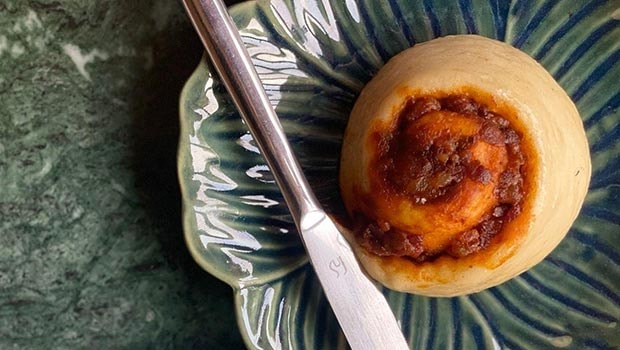
From: Ladakh and the Trans-Himalayan belt
Tingmo is a steamed, spiralled bread from Ladakh's Tibetan roots, known for its soft, pillowy texture and coiled shape. Made with refined or mixed flour, yeast, and steamed, it pairs well with thukpa, dal, or sha phaley. Mildly sweet and tangy, it reheats beautifully. Despite its delightful texture, it's largely unknown outside Ladakh.
Ingredients (makes 6 pieces):
- 2 cups maida or a mix of maida and atta
- 1 teaspoon instant yeast
- 1 tablespoon sugar
- Salt to taste
- Warm water to knead
- A little sesame oil for rolling
Method:
- Mix flour, yeast, sugar, and salt. Add warm water and knead into a soft, smooth dough. Rest covered for 1.5 to 2 hours until doubled.
- Roll the dough out into a thin rectangle. Brush the surface lightly with sesame oil or any neutral oil.
- Roll it up tightly like a Swiss roll, then cut into 6 to 8 equal pieces. The spiral pattern will be visible on each piece.
- Place in a steamer basket lined with parchment or cabbage leaves, spaced apart. Steam on high heat for 15 minutes until puffed and cooked through.
- Serve hot with thukpa, dal, or any warming curry.
7. Litti
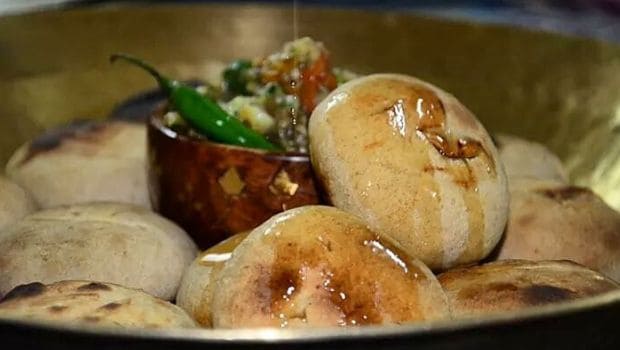
From: Bihar, Jharkhand, and parts of Eastern Uttar Pradesh
Litti is a whole wheat dough ball stuffed with sattu, roasted gram flour mixed with mustard oil, pickle masala, raw onion, garlic, and green chillies, and slow-roasted over coal or wood. It's smoky, dense, and flavourful. Litti chokha, paired with mashed aubergine and tomato, is a satisfying yet underrated Indian dish. Its long shelf life made it ideal for travellers and soldiers. Modern ovens or air fryers can cook it, but charcoal adds unmatched smokiness. Sattu is nutritious and affordable.
Ingredients (makes 8 to 10 littis):
- 2 cups whole wheat flour
- a pinch of ajwain
- salt
- 2 tablespoons ghee
- warm water for kneading
- For stuffing: 1 cup sattu (roasted gram flour), 2 tablespoons mustard oil, 1 tablespoon lemon juice, 1 teaspoon pickle masala (achar masala), 1 finely chopped onion, 2 green chillies, fresh coriander, salt
Method:
- Knead the wheat flour with ghee, ajwain, salt, and warm water into a firm dough. Rest for 20 minutes.
- Mix the sattu with mustard oil, lemon juice, achar masala, onion, chillies, coriander, and salt. The mixture should be moist but not wet.
- Divide the dough into balls. Flatten each, place a generous spoonful of stuffing in the centre, gather the edges, and seal tightly into a smooth ball.
- Bake in an oven at 200 degrees Celsius for 25 to 30 minutes, turning halfway, until evenly golden and slightly crisp. Alternatively, cook in an air fryer at 180 degrees for 20 minutes.
- Dip generously in melted ghee before eating. Serve with baingan chokha (roasted aubergine mashed with mustard oil, garlic, and green chilli).
8. Jolada Rotti
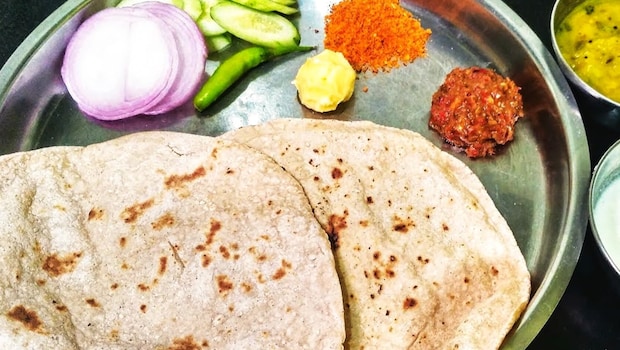
From: North Karnataka (Dharwad, Hubli, Bijapur)
Jolada rotti, a jowar flatbread from North Karnataka, Telangana, and parts of Maharashtra, is made by hand without a rolling pin or wheat. It's thick, soft, and slightly crisp, with a nutty flavour. Gluten-free and low in glycaemic index, it pairs well with garlic chutney, vangi, or dal.
Ingredients:
- 2 cups jowar flour (jolada hittu)
- Hot water as needed
- Salt to taste
- Dry jowar flour for dusting
Method:
- Boil water with a pinch of salt. Add jowar flour to a bowl, pour hot water over it gradually, and mix with a spoon first, then knead by hand once cool enough to handle. The dough should be soft but not sticky.
- Take a portion of dough and place on a dry surface lightly dusted with jowar flour.
- Pat the dough outward gently with your palm and fingers, rotating the rotti as you go. Aim for a circle roughly 7 to 8 inches in diameter.
- Carefully transfer to a hot, dry tawa. Cook until the underside has small dark spots and the surface looks dry.
- Flip and press gently with a cloth. Cook the second side.
- Serve immediately with red garlic chutney, a smear of ghee, and any dal or sabzi.
India's Breads Are Waiting to Be Discovered
India boasts a rich tapestry of bread traditions, yet the world often associates it solely with naan. This article highlights eight breads, each crafted by communities over generations, tailored to their unique environments. Siddu thrives in Himalayan winters, Jolada rotti endures Deccan summers, and Pathiri is a Kerala coastal classic. These breads are more than recipes; they are stories. The exciting part? Most are easy to make at home with common ingredients. Next time you're in the kitchen, explore beyond paratha. Discover these breads, their origins, and India's vast, unexplored bread culture.