



South Indian cuisine is full of comforting rice-based dishes, but few cause as much friendly confusion as appam and neer dosa. At a glance, both appear white, soft and delicately thin, which makes many people believe they are simply regional variations of the same recipe. But once you bite into them, you realise they are completely different in texture, flavour and technique. Appam is a Kerala staple known for its lacy edges, while neer dosa is a coastal Karnataka favourite with a melt-in-the-mouth softness. Both are loved across India and abroad, yet they tell entirely different food stories. If you've ever struggled to explain how they differ, here's a friendly guide that breaks it all down in detail.
Also Read: 5 Must-Try Chettinad Dishes For An Authentic South Indian Feast
What Is Appam?
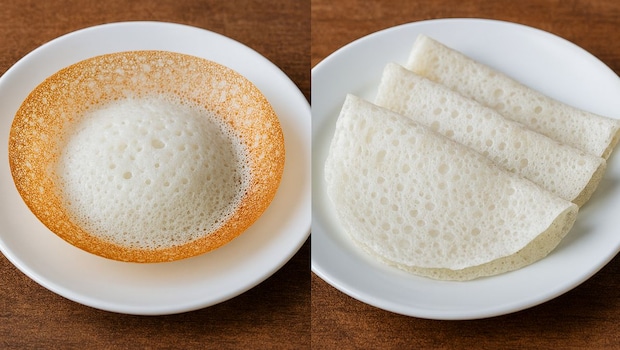
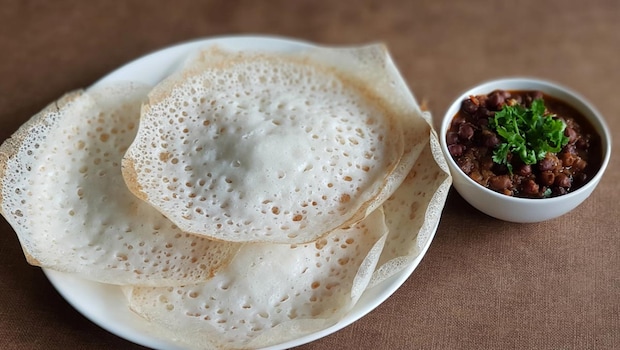
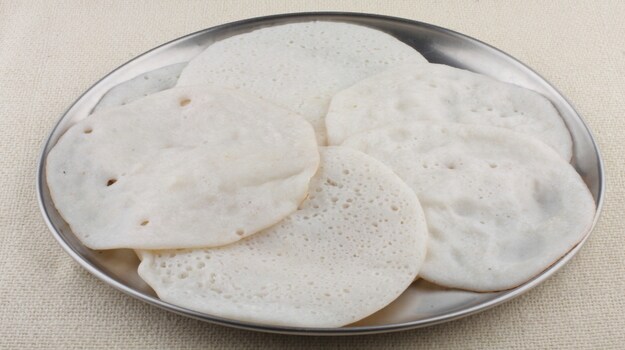
Appam is a soft, bowl-shaped pancake traditionally made in Kerala with fermented rice and coconut batter. Cooked in a curved pan called an appachatti, it develops a fluffy, spongy centre surrounded by thin, crisp, lace-like edges. The fermentation gives appam a gentle sourness, enhancing its ability to soak up stews and curries. It's often enjoyed with Kerala vegetable stew, kadala curry or egg roast, making it a comforting breakfast or dinner in many Malayali homes. The coconut in the batter adds natural sweetness, fragrance and richness that make appam truly special.
What Is Neer Dosa?
Neer dosa is a delicate, silky, paper-thin crepe from coastal Karnataka. "Neer" means water in Tulu, referring to the extremely watery rice batter used to make this dish. Unlike appam, neer dosa requires no fermentation, which means it can be prepared quickly. Cooked on a flat tawa, the dosa turns out soft, moist and foldable, with a subtle flavour that pairs beautifully with spicy coastal curries. It's commonly served with kori gassi, chicken ghee roast, coconut chutney or sweet jaggery-coconut filling. Light, easy to digest and naturally gluten-free, neer dosa is a favourite in West Coast households.
Key Differences Between Appam And Neer Dosa
1. Fermentation: The Step That Changes Everything
Appam relies on overnight fermentation, traditionally with coconut water, yeast or toddy. This process creates air pockets in the batter, giving appam its signature spongy centre and mild tangy flavour. The fermentation also adds aroma and complexity.
Neer dosa, however, skips fermentation entirely. The batter is simply rice blended with water until ultra-thin. With no rising time involved, the result is a clean, fresh rice flavour that feels light on the palate. It's also quicker to prepare-perfect when you want a fast breakfast.
2. Texture: Fluffy vs Feathery Light
Appam has a unique two-in-one texture: a soft, cushiony centre that absorbs coconut milk and a crisp, lacy edge that adds crunch. This contrast makes every bite interesting.
Neer dosa is extremely thin, smooth and delicate, almost like a rice crepe. It's soft all the way through, folds easily and feels almost silk-like in the mouth. This delicate texture makes it ideal for fiery, flavour-heavy dishes.
3. Shape And Cooking Technique: Curved Pan vs Flat Tawa
Appam gets its signature bowl shape from the curved appachatti. When the batter is swirled in the pan, it naturally spreads thin along the edges while collecting in the centre, creating its iconic form.
Neer dosa is cooked on a flat tawa, and because the batter is watery, it forms an irregular, lacy pattern on its own. It's then folded into triangles or rectangles. The technique highlights the dosa's thinness and softness.
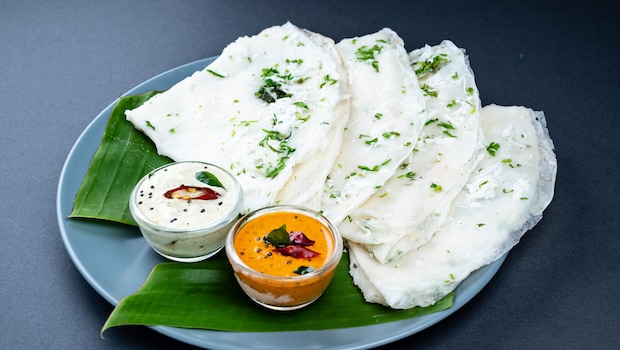
Photo Credit: iStock
4. Ingredients: Coconut-Rich vs Water-Light
Appam uses rice, coconut, water and a fermenting agent, giving it a richer, sweeter, more aromatic taste.
Neer dosa contains just rice, salt and plenty of water, which keeps it light, clean and mild. The flavour largely comes from the accompaniments rather than the dosa itself.
5. Traditional Pairings: Mild Kerala Curries vs Spicy Coastal Karnataka Dishes
Appam is often eaten with Kerala vegetable stew, chicken stew, egg curry or kadala curry because its soft centre soaks up creamy gravies beautifully.
Neer dosa is typically paired with spicy coastal curries such as chicken ghee roast, kori gassi or prawn masala. Its simplicity lets bold flavours shine.
Also Read: 6 Office-Friendly South Indian Rice Dishes Perfect For Busy Days
So, Which One Should You Choose? Appam Or Neer Dosa?
If you enjoy light tanginess, fluffy textures and coconut-based curries, appam is your perfect match. If you prefer delicate, thin crepes that complement spicy, flavour-packed dishes, neer dosa is the winner. Both dishes celebrate the diversity of South Indian cooking, proving how the same base ingredient - rice - can create two completely different food experiences