


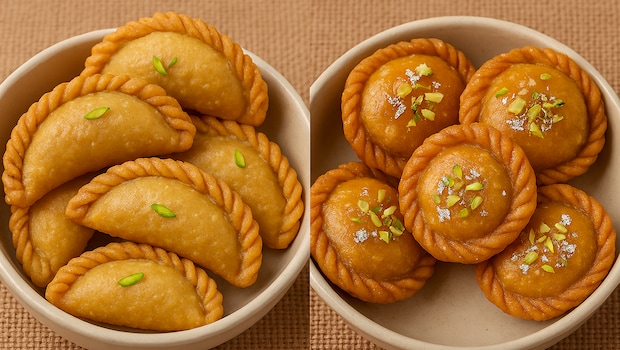
Festivals in India fill homes with warm smells, bright colours and a sense of togetherness. Among the many treats that make these moments special, two sweets often sit side by side and invite comparison. Gujiya and Chandrakala may look alike at first, which makes people wonder if they're actually the same. Both are deep-fried, sweet and comforting in their own way. Yet each has its own style, shaped by how it's made and the traditions behind it. Knowing the difference simply adds to the joy of enjoying them, making every festive bite a little more interesting.
Difference Between Gujiya And Chandrakala
1. Shape And Appearance
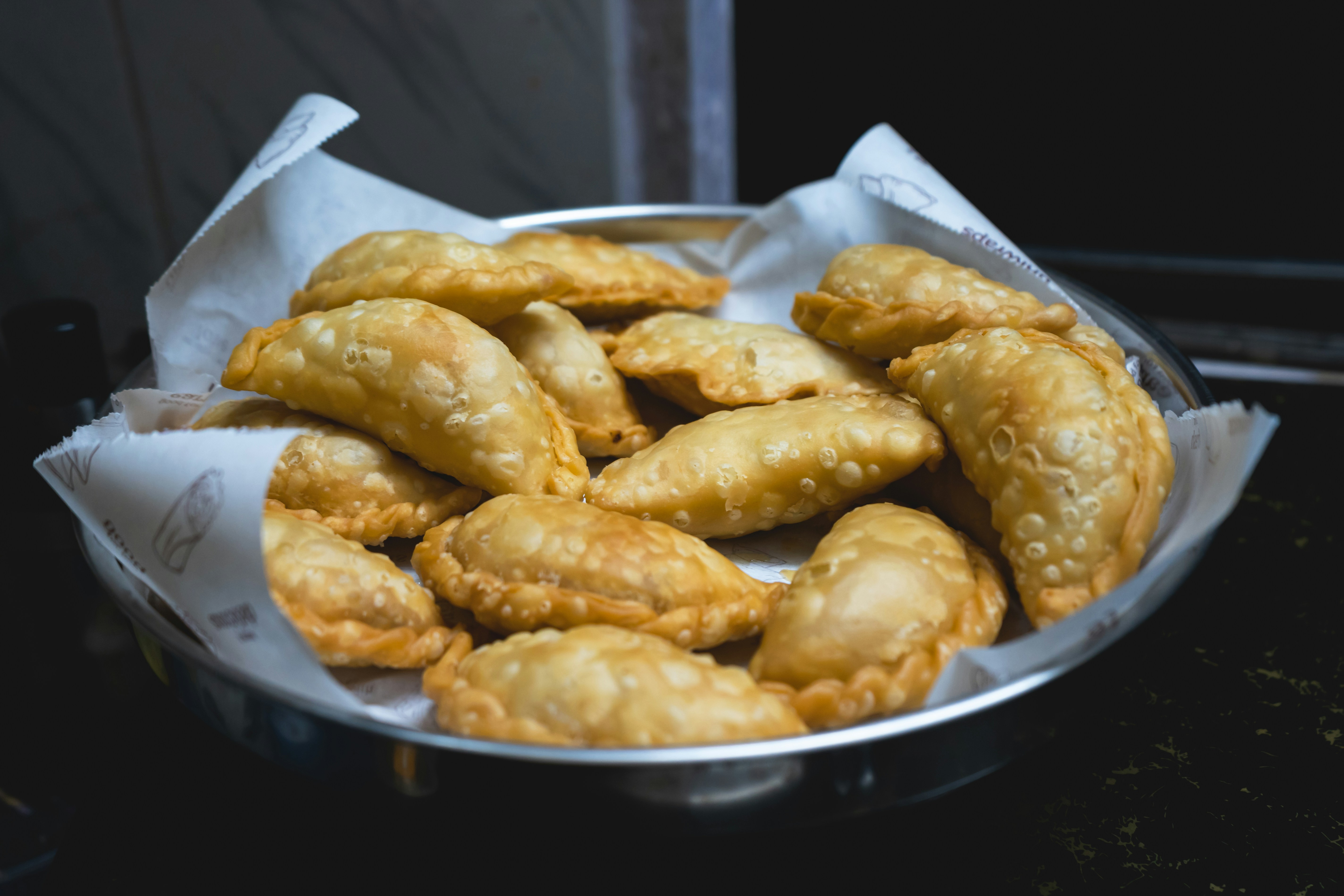
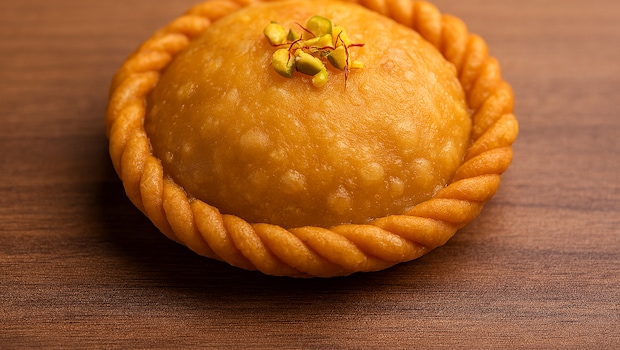
Gujiya typically has a crescent-shaped form with crimped edges that seal the filling inside. It is light, slightly curved and often has a golden, flaky look once fried. Chandrakala, on the other hand, takes on a full-moon appearance. It is round, thicker and resembles a stuffed pastry sealed with a decorative pattern. The fuller shape gives it a more luxurious and celebratory presence.
Also Read: 5 Quick And Yummy Indian Desserts You Can Try At Home Today
2. Filling And Flavour
The filling in gujiya is usually simple and aromatic. It involves khoya mixed with nuts, a bit of sugar and sometimes grated coconut. This combination gives gujiya a warm, homely sweetness that is instantly comforting. Chandrakala's filling is similar in ingredients but richer in texture. It often includes more dry fruits and slightly more moisture, making the centre denser and more decadent.
3. Method Of Preparation
Gujiya is traditionally prepared by shaping the dough into semi-circles, filling them and frying them until crisp. They may be eaten as they are or lightly glazed with syrup. The simplicity of its preparation makes gujiya a beloved household sweet during Holi. Chandrakala, by contrast, is dipped in sugar syrup after frying, giving it a glossy sheen and a distinct sweetness that lingers.
4. Taste And Texture
Gujiya offers a crisp bite followed by a soft, subtly flavoured centre. Its texture is delicate, making it easy to enjoy more than one. Each bite feels light, making it a perfect festive nibble. Chandrakala is sweeter and more robust. Its syrupy exterior and thicker dough create a dessert that feels more celebratory and elaborate.
5. Cultural Presence
While gujiya is widely made during Holi across northern India, Chandrakala often appears in festive spreads during Diwali or special family occasions. Gujiya has a more everyday appeal, whereas Chandrakala is viewed as a slightly grander sweet that requires more time and care. This distinction in timing and usage adds to the cultural charm of both sweets.
Also Read: How To Make Kesar Gujiyas? Pankaj Bhadouria Shares Easy Recipe
Both gujiya and chandrakala show how small variations can create two lovely festive sweets.