



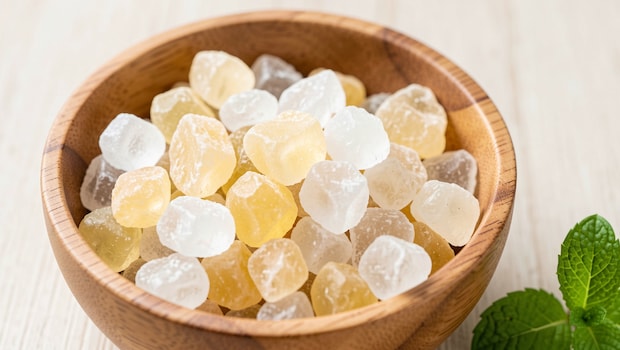
Every summer, as temperatures climb past 40°C and the ceiling fan becomes your best friend, Indian kitchens quietly pull out an ingredient that no fancy cold-press juice or imported superfood can rival. It is small, pale, and looks a bit like broken bits of chalk. It is gond katira, and chances are your nani or dadi kept a jar of it tucked away somewhere near the atta and the ghee. If you have never used it yourself, this summer is the perfect time to start. And if you already know it, well, you are about to fall in love with it all over again.
A Brief History: This Ingredient is Older Than Your Great-Great-Grandmother
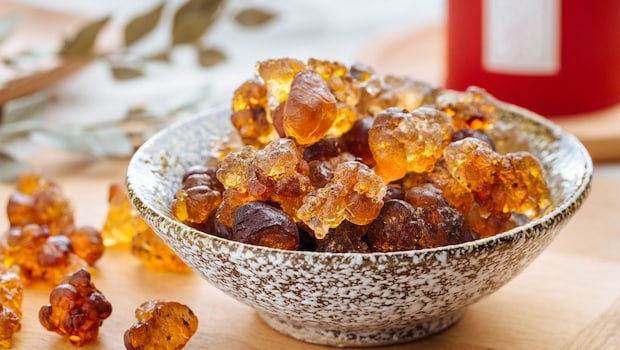
Photo Credit: Canva
Gond katira, or gum tragacanth, is derived from the dried sap of Astragalus shrubs native to the Middle East and Central Asia. When soaked in water, these gum crystals transform into a firm, translucent jelly. In India, it has been integral to traditional medicine and summer cooking, especially in Punjab, Rajasthan, and Uttar Pradesh. Unani hakims have long used it as a cooling agent. In Pakistan, it's known as Hakimi Sharbat, a medicinal summer drink that has also become popular in northern India.
There are two types of gond in Indian markets: one for warming dishes like gond ke laddu and another, gond katira, for cooling drinks and desserts. Gond katira, also called badam pisin in South India, is a hydrocolloid that absorbs water and swells significantly. It has no taste, making it versatile and perfect for adding texture to various dishes.
Also Read: Kerala's Rs 40 Kulukki Sarbath Is Shaken Like A Cocktail And Served On The Streets
How to Soak It (Get This Right and Everything Else Is Easy)
Before you make anything, you need to soak your gond katira. This is non-negotiable. The dry crystals are hard and not edible as they are. Here is the correct method:
Take 1 to 2 teaspoons of gond katira and place them in a large bowl. This is important: use a much larger bowl than you think you need, because the gum expands dramatically. Cover the crystals with plenty of cold water (at least 3 to 4 cups) and leave them to soak overnight, or for a minimum of 6 to 8 hours. By morning, you will find a soft, jelly-like mass that has absorbed most of the water. It will look slightly cloudy and gelatinous, and that is exactly right.
Once soaked, you can use this jelly directly in drinks, desserts, or faloodas. Store any leftover soaked gond katira in the fridge in a covered bowl for up to 2 days. Do not soak it in hot water, as that can make it clump unevenly. Cold or room temperature water and patience are all you need.
Recipe 1: Classic Gond Katira Sharbat with Rooh Afza
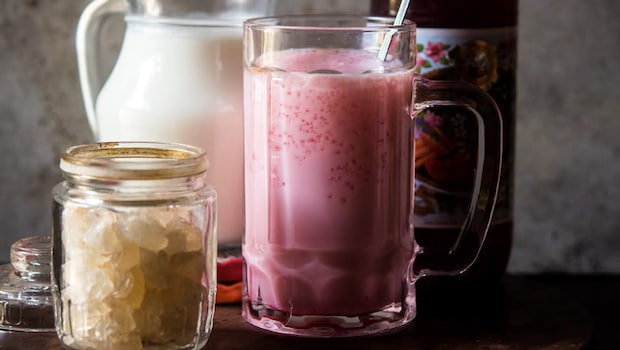
This is the most traditional way to use gond katira, and honestly, it is so simple you will wonder why you were buying bottled drinks all these years. Gond Ka Sharbat is a simple, easy, and cooling beverage made with gond katira, and it is commonly prepared in North Indian homes during summer. The combination of soaked gond katira with cold milk and a good glug of Rooh Afza is one of those things that just works, every single time.
What You Need (serves 2):
- 1.5 teaspoons gond katira, soaked overnight and drained
- 2 glasses chilled milk (full-fat works best)
- 3 to 4 tablespoons Rooh Afza (or rose syrup, to taste)
- A handful of ice cubes
- Optional: a pinch of cardamom powder, a few soaked basil seeds (sabja)
How to Make It:
Pour the chilled milk into two tall glasses. Add 2 tablespoons of Rooh Afza to each glass and stir well. Spoon 2 to 3 generous tablespoons of the soaked, jelly-like gond katira into each glass. Drop in the ice cubes. If using sabja seeds (which you should, they add another layer of cooling goodness), soak them separately for 15 minutes and add them on top. Dust with a pinch of cardamom if you like, and serve immediately.
The gond katira sinks to the bottom, and you get these lovely, slippery, satisfying bursts of jelly with every sip. The subtle sweetness and floral notes of the Rooh Afza, along with the gond katira and milk, create a harmonious blend of flavours. The gelatinous texture of the gond katira adds a unique mouthfeel that no smoothie or milkshake can replicate. Rose syrup is a good swap if you do not have Rooh Afza, and for a dairy-free version, coconut milk works beautifully.
Recipe 2: Mango Gond Katira Pudding

If you are a mango person (and if you are Indian in summer, you almost certainly are), this pudding is going to be your new obsession. It is light, wobbly, naturally cooling, and uses the best fruit of the season. Think of it as a desi panna cotta, but simpler, more forgiving, and without any gelatine.
What You Need (serves 4):
- 2 teaspoons gond katira, soaked overnight
- 1 cup fresh mango pulp (Alphonso or Kesar works best)
- 1.5 cups full-fat milk
- 3 to 4 tablespoons sugar (adjust to taste and to the sweetness of your mangoes)
- 1/4 teaspoon cardamom powder
- A few strands of saffron soaked in 2 tablespoons of warm milk
- Chopped pistachios or almonds to garnish
How to Make It:
Warm the milk gently in a saucepan. Add the sugar and stir until dissolved. Take it off the heat, add the saffron milk and cardamom, and let it cool to room temperature. Do not let the milk boil.
Once cooled, stir in the mango pulp and mix well. Now fold in the soaked gond katira gently so the jelly bits are distributed throughout the mixture. Pour into small bowls or kulhads and refrigerate for at least 2 hours until set.
The gond katira acts as a natural thickener here, binding the pudding and giving it a lovely, soft texture. It will not set as firmly as a jelly, but more like a thick, creamy, spoonable pudding with little pockets of wobble. Garnish with chopped nuts before serving. This keeps well in the fridge for a day, making it perfect to make a night ahead when you have guests coming over.
Also Read: Gen Z Is Coping With The Apparent Diet Coke Shortage. The Result Is A Meme Fest!
Recipe 3: Gond Katira Falooda

Falooda is one of those desserts that feels like summer itself in a glass. Tall, layered, colourful, and unapologetically indulgent, it is the kind of thing you order at an Irani café and then quietly make at home because it is actually not that complicated. Adding gond katira to falooda is a well-established tradition, especially during Ramzan and Eid, when richer, more elaborate versions appear across India.
From simple drinks to indulgent treats, gond katira slips effortlessly into your summer routine. In falooda, it adds a cooling, jelly-like layer that contrasts beautifully with the creaminess of the ice cream and the crunch of the nuts.
What You Need (serves 2):
- 1.5 teaspoons gond katira, soaked overnight
- 2 tablespoons sabja (basil) seeds, soaked for 15 minutes
- 100g falooda sev (thin wheat vermicelli), cooked and cooled
- 2 cups cold full-fat milk
- 3 tablespoons rose syrup
- 2 generous scoops vanilla or rose ice cream
- A handful of mixed nuts (almonds, pistachios, cashews), chopped
- 2 tablespoons Rooh Afza or rose syrup for the base
How to Assemble It:
Start by drizzling a tablespoon of rose syrup at the bottom of a tall glass. Add a layer of cooked and cooled falooda sev. Next, spoon in 2 to 3 tablespoons of soaked gond katira, spreading it gently over the sev. Add a spoonful of soaked sabja seeds on top. Slowly pour cold milk over everything (about 3/4 of the glass). Add another small drizzle of rose syrup. Place a scoop of ice cream right on top, then scatter the chopped nuts generously over it. Add a final small drizzle of rose syrup for colour and drama.
Serve immediately with a long spoon and a wide straw. The trick to a good falooda is eating it quickly and mixing each spoonful so you get a bit of everything: the ice cream, the jelly, the seeds, and the fragrant milk all at once.
A Few Tips Before You Go
Buy your gond katira from a reliable store, preferably one that stocks Ayurvedic or dry fruit items. The quality varies, and a good batch will be pale cream or slightly translucent, not too yellow. The bloomed jelly can also be mixed with chopped nuts, raisins, and gulkand to make a cooling dessert that looks simple but is deeply satisfying, and requires no added sugar. Do not overlook this combination: gond katira with gulkand and nuts, served cold, is one of the most underrated summer desserts you can make in under five minutes.
If you want to keep things simple on a busy weekday, even just adding a spoonful of soaked gond katira to your nimbu pani or aam panna makes a difference, both in texture and in how cooling the drink feels.
Also Read: Watch: At This Viral Cafe, Your Coffee Is Flown Down In An Air Balloon
The Desi Way To Cool Down
Gond katira is not a trend. It is not a superfood that arrived on an Instagram reel from overseas. It is something Indian kitchens have known for a very long time, passed quietly from one generation to the next, from a dadi to a daughter-in-law, from a hakim to a patient. It does not need fancy packaging or a celebrity endorsement. It just needs a bowl of cold water, a bit of patience, and a little creativity in the kitchen. This summer, before you reach for another aerated drink or a tub of store-bought ice cream, give gond katira a proper chance. Your body will thank you, and honestly, your taste buds will too.