

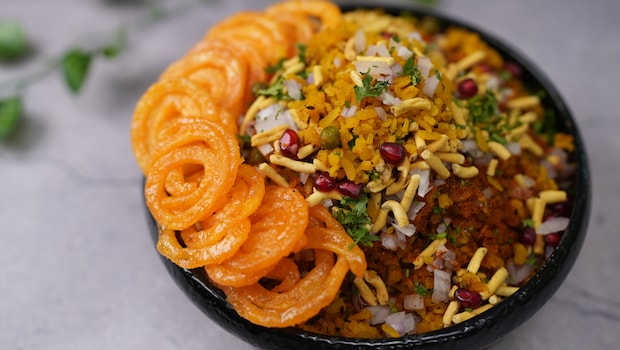
Every city has a breakfast it's proud of. Mumbai has its vada pav. Delhi has its chole bhature. But somewhere in the heart of India, in the sprawling, chaotic, food-obsessed streets of Indore and Bhopal, a breakfast exists that manages to be two completely different things at once. One component is humble, light, and savoury. The other is sticky, sweet, and gleaming. Together, they make absolutely no sense on paper, and complete sense on the plate. Poha-jalebi is not just a breakfast combination. It's a cultural institution, a daily ritual, and a bite of history that most people have never stopped to think about.
Also Read: Which City Is Known As The Dosa Capital Of India?
The City at the Centre of the Story

The honest answer to which city poha-jalebi comes from is Indore, but with caveats, because Bhopal claims it too, and the whole of the Malwa region holds it close. Indori poha is a flattened rice snack that is likely to have originated in the Indian metropolis of Indore. It gets its name from the city of Indore, which is its place of origin. It is believed that it was created after India's independence.
But poha didn't just appear in Indore from nowhere. To understand it, you have to understand how Indore got to be the city it is. Indore traces its roots to its 16th-century founding as a trading hub between the Deccan and Delhi. The city and its surroundings came under the Maratha Empire on 18 May 1724 after the Maratha Peshwa assumed full control of Malwa. And it's the Marathas who carry the poha into this story.
The Holkars and Scindias came to Madhya Pradesh from Maharashtra, where the dish is popular. In Madhya Pradesh, wherever Maratha rulers went, you can find common dishes like shrikhand and poha. So it is logical to assume Maratha warriors brought it to North India and the Malwa region. Think of it like a culinary migration. A ruling dynasty arrives with their food habits, their cooks, their ingredients, and slowly, those flavours take root in the new soil.
It is hard to get away from this delectable breakfast treat from Madhya Pradesh, as poha-jalebi enjoys a fanfare in not just Bhopal but Indore too. A quick search online might leave you confused as to where this delicious combination originated, but the fact remains that poha-jalebi is popular across both cities today.
What Makes the Indori Poha Different
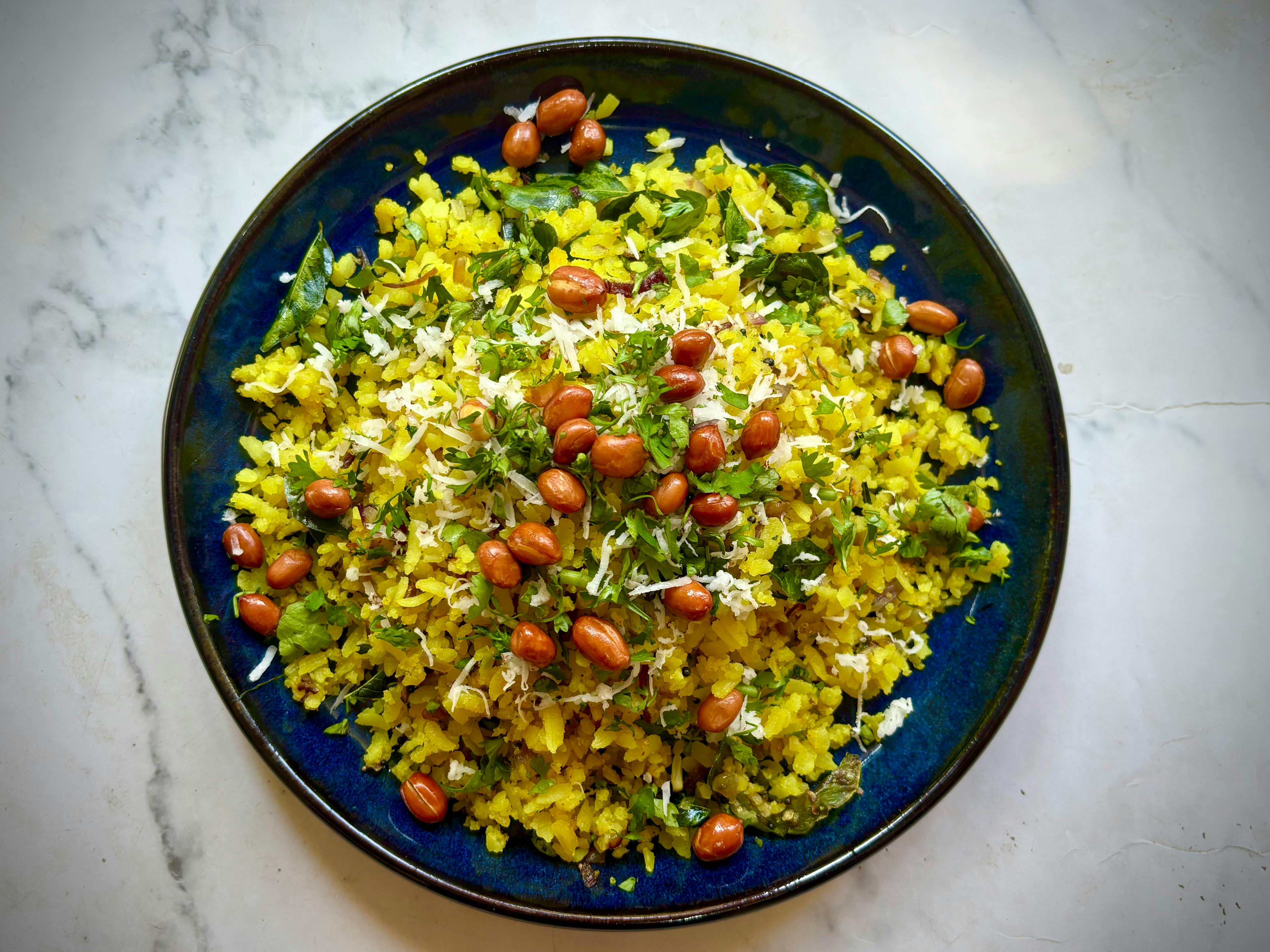
Poha is popular across India, with Maharashtra, Gujarat, and other states having their versions. However, Indore's poha stands out due to its unique preparation method. Unlike other poha, which is pan-cooked with ingredients, Indori poha is steamed. This technique gives it a distinct taste, softness, and flavour. The process involves seasoning the washed poha, pouring tempering over it, and steaming the mixture, resulting in a lighter, fluffier dish.
Indori poha is uniquely flavoured with fennel seeds, adding a sweet fragrance, and topped with sev or bhujiya, a crispy snack made from gram flour and spices. While Maharashtrian poha often includes coconut, coriander, potatoes, and onions, Indore's version from the Nimar-Malwa region is garnished with crushed kachori, bhujia sev, or jalebis.
Also Read: Is Your Imli Chutney Too Thick, Too Watery Or Too Sour? Avoid These Mistakes While Making It
The garnish is a highlight, featuring jalebi, sev, usal, sliced onions, and fennel seeds, with a dash of Jeerawan powder. This proprietary Indore spice blend, comprising around 20 spices, is unique to the region and essential to its identity, distinct from generic chaat masala.
In 2017, India Post honoured Indore poha with a commemorative stamp, cementing its status as a beloved traditional dish.
And Then There's the Jalebi
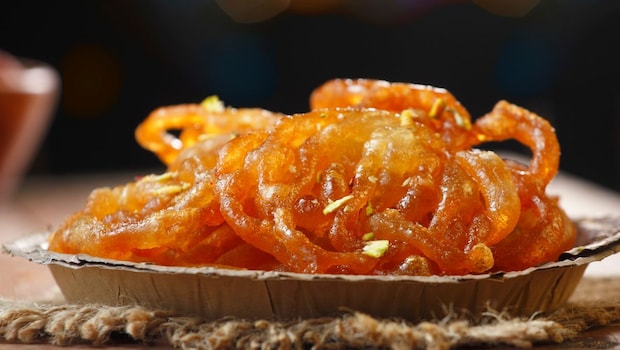
Photo Credit: Canva
The jalebi's inclusion in this combination is intentional, with a history deeper than many realise. Originating in the Middle East as Zalabiya, this sweet was made by frying fermented wheat batter and soaking it in honey or sugar syrup. It appears in medieval Arabic cookbooks like the Kitab al-Tabikh by Ibn Sayyar al-Warraq in the 10th century and by Muhammad bin Hasan al-Baghdadi in the 13th century.
Turkish and Persian traders brought Zalabiya to India, where it became known as jalebi. From the 15th century, it became a cultural staple for festivals, weddings, and temple rituals. The first Indian reference to jalebi is in the Priyamkarnrpakatha (1450 CE), a Jain text by Jinasura, mentioning it as part of a merchant's dinner menu. Thus, jalebi has been part of Indian cuisine for at least six centuries. By the time it reached Madhya Pradesh, it had passed through Persian kitchens, Turkish trading posts, and Mughal courts.
Bhopal, with its strong Mughal influence, is famous for shahi tukda and kebabs. Jalebi paired with poha reflects this cultural blend, offering a breakfast that encapsulates central India's cultural geography. One element comes from Maratha rulers in Maharashtra, the other from Mughal-Persian influence, both converging in Madhya Pradesh.
The Malwa Culture That Made It Stick
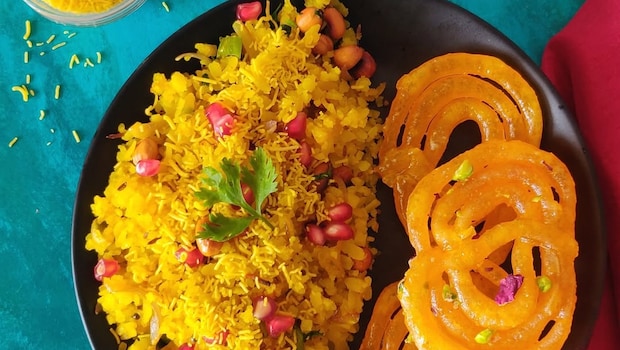
Food combinations only survive if they work, and poha-jalebi works in a very specific, very local way. Poha-jalebi is the staple breakfast of the Malwa region. These are two different dishes, but the combination is a hit. Indore's culinary culture has a blend of Maharashtrian, Malwi, Rajasthani, and Gujarati influences. That blend is precisely why the pairing makes sense here. The Malwa palate is used to contrasts, sweet and sour, spicy and cooling, crunchy and soft. The sour tang of the poha against the syrupy sweetness of the jalebi is not a strange pairing in this context. It's the natural outcome of a food culture built on layered flavour.
Indori poha is mainly sold by vendors all around the city during the morning time, often alongside the city's other popular snacks like kachori-samosas. The street vendor culture in Indore is extremely serious; this is a city that takes its food identity personally, and the poha-jalebi cart is part of that identity in the same way the old Sarafa Bazaar and Chappan Dukan are. You can get poha-jalebi in sit-down places now, and some restaurants do very decent versions. But the real experience is standing by a cart in the morning, paper plate in hand, with jalebi syrup threatening to drip down your wrist.
The Indore Mithai Aur Namkeen-Vikreta Vyapari Sangh (IMANVVS), an association of sweets and snacks manufacturers, started documenting four popular food items of the Malwa region in 2019, including Indori poha, in an attempt to get a Geographical Indicators (GI) tag for these food items. If that comes through, Indori poha-jalebi will join a very small club of Indian breakfast dishes with official protected status, which, given what it represents, seems entirely fair.
Bhopal's Version and Why Both Cities Matter
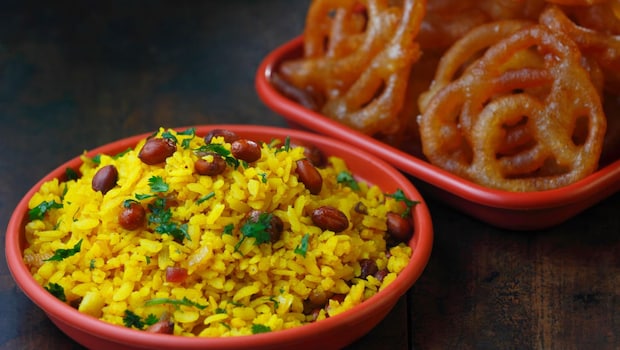
Bhopal's relationship with poha-jalebi is somewhat different from Indore's. People queue up even as the vendor is setting up his shop. The jalebis are crispy and juicy, and the poha is tangy and spicy. Bhopal's version tends to lean spicier, with the Mughal-influenced seasoning and a slightly different garnish profile. The cities are only a couple of hours apart, but their poha tastes different enough that regulars will tell you which they prefer.
Also Read: 7 Lesser-Known Bengali Sweets Locals Swear By
Neither city is wrong. That's the whole point of this dish: it absorbed the culture around it wherever it landed, and came out tasting like that place specifically. The fennel-forward, sev-heavy Indori version and the tangier, spicier Bhopali version are both authentic. They just reflect different conversations happening between the same set of ingredients and two very different cities.
An Iconic Breakfast
To eat poha-jalebi in Indore or Bhopal is to eat something that has been shaped by Maratha migration, Persian trade routes, Mughal kitchens, and the specific genius of a food culture that knows exactly how to take ingredients from elsewhere and make them completely its own. It is not a trendy breakfast, not a brunch menu item, not a food festival speciality. It is a daily morning meal that has been eaten on the same streets, from the same kinds of carts, for generations. The combination that makes no logical sense is also the combination that, once you've had it, you will spend the rest of your life trying to find elsewhere, and never quite managing to.