





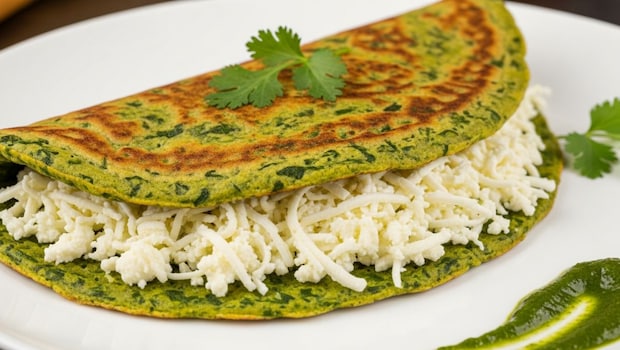
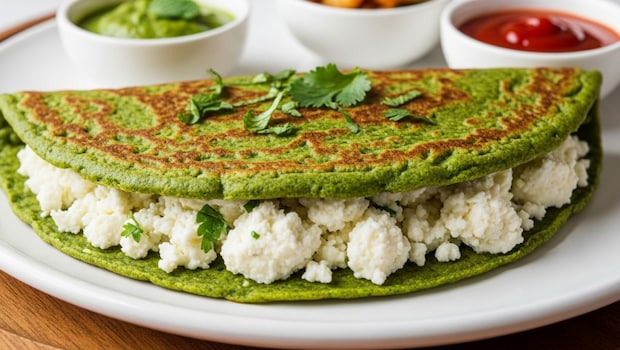
It usually starts sometime after lunch. Energy dips, focus drifts, and suddenly something sweet feels urgent. Not optional. Urgent. Most people blame willpower, but the real issue is simpler. Meals that are low in protein and fibre rarely hold you for long. The result is a steady cycle of hunger, snacking, and energy crashes. This is where everyday Indian foods quietly step in and fix the problem. A high-protein palak moong dal cheela with paneer stuffing, paired with fibre-rich sweet potatoes, is the kind of combination that feels comforting yet works hard in the background. It fills you up, keeps energy steady, and removes the need for constant snacking without feeling restrictive.
Also Read: What Happens When You Eat Moong Dal Cheela Every Night For A Month
Why Protein And Fibre Together Support Better Energy And Satiety
Protein on its own does not solve hunger. Fibre on its own does not either. It is the combination that slows digestion, steadies blood sugar, and keeps appetite in check.
"Meals that combine protein with fibre tend to support better appetite control and energy stability through the day," says nutritionist Rupali Datta.
Moong dal provides easy-to-digest plant protein. Paneer adds calcium and complete dairy protein. Spinach contributes micronutrients and antioxidants. Sweet potatoes bring complex carbohydrates and fibre that release energy slowly. Together, this creates a balanced meal that supports everyday eating rather than short-term fixes.
Who Should Eat High-Protein Palak Moong Dal Cheela And Sweet Potato Meals
This combination suits a wide range of dietary needs and lifestyles. "For vegetarians, meals like these help bridge protein gaps without relying on supplements," says nutritionist Rupali Datta.
It works well for:
- People managing weight without cutting familiar foods
- Office-goers who need filling meals that last
- Fitness enthusiasts looking for whole-food post-workout options
- Older adults who need nutrient-dense and easy-to-digest meals
The flavours are familiar, the texture is gentle, and the nutrition quietly does its job.
Is Palak Moong Dal Cheela And Sweet Potato Suitable For Diabetics
Sweet potatoes often raise concerns because of their natural sweetness, but their fibre content slows glucose absorption, especially when paired with protein.
"Protein and fibre together help blunt blood sugar spikes after meals," explains nutritionist Dr Ritika Samaddar.
Moong dal has a low glycaemic load, spinach is naturally low in carbohydrates, and paneer adds satiety without spiking blood sugar. When sweet potatoes are boiled, roasted, or baked instead of fried, they fit into a diabetes-friendly eating plan.
"Sweet potatoes are not off-limits when portion size and cooking method are managed correctly," adds Dr Samaddar.
Best Time To Eat Palak Moong Dal Cheela And Sweet Potatoes
| Food | Why It Works | Best Time To Eat |
|---|---|---|
| Palak Moong Dal Cheela | High protein, easy digestion | Breakfast or lunch |
| Paneer Vegetable Stuffing | Protein and fibre boost | Post-workout or mid-day |
| Sweet Potato | Slow-release energy | Lunch or early dinner |
This is not about strict timing. It is about eating foods that support steady energy and fullness.
High-Protein Palak Moong Dal Cheela With Paneer Stuffing Recipe
Ingredients For Palak Moong Dal Cheela Batter
- 1 cup yellow moong dal soaked for 4 to 6 hours
- 1 cup fresh spinach palak finely chopped
- 1 green chilli
- 1 inch ginger
- Salt to taste
- Water as required
Ingredients For Paneer And Vegetable Stuffing - 1/2 cup grated paneer
- 1/4cup finely chopped capsicum1/2 cup grated carrot
- 2 tablespoons sweet corn optional
- Salt and black pepper to taste
- 1/2 teaspoon cumin powder
- 1/2teaspoon chaat masala
- Oil or ghee for cooking
Method To Make Palak Moong Dal Cheela
Blend soaked moong dal with ginger, chilli, and water into a smooth batter. Mix in spinach and salt. Heat a lightly greased pan and spread a ladle of batter into a thin circle. Cook until bubbles appear.
Mix paneer, vegetables, and spices. Spread the stuffing on one side of the cheela, fold, and cook gently until crisp on both sides.
"Adding vegetables to paneer improves fibre intake without compromising protein," says nutritionist Rupali Datta.
Serve hot with green chutney or yoghurt.
Why Sweet Potatoes Provide Sustained Energy Without Sugar Crashes
Sweet potatoes contain complex carbohydrates, fibre, potassium, and beta-carotene. This combination supports slow digestion and steady energy release.
"Slow-digesting carbohydrates help avoid energy crashes and improve focus through the day," explains nutritionist Rupali Datta.
They offer nutrient density without being calorie-heavy, making them suitable for regular meals.
Sweet Potato Nutrition Value And Health Benefits
Sweet potatoes provide fibre, antioxidants, vitamin A, potassium, and B vitamins. These nutrients support digestion, eye health, heart health, and blood sugar balance when eaten in moderation.
"Sweet potatoes offer nutrient density without being calorie-heavy, which makes them ideal for everyday meals," says dietitian Anju Sood.
3 Sweet Potato Recipes For Healthy Everyday Eating
1. Roasted Sweet Potato Fries Recipe
Roast sliced sweet potatoes with olive oil, cinnamon, and salt at 220celcius until crisp at the edges.
2. Creamy Sweet Potato Soup Recipe
Simmer cubed sweet potatoes with ginger, garlic, and stock. Blend smooth and season with cumin and black pepper.
3. Sweet Potato Energy Balls Recipe
Mash boiled sweet potato with almond flour, dates, cinnamon, and almond butter. Roll into balls and chill.
Best Cooking Methods For Sweet Potatoes
Recommended methods include:
Roasting or baking with skin on
Steaming or boiling
Pan-cooking with olive or avocado oil
Avoid deep frying, excess sugar, or heavy cream-based sauces.
"The way food is cooked matters as much as what you eat," notes nutritionist Rupali Datta.
How Much Sweet Potato To Eat In One Meal
One medium to large sweet potato per meal is sufficient. Sweet potatoes can be eaten several times a week and work well at any time of day due to slow energy release.
Also Read: Sooji Cheela vs Oats Cheela: Which Makes A Better Breakfast?
High-Protein Indian Meals For Everyday Health
Healthy eating does not require dramatic changes. Choosing meals that combine protein, fibre, and familiar flavours often solves more problems than restrictive diets. High protein palak moong dal cheela with paneer stuffing and fibre-rich sweet potatoes support fullness, steady energy, digestion, and long-term health.
"When food keeps you full and energised, discipline becomes effortless," says Rupali Datta.