

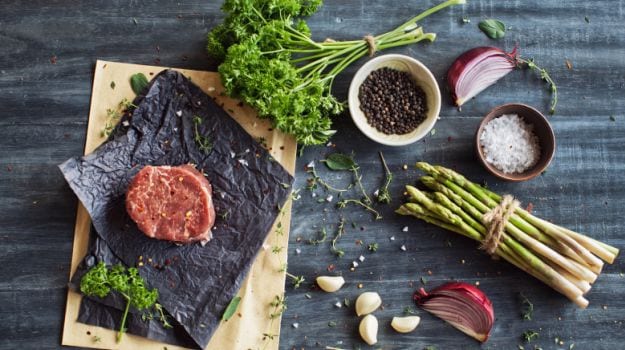
The consumption of a paleolithic-type diet by obese women can help them lose weight and lower their future risk of diabetes and heart disease, says a new research. A typical Paleolithic diet includes lean meat, fish, eggs, vegetables, fruits, nuts and berries, with rapeseed, olive oil and avocado as additional fat sources. It excludes dairy products, cereals, added salt and refined fats and sugar.
The findings showed that saturated fatty acids decreased by 19 percent in women who consumed the Paleolithic-type diet. Further, there was an increase of 47 percent in monounsaturated fatty acids and 71 percent increase was seen in their polyunsaturated fatty acids. Specific fatty acids associated with insulin resistance were found to be significantly lower in the women eating the Paleolithic-type foods compared with those on the prudent control diet.The team conducted their 24-month intervention in 70 obese postmenopausal women with normal fasting plasma glucose levels.The women were randomly assigned to one of two groups. Those in the Paleolithic-type-diet group aimed to consume 30 percent of their total energy (E percent - energy percent) in protein, 30 E percent in carbohydrates, and 40 E percent in fats with high-unsaturated fatty acid content.In contrast, the women in the prudent control diet group aimed to eat 15 E percent in protein, 30 E percent in fat, and 55 E percent in carbohydrates. The results were presented at the ENDO 2016, the annual meeting of the Endocrine Society, in Boston, US.(This story has not been edited by NDTV staff and is auto-generated from a syndicated feed.)

 "Indian Food Is Not Just Butter Chicken": Samyukta Nair At NDTV World Summit
 "AI Chatbots Horrible For Learning": Andrew Ng At NDTV World Summit
 "India No Longer Spectator": Italy On New Delhi's Growing Peacemaker Role
 India Must Reduce Dependence On Imported Fuel: Avaada Group Chief Vineet Mittal To NDTV
 "Keep Learning New Skills": Andrew Ng On 'AI Jobapocalypse' Fear
 Nikhil Kamath On Groww Overtaking Zerodha In Active Clients | Nikhil Kamath
 What Gen Z Has That Millennials Don't? Mohini Dey & Band Weigh In
 Chatbots Could Be Damaging Adult Learning Too: Andrew Ng
 Swami Sarvapriyananda Asks On AI Alignment; Andrew Ng Flags Risks Of Overhyping AI Fears
 'Why Plan Life So Far Ahead?' Nikhil Kamath On Marriage, Kids And Choosing Freedom Over Certainty
The findings showed that saturated fatty acids decreased by 19 percent in women who consumed the Paleolithic-type diet. Further, there was an increase of 47 percent in monounsaturated fatty acids and 71 percent increase was seen in their polyunsaturated fatty acids. Specific fatty acids associated with insulin resistance were found to be significantly lower in the women eating the Paleolithic-type foods compared with those on the prudent control diet.The team conducted their 24-month intervention in 70 obese postmenopausal women with normal fasting plasma glucose levels.The women were randomly assigned to one of two groups. Those in the Paleolithic-type-diet group aimed to consume 30 percent of their total energy (E percent - energy percent) in protein, 30 E percent in carbohydrates, and 40 E percent in fats with high-unsaturated fatty acid content.In contrast, the women in the prudent control diet group aimed to eat 15 E percent in protein, 30 E percent in fat, and 55 E percent in carbohydrates. The results were presented at the ENDO 2016, the annual meeting of the Endocrine Society, in Boston, US.(This story has not been edited by NDTV staff and is auto-generated from a syndicated feed.)