







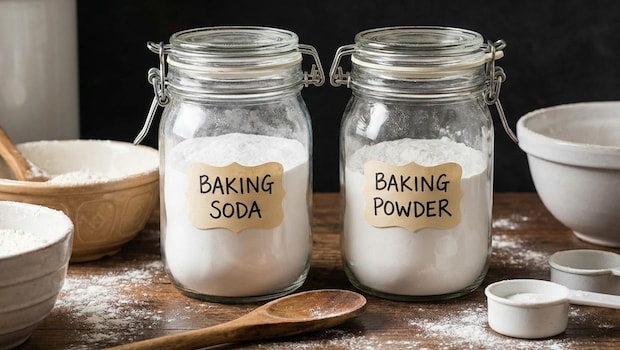
Choosing between baking soda and baking powder is one of those small decisions that quietly determines whether a recipe turns out light, tender, and evenly risen, or flat, dense, and oddly bitter. They both help create lift, but they do so through different reactions, and those reactions depend on the ingredients already present in a batter. Baking soda responds to acidity and acts quickly; baking powder works in stages and is designed for batters without much acid. This difference doesn't just matter for cakes and muffins but also for everyday cooking: from making dhokla softer to helping pakora batter turn lighter and less oily. Understanding when each one works best removes the guesswork and makes it easier to adjust flavour, texture, and colour before something even reaches the oven.
What Baking Soda Actually Is
Baking soda is sodium bicarbonate, an alkaline powder that reacts rapidly when it comes into contact with acid + moisture. This reaction immediately releases carbon dioxide bubbles that expand through a batter to create lift. Because the reaction starts as soon as ingredients meet, recipes that rely on baking soda generally need to be baked or cooked soon after mixing.
Acidic ingredients are essential. Curd, buttermilk, lemon juice, vinegar, honey, natural cocoa, and fruit puree are common triggers. When the reaction is balanced, it results in quick aeration and deeper browning; if unbalanced, it can cause sharp, soapy flavours or a darker crumb due to increased alkalinity.
What Baking Powder Does Differently
Baking powder already contains baking soda, a dried acid, and a starch to stabilise it. It does not rely on the recipe's acidity to work. Most products today are double-acting, meaning they react in two stages: first when the batter is mixed, and again when heat is applied in the oven or steamer.
This staggered release produces a steadier rise and a more even crumb. It gives the batter time to gain structure before fully expanding, which is why it's so commonly used in basic cakes, cupcakes, muffins, and scones.
Also Read: 10 Fool-Proof Tips to Prevent Baking Disasters
Baking Soda Vs Baking Powder: How They Affect Flavour, Texture, And Colour

Photo Credit: Unsplash
These ingredients affect more than just height. Baking soda deepens colour due to alkali-driven browning and can soften sharp acidity in the batter. Baking powder focuses on structure rather than flavour, supporting an even interior and a more delicate crumb. Understanding their behaviour helps avoid common issues like bitterness, collapsed centres, or uneven browning. In simple terms, baking soda acts like a spark, while baking powder behaves like a slow, steady flame.
When To Use Baking Soda Vs Baking Powder
- If the batter contains acidic ingredients, baking soda is useful.
- If the batter is neutral, baking powder is the safer choice.
- If you need early lift plus oven support, a combination may do the trick.
- If bitterness or harsh flavour develops, reduce soda or increase acidity slightly.
The key is recognising acidity and working with it rather than against it.
When To Use Both Baking Soda And Baking Powder
Certain recipes require the strengths of each: baking soda to neutralise acidity and trigger initial lift, and baking powder to sustain that rise through the oven or steamer. The goal is a balanced interior that rises evenly without collapsing once it's out of the heat.
| Aspect | Baking Soda | Baking Powder |
|---|---|---|
| Needs Acid to Work? | Yes — must react with an acidic ingredient | No — contains its own dried acid |
| Reaction Timing | Immediate when wet | Two-stage: wet + heat (double-acting) |
| Strength | Stronger lift, faster reaction | More gentle and controlled rise |
| Flavour Impact | Can taste bitter if unbalanced | Mostly neutral if measured correctly |
| Browning / Colour | Enhances browning due to alkalinity | Milder browning |
| Best For | Acidic batters (curd, lemon, cocoa, fruit) | Neutral batters (vanilla cakes, muffins, scones) |
| Common Risks | Bitterness, uneven rise if misused | Weak rise if product is old or diluted |
Baking Soda And Baking Powder: Differences In Cooking

Even outside baking, both ingredients are used to improve texture and structure in savoury preparations:
- Pakoras and Bhajiyas: A small pinch of baking soda creates lighter interiors and reduces oiliness of pakoras. Too much leads to bitterness, so restraint matters.
- Dhokla and Khaman: Soda reacts with curd or lemon for quick aeration; some recipes also include baking powder for support during steaming.
- Crispier Coatings: Very small amounts of baking powder in batters for fried appetisers create tiny bubbles that crisp up the outer layer, useful in Indo-Chinese snacks or vegetable fritters.
Baking Soda Vs Baking Powder: Real-World Kitchen Examples

Photo Credit: Unsplash
Where Baking Soda Works Well:
- Chocolate cake with natural cocoa
- Banana bread and muffins
- Buttermilk pancakes
- Dhokla or steamed curd-based batters
Where Baking Powder Fits Best:
- Plain vanilla sponge cakes
- Muffins, cupcakes, scones
- Basic tea-time biscuits
Where Both Are Common:
- Curd-based eggless cakes
- Brownies and dense chocolate bakes
- Carrot and fruit-forward loaves
Can You Use Baking Powder Instead Of Baking Soda? How To Substitute One For The Other
Substituting baking soda and baking powder is not a direct or equal swap, because each reacts differently and contributes its own effect on structure, flavour, and timing.
- Baking soda is stronger, so it needs less quantity but also requires an acidic ingredient to activate it. Without this, the reaction remains incomplete and can leave a sharp or alkaline taste.
- Baking powder is milder and already contains an acid, so it can work independently. But it may not provide the same browning or fast expansion that baking soda delivers in acidic batters.
If you replace baking soda with baking powder, you usually need a larger amount to get a similar lift, often up to two or three times more. This can affect the flavour and texture, since too much baking powder can leave a chalky or metallic note and may cause the structure to weaken if the batter becomes too aerated.
If you replace baking powder with baking soda, you must add an acidic ingredient like lemon juice, curd, vinegar, or buttermilk to activate it, or the leavener will not release enough gas to help the batter rise. The recipe may bake unevenly or taste unpleasant if the acidity is not adjusted properly.
For both swaps, it is important to remember that the final outcome will not be identical to the original recipe. Substitutions are workable, but they are adjustments. So, flavour, colour, and texture may change.
Also Read: 5 Easy Butter Substitutes That You Can Use In Baking
Baking Soda Vs Baking Powder: How To Fix Common Mistakes
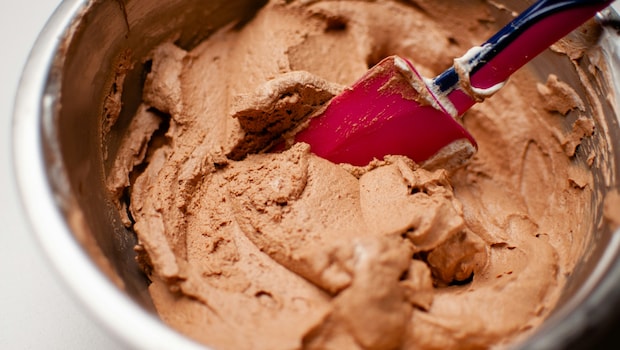
1. If a bake tastes bitter or chemical-like:
This usually means too much baking soda was added, or there was not enough acidity in the batter to neutralise it. The leftover unreacted soda increases alkalinity, which affects flavour. Reducing the soda slightly or increasing acidic ingredients can restore balance.
2. If the centre collapses after baking:
This often happens when the batter rises too quickly in the early stages and then loses structure before the crumb sets. It can be caused by too much leavener, an over-reliance on baking soda, or old baking powder that has lost activity. Using a combination of soda and powder, rather than extra soda alone, supports the rise throughout the baking process.
3. If the exterior browns too fast while the inside stays pale or dense:
Excess baking soda can deepen colour prematurely by increasing alkalinity. The outside cooks rapidly, but the interior does not receive enough structural lift. Reducing soda or balancing it with powder helps maintain even browning and internal rise.
4. If pancakes or fritters turn out flat even before hitting the pan:
This often happens when the batter rests too long after adding baking soda. The reaction completes in the bowl, releasing gas before cooking begins. Preparing the batter just before cooking or switching to baking powder for a more sustained reaction can prevent this.
5. If fried batters absorb too much oil:
A large amount of baking soda can weaken the batter's structure, allowing it to soak up more oil instead of sealing on contact. Reducing soda to a pinch or swapping to a small amount of baking powder creates bubbles more gradually and helps the coating become crisp instead of spongy.
In short, baking soda is best suited for naturally acidic batters, quicker lift, enhanced browning, and recipes where a deeper colour or slight chew is desirable. Baking powder is best suited for neutral batters and recipes where a gentle, predictable lift is more important than speed.