





Winter quietly reshapes everyday eating habits. Mornings demand something warm and filling, lunches lean towards comfort, and meals begin to prioritise nourishment over novelty. This is also the season when root vegetables return to centre stage, with sweet potatoes becoming a regular feature in Indian kitchens. Naturally sweet, satisfying, and easy to cook, they fit seamlessly into winter meals. Turning them into a High Protein Sweet Potato Paratha is a practical upgrade that keeps familiar flavours intact while improving nutritional balance. This paratha works across the day, whether as a hearty breakfast, a wholesome lunch, or a post-workout meal during colder months. With protein-rich additions and warming spices, it delivers comfort without excess heaviness.
Why Sweet Potato Paratha Works Well In Winter
1. Naturally Suited To Cold-Weather Diets
Sweet potatoes are particularly effective in winter cooking because they are dense, warming, and rich in dietary fibre. They help keep the body fuller for longer and support steady energy release through the day, which is useful when colder weather increases appetite. Sweet potatoes also contain antioxidants such as beta-carotene, which support immunity, an important factor during winter.
2. Improve Texture And Reduce Excess Fat In Parathas
When used in paratha dough, sweet potatoes add natural softness and moisture, reducing the need for excess ghee or oil. Their mild sweetness balances everyday spices well, resulting in a paratha that feels comforting without being overpowering. This balance makes the dish flavourful, filling, and easy to digest.
Also Read: 5 Easy And Delicious Ways To Add Sweet Potatoes To Your Diet

Photo Credit: Pexels
Why Adding Protein Makes This Paratha More Balanced
1. Protein Helps Counter Winter-Heavy Carbohydrate Meals
Winter diets often become carbohydrate-heavy, leaving meals filling but short-lived in terms of energy. Adding protein through paneer, lentils, seeds, and flours such as besan helps balance the plate. Protein supports muscle repair, improves satiety, and provides sustained energy, making this paratha suitable for breakfast, lunch, or after physical activity.
2. Protein-Rich Ingredients Support Digestion And Warmth
The combination of whole wheat flour with ragi or makki flour improves fibre intake and supports gut health. Protein-rich additions further stabilise blood sugar levels. Spices such as ginger and cumin aid digestion and help maintain body warmth, which is especially beneficial during colder months.
Nutritional Focus of Key Ingredients
| Ingredient | What It Adds To The Paratha |
|---|---|
| Sweet potato | Fibre, steady energy, winter warmth |
| Paneer or lentils | Protein for muscle support |
| Flaxseed and sesame seeds | Healthy fats and digestive support |
| Whole wheat, ragi, makki | Complex carbohydrates and gut health |
| Ginger and cumin | Better digestion and internal warmth |
Ingredients for High-Protein Sweet Potato Paratha
This recipe uses everyday ingredients commonly found in Indian kitchens during winter.
- 2 medium-sized sweet potatoes, boiled and mashed
- 1 1/2 cups whole wheat flour
- 1/2 cup besan
- 1/2 cup ragi or makki flour
- 1/2 cup grated paneer or boiled lentils for protein
- 1 tablespoon roasted flaxseed powder
- 1 tablespoon sesame seeds
- 1 small onion, finely chopped, optional
- 1 teaspoon grated ginger
- 1/2 teaspoon cumin seeds
- 1/2 teaspoon red chilli powder
- 1/2 teaspoon turmeric powder
- Salt to taste
- Water as needed for kneading
- Ghee or cold-pressed oil for cooking
High-Protein Sweet Potato Paratha: Step-by-Step Preparation
1. Prepare the Dough
In a large mixing bowl, combine mashed sweet potatoes, whole wheat flour, besan, ragi or makki flour, grated paneer or lentils, flaxseed powder, sesame seeds, ginger, cumin seeds, red chilli powder, turmeric powder, and salt. Mix thoroughly until evenly combined. Gradually add water and knead into a soft, smooth dough. Cover and let the dough rest for 10 to 15 minutes to allow the flours to absorb moisture and soften.
2. Shape the Parathas
Divide the rested dough into equal portions and roll them into smooth balls. Lightly dust each portion with flour and roll into a medium-thick circular paratha. Keeping the thickness even ensures uniform cooking, especially since sweet potato-based dough browns faster.
3. Cook the Paratha
Heat a tawa or flat pan over a medium flame. Place the rolled paratha on the hot surface and cook until bubbles appear. Flip the paratha, apply a small amount of ghee or oil, and cook the other side. Flip again if required and cook until both sides are evenly golden and lightly crisp.
4. Serve Hot
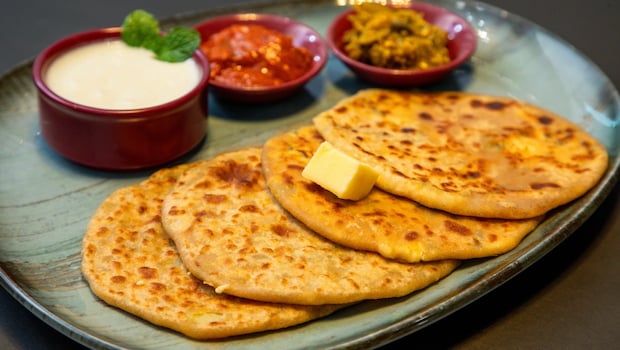
Serve the parathas hot, straight from the tawa. They pair well with plain curd, homemade butter, mint chutney, or a bowl of warm soup, making this a complete and comforting winter meal.
Also Read: 5 Easy Tips To Make Sweet Potato Fries At Home
Easy Variations Based On Your Diet
- Add finely chopped spinach, methi leaves, or grated carrots to increase vitamin and mineral content.
- Replace paneer with tofu to make the paratha vegan while retaining protein value.
- Mix in a spoon of soaked chia seeds to increase fibre and omega-3 fatty acids.
- Pair the paratha with probiotic-rich curd to support digestion and nutrient absorption during winter.
This high protein sweet potato paratha fits naturally into winter routines. It works well for slow mornings, packed lunches, or meals after a long walk or workout in cold weather. It keeps the comfort of traditional parathas intact while quietly improving everyday nutrition.