


Members of the successful Apollo space programme are experiencing higher rates of cardiovascular problems thought to be caused by their exposure to deep space radiation, according to a new study.
Professor Michael Delp from Florida State University explains that the men who travelled into deep space as part of the lunar missions were exposed to levels of galactic cosmic radiation that have not been experienced by any other astronauts or cosmonauts.
That exposure is now manifesting itself as cardiovascular problems, researchers said. "We know very little about the effects of deep space radiation on human health, particularly on the cardiovascular system," Delp said. "This gives us the first glimpse into its adverse effects on humans," he said. This is the first study looking at the mortality of Apollo astronauts. The Apollo programme ran from 1961 to 1972, with 11 manned flights into space between 1968 and 1972. Nine of those flew beyond Earth's orbit into deep space. The programme is most notable for landing men on the Moon as well as the failed mission of Apollo 13 that inspired the popular 1995 Ron Howard film.
Delp's research is of special interest now as the US and other countries, as well as private organisations, make plans for deep space travel. NASA has unveiled plans for US orbital missions around the Moon from 2020 to 2030 in preparation for a manned flight to Mars. Russia, China and the European Space Agency are all looking at lunar missions. And SpaceX, owned by Elon Musk, has proposed landing humans on Mars by 2026.
As a group, astronauts are highly educated and have access to top medical care, meaning their health-care outcomes are generally better than the general population. However, the astronauts in the Apollo programme experienced different environmental conditions than anyone else in the world when they travelled into deep space. Delp found that 43 per cent of deceased Apollo astronauts died from a cardiovascular problem. That is four to five times higher than non-flight astronauts and those who have travelled in low Earth orbit. Of the 24 men who flew into deep space on the Apollo lunar missions, eight have died and seven were included in the study.
Delp and his colleagues also exposed mice to the type of radiation that Apollo astronauts would have experienced. After six months - the equivalent of 20 human years - the mice demonstrated an impairment of arteries that is known to lead to the development of atherosclerotic cardiovascular disease in humans. "What the mouse data show is that deep space radiation is harmful to vascular health," Delp said.

 "World That Relied On India's Brainpower Now Trusts Its Mindpower": PM Modi
 Non-Oil Trade With India Went Up 50% In 3 Years: UAE Minister At NDTV Summit
 "Some Dreaming Of Disorder": PM's "Failed Product Of Congress" Jibe At Rahul Gandhi
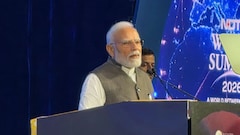 'Viksit Bharat Not Just For Us': PM Modi's Top Quotes At NDTV World Summit
 Has Indian Cuisine Arrived At The Global Stage? What Vir Sanghvi Believes
 Best Of NDTV World Summit 2026 | Defining Conversations, Big Ideas
 PM Modi Says 'Parasite' Congress Hurts 'Honest' Dissent Movements
 "Some Dreaming Of Disorder": PM Modi's Dig At Rahul Gandhi
 PM Modi Highlights India's Firsts: Fast Breeder Reactor, Hydrogen Train, Asian Games Medals
 "UN's Limits Clearly Visible": PM Modi Presses For 'New Solutions' At NDTV Summit