

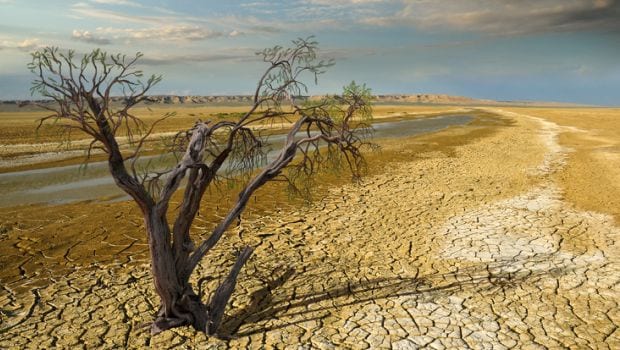
Most life on Earth is already being changed by the warming climate, even though the rise in global temperature since pre-industrial times has been rather slight, researchers warned on Thursday.
"We now have evidence that, with only a about one degree C of warming globally, major impacts are already being felt," said lead study author Brett Scheffers, member of the International Union for Conservation of Nature Climate Change Specialist Group and assistant professor at the University of Florida."These range from individual genes changing, significant shifts in species' physiology and physical features such as body size, and species moving to entirely new areas."These changes will affect humans by causing disease outbreaks, inconsistent crop yields and cutting down on fishery productivity, threatening food security, experts said.The study, which analyzed 94 ecological processes as documented in peer-reviewed literature, also warned that the more ecosystems change, the less likely they may be to guard against the harshest effects of climate change.Unhealthy forests will no longer be able to sequester large amounts of carbon, for instance.
Increasingly warm oceans will no longer act as a an effective buffer against temperature rise, and climate-related floods, sea-level rise and cyclones will get worse.Since people depend on healthy ecosystems for food and clean water, the more the natural environment changes, the more people's livelihoods will be at risk."We are simply astonished at the level of change we observed, which many of us in the scientific community were not expecting for decades," said senior author James Watson from the University of Queensland and Wildlife Conservation Society, member of the IUCN Climate Change Specialist Group."It is no longer sensible to consider this a concern for the future, and if we don't act quickly to curb emissions it is likely that every ecosystem across Earth will fundamentally change in our lifetimes."
(This story has not been edited by NDTV staff and is auto-generated from a syndicated feed.)

 "World That Relied On India's Brainpower Now Trusts Its Mindpower": PM Modi
 Non-Oil Trade With India Went Up 50% In 3 Years: UAE Minister At NDTV Summit
 "Some Dreaming Of Disorder": PM's "Failed Product Of Congress" Jibe At Rahul Gandhi
 'Viksit Bharat Not Just For Us': PM Modi's Top Quotes At NDTV World Summit
 Has Indian Cuisine Arrived At The Global Stage? What Vir Sanghvi Believes
 Best Of NDTV World Summit 2026 | Defining Conversations, Big Ideas
 PM Modi Says 'Parasite' Congress Hurts 'Honest' Dissent Movements
 "Some Dreaming Of Disorder": PM Modi's Dig At Rahul Gandhi
 PM Modi Highlights India's Firsts: Fast Breeder Reactor, Hydrogen Train, Asian Games Medals
 "UN's Limits Clearly Visible": PM Modi Presses For 'New Solutions' At NDTV Summit
"We now have evidence that, with only a about one degree C of warming globally, major impacts are already being felt," said lead study author Brett Scheffers, member of the International Union for Conservation of Nature Climate Change Specialist Group and assistant professor at the University of Florida."These range from individual genes changing, significant shifts in species' physiology and physical features such as body size, and species moving to entirely new areas."These changes will affect humans by causing disease outbreaks, inconsistent crop yields and cutting down on fishery productivity, threatening food security, experts said.The study, which analyzed 94 ecological processes as documented in peer-reviewed literature, also warned that the more ecosystems change, the less likely they may be to guard against the harshest effects of climate change.Unhealthy forests will no longer be able to sequester large amounts of carbon, for instance.
Increasingly warm oceans will no longer act as a an effective buffer against temperature rise, and climate-related floods, sea-level rise and cyclones will get worse.Since people depend on healthy ecosystems for food and clean water, the more the natural environment changes, the more people's livelihoods will be at risk."We are simply astonished at the level of change we observed, which many of us in the scientific community were not expecting for decades," said senior author James Watson from the University of Queensland and Wildlife Conservation Society, member of the IUCN Climate Change Specialist Group."It is no longer sensible to consider this a concern for the future, and if we don't act quickly to curb emissions it is likely that every ecosystem across Earth will fundamentally change in our lifetimes."
(This story has not been edited by NDTV staff and is auto-generated from a syndicated feed.)