


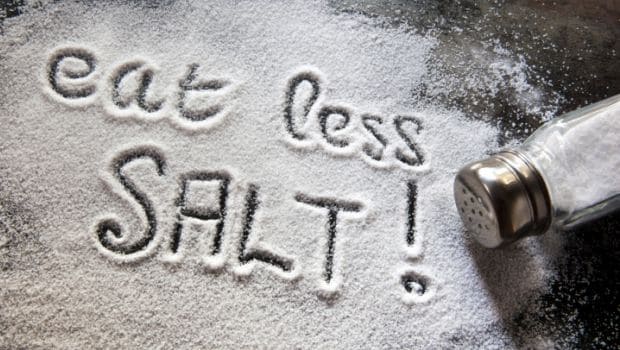
Reducing salt intake worldwide by only ten percent could save millions of lives, a study reported Wednesday.
Most adults exceed the recommended maximum salt levels of 2 grammes per day, resulting in 1.65 million deaths from heart disease every year, according to the World Health Organization.Research has shown that national policies to curb salt consumption can reduce the number of people affected by high blood pressure and heart disease.But few countries around the world have assessed the costs of implementing such programmes.A team of researchers led by Dariush Mozaffarian from the Tufts Friedman School of Nutrition Science and Policy calculated what it would cost to put in place a "soft regulation" strategy -- in coordination with industry -- for 183 nations.They took into account age and sex distributions in each country in estimating both the costs and health effects.They also tallied the number the number of years lost to poor health that could be averted -- a measure called DALYs (disability-adjusted life years) -- with a salt-reduced diet.The study concluded that cutting salt intake over a decade would avoid about 5.8 million DALYs every year, at an average per person cost of $1.13 over the 10-year period.The cost for each year of healthy life gained was roughly the same as what is currently spent on drugs used to prevent cardiovascular disease, they noted.(This story has not been edited by NDTV staff and is auto-generated from a syndicated feed.)

 Should Machines Decide Who Lives And Dies In A War? Ex-CIA Chief Answers
 Kriti Sanon Says Instagram Has No Option To Report AI-Generated Images Of Her
 What Anthropic, Monks And The Cusp Of Consciousness Teach About Tomorrow
 Nikhil Kamath's Big AI Bet: Why India Should Look Beyond Silicon Valley
 When Will India Get Its Own Apple, Samsung? Ashwini Vaishnaw Reveals Timeline
 Neeru Saini On Fitness, Focus & Her Love for Churma!
 NDTV Lifeline- Himanshu Saini on the Secret to Eating Well: More Greens, Healthier Desserts
 Hockey Champions Savita Punia & Neha Goel on Fitness, Recovery & The Meaning of Health
 Millets: The Superfood That's Good for You and the Planet
 Yoga, Millets, Vaccines: S Jaishankar On How India Is Building Stronger Ties | NDTV World Summit
Most adults exceed the recommended maximum salt levels of 2 grammes per day, resulting in 1.65 million deaths from heart disease every year, according to the World Health Organization.Research has shown that national policies to curb salt consumption can reduce the number of people affected by high blood pressure and heart disease.But few countries around the world have assessed the costs of implementing such programmes.A team of researchers led by Dariush Mozaffarian from the Tufts Friedman School of Nutrition Science and Policy calculated what it would cost to put in place a "soft regulation" strategy -- in coordination with industry -- for 183 nations.They took into account age and sex distributions in each country in estimating both the costs and health effects.They also tallied the number the number of years lost to poor health that could be averted -- a measure called DALYs (disability-adjusted life years) -- with a salt-reduced diet.The study concluded that cutting salt intake over a decade would avoid about 5.8 million DALYs every year, at an average per person cost of $1.13 over the 10-year period.The cost for each year of healthy life gained was roughly the same as what is currently spent on drugs used to prevent cardiovascular disease, they noted.(This story has not been edited by NDTV staff and is auto-generated from a syndicated feed.)