









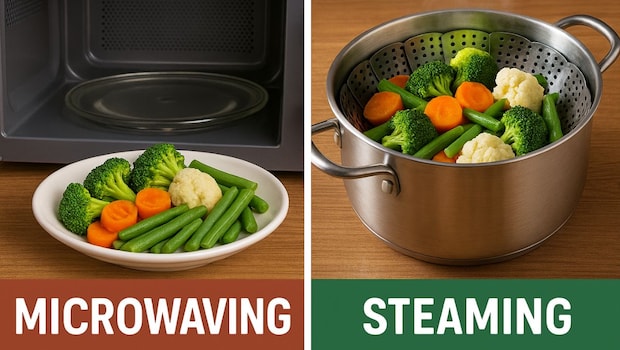
Cooking vegetables is essential for flavour and digestibility, but how you cook them can influence their nutritional value. Both microwaving and steaming are considered gentler options compared to boiling, as they limit water contact and reduce nutrient loss. Microwaving relies on quick heat and minimal water, which can help preserve sensitive vitamins. Steaming, on the other hand, uses indirect heat to maintain texture and colour while protecting key nutrients. Nutritionist Rupali Datta explains that shorter cooking times and minimal water exposure are crucial for retaining vitamins and antioxidants in vegetables. Research has explored how these methods affect antioxidants and vitamins, but the results vary depending on the vegetable and cooking time. So, which technique truly safeguards your nutrients? Let's find out.
Also Read: Steaming Food: 5 Surprising Health Benefits You Need to Know
Quick Comparison Chart
| Aspect | Microwaving | Steaming |
| Cooking Time | Very fast | Moderate |
| Nutrient Retention | Excellent for vitamins & antioxidants | Very good, especially minerals |
| Texture | Slightly softer | Crispy and tender |
| Water Usage | Minimal | None |
Benefits Of Microwaving Vegetables
1. Superior Nutrient Retention
Microwaving uses rapid heat and minimal water, which helps preserve water-soluble vitamins like vitamin C and B vitamins. Research published in the Journal of Food Science shows that shorter cooking times reduce oxidative damage, making microwaving one of the best methods for nutrient preservation. This is particularly useful for vegetables prone to losing nutrients quickly, such as spinach and broccoli.
2. Time-Saving And Convenient
Microwaving is perfect for busy schedules. It cooks vegetables in minutes without elaborate setups, making healthy eating more achievable. This convenience encourages more home-cooked meals, which can lead to better dietary habits and less reliance on processed foods.
3. Energy Efficiency And Sustainability
Microwaves consume less energy than stovetop steaming or boiling. Their quick cooking cycle reduces electricity usage, making them an eco-friendly choice for those looking to lower their carbon footprint. This efficiency also means less heat in your kitchen, which is a bonus during warmer months.
4. Versatility In Cooking
From steaming vegetables in microwave-safe containers to reheating leftovers, microwaving offers flexibility without compromising nutrition. It is ideal for small portions and quick fixes, making healthy eating more accessible. You can even cook grains and pulses in the microwave, saving time without sacrificing quality.

Photo Credit: iStock
Benefits Of Steaming Vegetables
1. Gentle Cooking For Delicate Nutrients
Steaming uses indirect heat, which helps maintain antioxidants and phytonutrients. A study in Acta Horticulturae found that steaming broccoli preserves most glucosinolates, compounds linked to health benefits. This method is particularly effective for vegetables like asparagus and green beans, which can lose nutrients quickly under intense heat.
2. Preserves Flavour And Texture
Unlike boiling, steaming keeps vegetables crisp and vibrant. This not only enhances the eating experience but also makes dishes visually appealing, which can encourage healthier choices. The gentle heat ensures vegetables retain their natural sweetness and colour.
3. No Added Fat For Healthier Meals
Steaming requires no oil or butter, making it ideal for low-calorie diets. It allows you to enjoy nutrient-rich vegetables in their purest form without compromising on health goals. This makes steaming a go-to method for those following clean eating plans.
4. Consistent Nutrient Retention Across Varieties
Because vegetables do not touch water, steaming minimises nutrient leaching. Minerals and water-soluble vitamins remain intact, making this method reliable for a wide range of produce. It is particularly effective for root vegetables and leafy greens.

The Final Verdict: Which Method Wins?
Both microwaving and steaming are excellent for nutrient retention, but the winner depends on what you value most. If speed and convenience are your priorities, microwaving is hard to beat. It often retains more vitamin C and antioxidants thanks to its rapid cooking process. If texture and flavour matter more, steaming is your best bet - it keeps vegetables crisp and vibrant while preserving minerals and phytonutrients. The golden rule? Keep cooking times short and avoid excess water to maximise nutrition.
Which Foods Are Best For Steaming?
Delicate vegetables thrive in steam. Asparagus, broccoli, and green beans stay crisp and retain their bright colours, making them perfect candidates. Root vegetables like carrots and potatoes also benefit from steaming, as they cook evenly without becoming waterlogged. Fish fillets are another excellent choice - they remain moist and tender while absorbing subtle flavours from herbs and aromatics placed in the steamer.
Also Read: Using Microwave For The First Time? What You Can And Cannot Put In It
Which Foods Are Best For Microwaving?
Microwaving works wonders for quick-cooking vegetables such as spinach, peas, and broccoli. These retain impressive amounts of vitamin C when cooked briefly with minimal water. It is also ideal for reheating leftovers without compromising texture or nutrition. Beyond vegetables, microwaving is great for grains like quinoa and rice, offering a speedy solution for wholesome meals without the hassle of stovetop cooking.
Both methods are champions of healthy cooking. Use the microwave when you need speed and nutrient protection, and turn to steaming when you want perfect texture and flavour. Either way, you are making a smart choice for your health.