



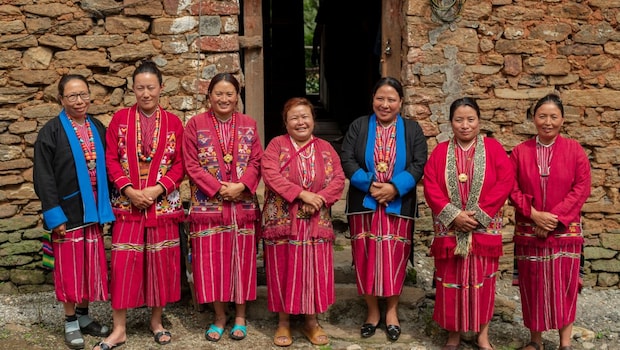
Some meals settle into memory quietly, like a soft echo that lingers long after the plates have been cleared. This one began with the sound of floor mats being arranged at The Kunj in Vasant Vihar, followed by a hint of cinnamon in the air. WWF India had brought the women of Damu's Heritage Dine to Delhi, a community-run dining experience from Arunachal Pradesh's Chug Valley. I had walked in thinking it would be a simple introduction to Monpa food, but the atmosphere suggested something else. The room felt familiar, almost homely, and that early calm shaped the rest of the afternoon. What followed was not a display of regional dishes. It felt like a window into a kitchen shaped by women, land and memory.
Also Read: An Inside Look At Shankar Mahadevan's New Mumbai Restaurant
The Story Behind Damu's Heritage Dine
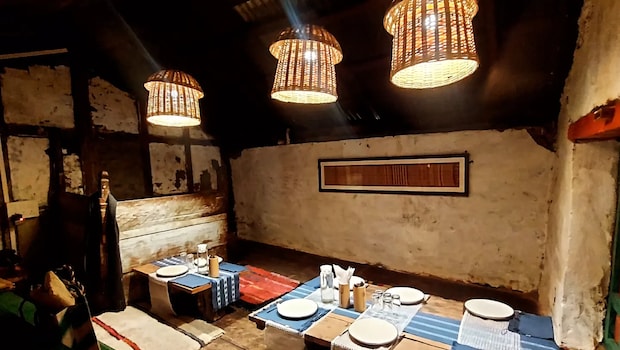
Photo: WWF India
Before the first plate arrived, their background gave the meal its foundation. Damu means daughter in the Monpa language, and Damu's Heritage Dine lives by that meaning. The dining space, set inside a 300-year-old traditional Monpa house in Chug Valley, is run entirely by women. Mothers, daughters, sisters and relatives work together to preserve the everyday cooking traditions of their community. Nothing is embellished for effect. Their food relies on buckwheat, millet, native corn, seasonal greens and long-standing techniques like hand shaping, steaming and slow roasting.
WWF India collaborates with the group through sustainable crop revival and community-led conservation. It supports both the landscape and the food culture it nurtures, making sure that the meals prepared today stay linked to the soil they depend on. This background made the Delhi pop-up feel less like a curated event and more like a temporary extension of their home kitchen.
How Tradition Appeared In The Room
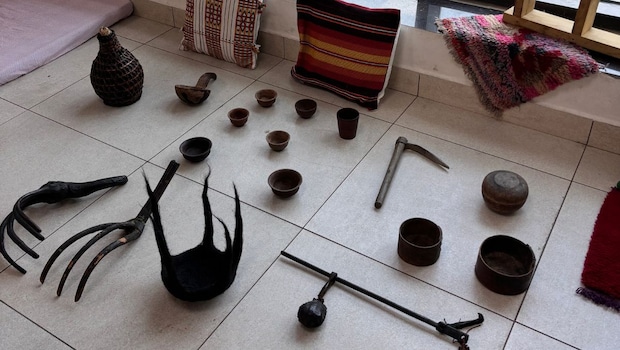
Cultivation and cooking tools used by Monpa tribe.
Photo: WWF India
This connection between land, labour and food played out visually before the tasting even began. One corner displayed traditional Monpa cultivation and cooking tools, quiet reminders that food is rooted in work that often stays unseen. The floor seating added an intimacy that a standard restaurant set-up would never have provided. It shifted the tone immediately. The room felt slower, calmer and deliberate, allowing the women's food to take the lead without interruption or noise.
Freshness And Simplicity On The First Plates
The first plate was unexpectedly bright. A sweet orange salad arrived with popcorn, white rajma and pickled carrot and radish. A sweet chilli oil tied it together without overshadowing the citrus. Alongside came warm apple cinnamon tea with soft apple pieces resting at the bottom. It felt like something handed to you at a family home on a cold evening.
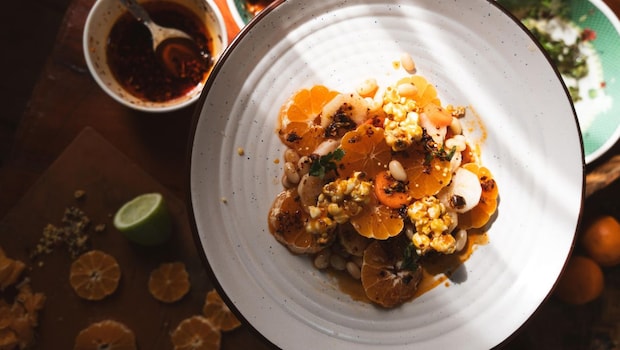
Fresh orange salad
Photo: WWF India
The next dish deepened the story of local grains. Churra gombu, something I had only read about earlier, turned out to be a small masterclass in technique. Coarse corn flour dough was shaped by hand, filled with fresh paneer and roasted slowly over charcoal. The outer layer developed a smoky crust, while the centre stayed soft. It was served with oleoresins from the Chinese lacquer tree, which added a distinctive edge. Every part of it felt close to the land it came from.
The Grain Story Continues With Dumplings
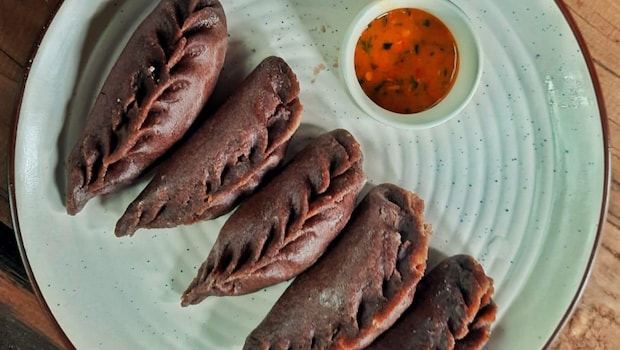
Photo Credit: WWF India
The tasting moved naturally into dishes shaped by buckwheat, a cornerstone of Monpa cuisine. The buckwheat chicken dumplings tasted unmistakably like food from the hills. Their dough was tender, and the filling combined chicken chunks with mustard leaves, water celery, spring onion, ginger and other foraged greens. The freshness of the vegetables made the dumplings feel alive in a way that commercial versions rarely achieve. A warm pumpkin soup followed, mild and garlicky, acting as a pause before the next shift in flavours.
A Balanced Chicken Sando And A Thoughtful Dessert
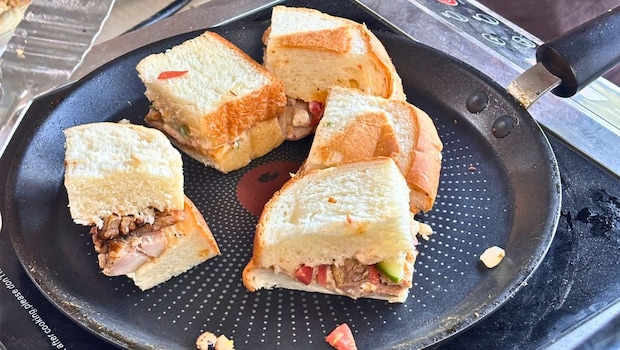
Chicken Sando.
Photo: WWF India
The chicken sando that arrived next carried a simplicity that felt intentional. Soft bread, well-seasoned chicken and a mix of textures made it balanced and satisfying. It felt familiar yet distinct, shaped by the same quiet confidence that had defined the earlier dishes. The buckwheat pancake that followed continued the grain story with an earthy, slightly nutty flavour that was not overly sweet.
The last plate was khapse, a crisp, lightly sweet snack made from amaranthus flour. It resembles nimki but tastes lighter and more celebratory. As people took small bites, the atmosphere of the room shifted into something that felt almost like a hillside afternoon. The women spoke softly amongst themselves, and the flavours made it easy to imagine the valleys they came from.
Why Preserving Monpa Food Matters
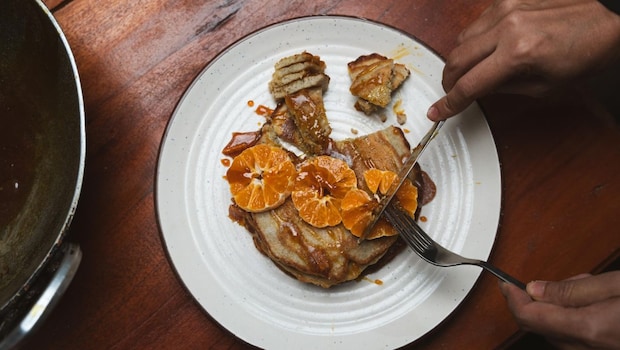
Buckwheat Pancakes.
Photo: WWF India
The entire experience stayed honest and understated. It did not rely on theatrical plating or elaborate descriptions. Instead, it offered a steady reminder that Monpa cuisine is shaped by women who have held on to their culinary identity through daily practice. For them, food is not a performance. It is inheritance, livelihood and memory. WWF India's work simply ensures that the ecological and agricultural systems that support this cuisine remain strong.
For diners in Delhi, this pop-up showed how cultural food heritage lives on. It survives not through museum-like preservation but through kitchens where daughters learn by watching, tasting, repeating and sharing. It continues through hands that roast corn dough slowly, simmer soup gently and pass down knowledge without ceremony. That is why this moment mattered. It allowed Monpa food to speak for itself, one careful serving at a time.