

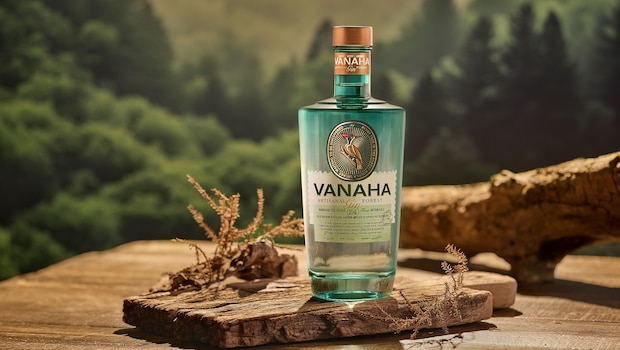
Goa has long been associated with the enjoyment of alcohol. Over the past decade or so, it has also evolved into a creative hub for its production. Today, the state is one of the most popular homes for India's burgeoning craft alcohol industries. Many spirits are tapping into different elements of its geography. While the coast is an obvious source of inspiration, there's also a lot more to Goa. And recently, I had the opportunity to immerse myself in its lesser-frequented side. I travelled away from the beaches and bustle to visit Revelry Distillery in North Goa and learn about a unique gin called Vanaha that is made there.
Rather than presenting itself through its defining flavours or surface-level cues, Vanaha places the emphasis on how it's created: a five-step distillation process designed to handle a wide range of botanicals without flattening their character. The gin features 24 distinctive botanicals, most of which are sourced from different parts of India. They were handpicked by Vaniitha Jaiin, one of the country's leading experts in the spirits industry. She is also touted to be the first woman in India to build and helm her own distillery.
About The Makers Of Vanaha Gin And Founders Of Revelry Distillery
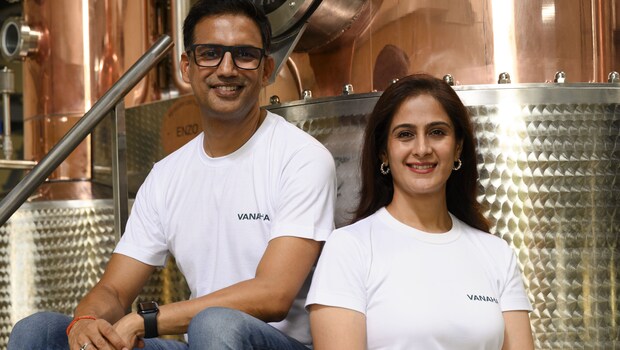
Navvin Jaiin and Vaniitha Jaiin
Revelry Distillery was founded by Vaniitha Jaiin and her husband, Navvin Jaiin. Vaniitha has spent over a decade working closely with wines and spirits as an educator, consultant and international judge. Her work across tastings, education and brand strategy shaped the decision to move from analysing spirits to producing one. Navvin comes from a long career in banking and financial services, with experience in building and scaling businesses, and oversees the operational and strategic side of the distillery.
Revelry Distillery was built from scratch in Sattari, a forested part of North Goa that is quieter and less urbanised than the state's coastal belt. The distillery boasts a 1,000-litre pot still custom-made in Hungary. Heat is derived from electricity rather than from commonly used boilers, which reduces overall water and fuel requirements on-site.
About The Botanicals
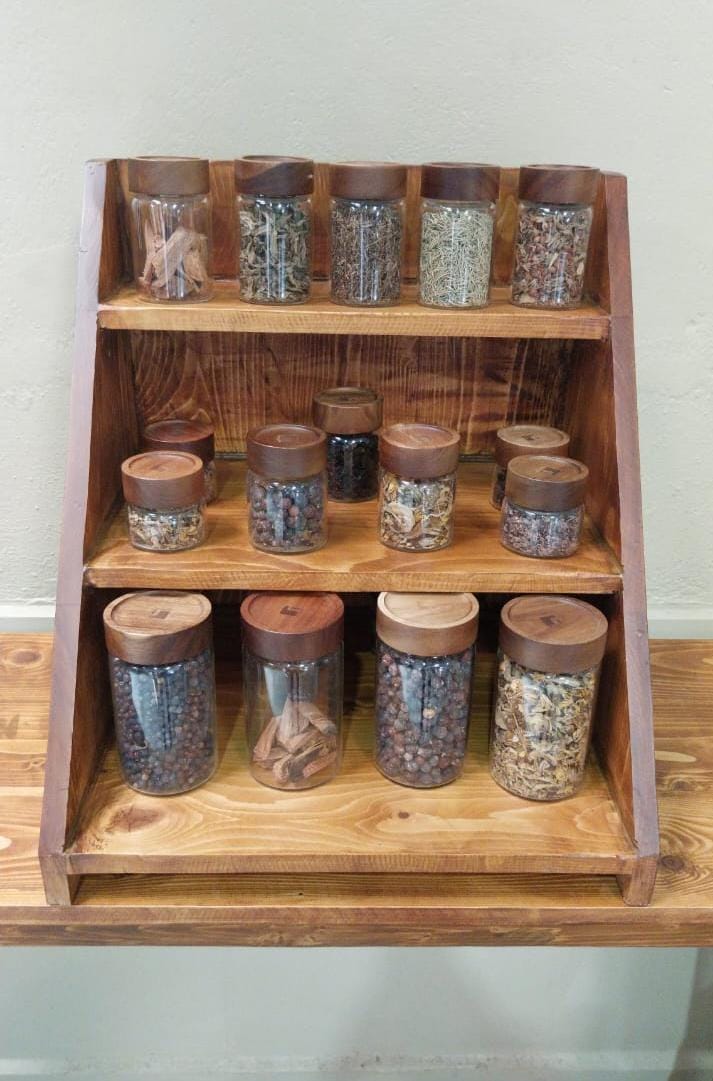
Vanaha botanicals
The creation of Vanaha began with a single idea. Vaniitha Jaiin wanted to "distil a forest in its purest form, with all its layers of depth, mystery and richness." This goal is also reflected in its name, which is a combination of the Sanskrit word "vana" (forest) and "aha" (a moment of realisation). Vaniitha began with a portfolio of 500 possible botanicals, out of which she first sourced and tested 200. Each was individually distilled in small quantities at Revelry's in-house lab, and trials were conducted to identify the ones that worked best. "The character of botanicals alters after they go through the distillation process. What starts out as floral or fresh may change dramatically after being distilled. We wanted to understand and experience that first-hand," Navvin Jaiin explains.
The list of botanicals was then narrowed down to 50 and later to 24. (This is still notable, as the average range for gins worldwide is around 8-12). Only three of Vanaha's botanicals are sourced from outside India: the angelica root, the orris root and one type of juniper berries (from Macedonia). The rest have been carefully selected from different parts of the country: wild lemons from Assam, mandarins from Sikkim, cacao nibs from the Malabar region, Palaash from Jharkhand, a local Sichuan pepper (tirphal) from Goa and a second type of juniper berries from the Himalayas. Vetiver, patchouli, deodar wood and other fascinating elements are also part of the list.
Vaniitha's vision didn't limit the gin to a particular forest or a particular part of India - it ended up celebrating the diversity of landscapes across the country. But this ambitious goal also required technical upgrades and investments beyond the usual. The production of Vanaha follows a particular five-stage process, which no other gin in the world is known to do, claim the founders.
Why Use So Many Methods?
What matters here is not just the number of botanicals, but their variety. Dense roots and woods release flavour very differently from citrus peels or delicate flowers. Treating all of them the same way during distillation can result in some notes overpowering others or disappearing altogether. This challenge is what led to the adoption of multiple extraction techniques within the production process for a single gin.
Using three different distillation techniques in one gin adds complexity to production. Each method requires its own setup and careful monitoring. Technology plays a key role here, with real-time tracking and programmable software helping maintain consistency across batches. Vanaha is described as a 100 per cent natural gin, with no artificial flavours or additives. All of its aromas and notes are derived from its careful distillation.
How The Gin Is Made
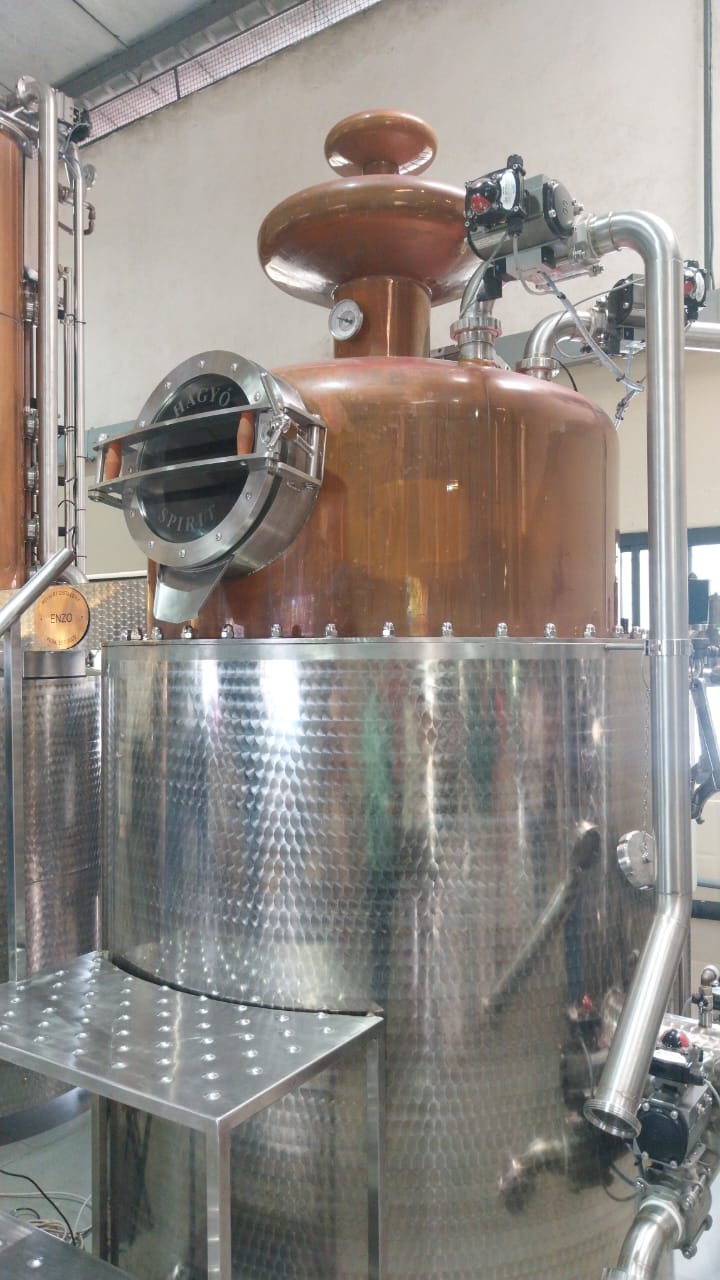
Vanaha copper pot still
The first stage is botanical maceration, where specific botanicals are soaked in base alcohol to draw out heavier flavours. The optimum duration for soaking each botanical varies. An agitator is used to rotate them and ensure a balance. This step is followed by copper pot distillation. The botanicals here are not heated directly: the pot is jacketed, which allows a certain level of refinement and control.
For lighter botanicals, vapour infusion is used. Instead of soaking the ingredients, alcohol vapour passes through them, gently picking up aroma without excessive heat. This technique retains the soft notes of citrus peels, flowers, leaves, etc., which might have ended up being "cooked" in a copper pot. Navvin reveals that the vapours are later condensed using a closed-loop chiller system that cuts down water usage drastically.
Some botanicals are also processed through cold vacuum distillation, a method Vaniitha adopted from the perfumery industry. She spoke to perfumery experts in France and chose to add this step because she wanted the top notes that were delicately aromatic. This technique, which allows distillation at lower temperatures, helps preserve those notes and also improves overall texture.
The final step, called staging, brings together the different distillates at a low temperature. Demineralised water is used for gradual dilution to reduce the ABV to the required level and create a more balanced spirit before bottling.
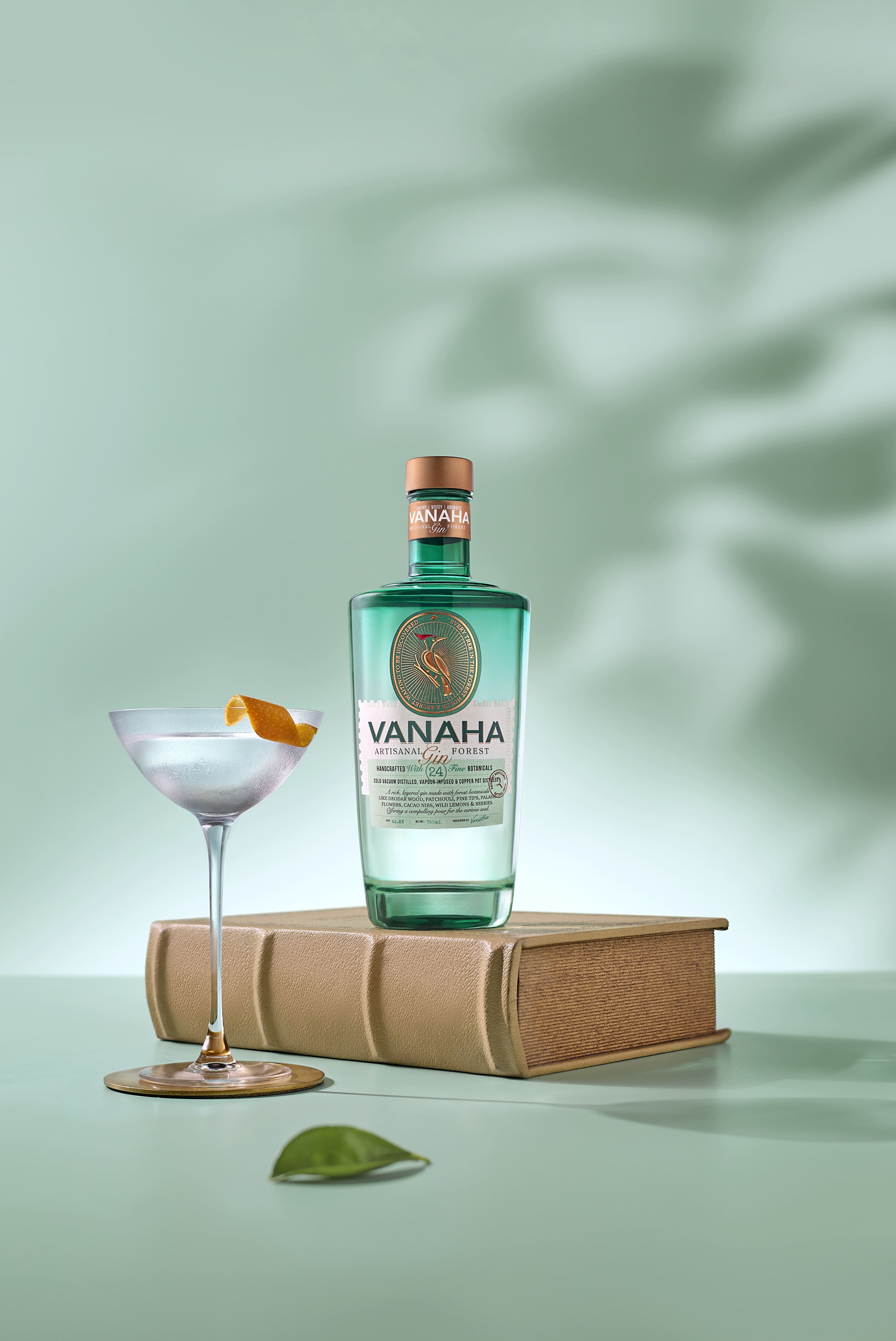
Photo Credit: Vanaha gin
Recognition Focused On Process
Within months of its launch, Vanaha received several international awards, including recognition from the Spirits Business Global Gin Masters, IWSC and the Global Wine & Spirits Awards Asia. It was also shortlisted as a finalist for Innovation in Production at the Spirits Business Awards 2025.
Conclusion
One of the best things I love about Goa is that it can always surprise you... You have to just open yourself up to exploration beyond the widespread stereotypes. While Vanaha is an ode to forests across India, I also felt that it is only fitting that its story began in Goa. This gin is about leisure, but not the kind defined by excess or haste. It's about the susegaad of the moments you spend sipping it and appreciating its intricacies. And those intricacies are a result of innovative R&D and production methods that make this gin one of its kind in India, and perhaps even globally.
[Vanaha is currently available in Goa and Madhya Pradesh]