





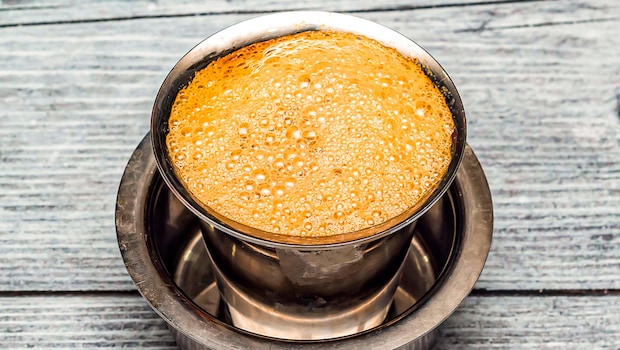
There is a particular kind of magic that happens in South Indian homes every morning. Before the sun is fully up, before anyone has properly woken up, the kitchen is already doing its thing. A steel filter sits on the counter, quietly dripping. The smell of roasted coffee and chicory curls through the corridor and reaches every corner of the house. By the time you shuffle into the kitchen in your half-asleep state, someone is already pouring a frothy stream of deep brown liquid from tumbler to dabara and back again. That is not just coffee. That is filter kaapi, and it has been the heartbeat of South Indian mornings for over three centuries.











The Man Who Smuggled Seven Seeds
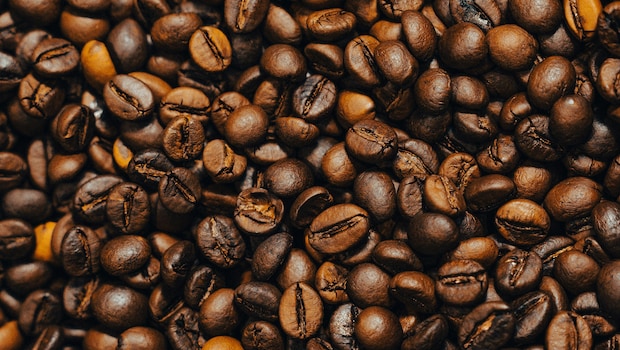
To understand filter kaapi, we must return to the 17th century and meet Sufi saint Baba Budan. The story of South Indian filter coffee begins with Baba Budan smuggling seven coffee seeds from Yemen to India, planting them in Chikmagalur, Karnataka, the birthplace of Indian coffee cultivation. The choice of seven seeds was strategic, as the Arab world held a monopoly on coffee, making the export of fertile, unroasted beans illegal. Baba Budan reportedly hid the seeds on his belly to escape Mocha. These seeds led to India's first coffee plantations, embedding coffee in South Indian culture. Chikmagalur, in the Western Ghats at 1,000 metres, offered ideal conditions: cool weather, misty mornings, and rich soil. Coffee spread from Chikmagalur to Tamil Nadu and Kerala, following the Western Ghats. The British, recognising its potential, expanded plantations, making South India a major coffee-growing region by the 19th century.
Also Read: Vikas Khanna Introduced Odia Street Food At His NY Restaurant, And It Sold Out Within Hours
How Coffee Went from the Plantation to the Kitchen

Here is something worth noting: coffee coming to India and Indians actually drinking coffee at home are two very different chapters of the story. For a long time, most of the coffee grown in India was exported. The local population, particularly in the South, largely drank tea or traditional herbal preparations. So what changed?
A lot of it had to do with the Indian Coffee House movement. The Coffee Board of India, set up in the 1940s, actively worked to popularise coffee drinking among Indians by opening coffee houses across the country. These became social spaces, particularly for students, writers, politicians and intellectuals. In the South, coffee houses became almost cultural institutions. The habit stuck. And when people started replicating that experience at home, the domestic coffee ritual was born.
But the South Indian kitchen did not just adopt coffee. It transformed it. It slowed it down, personalised it, gave it ritual. The result was filter kaapi as we know it.
The Device That Changed Everything: The Filter
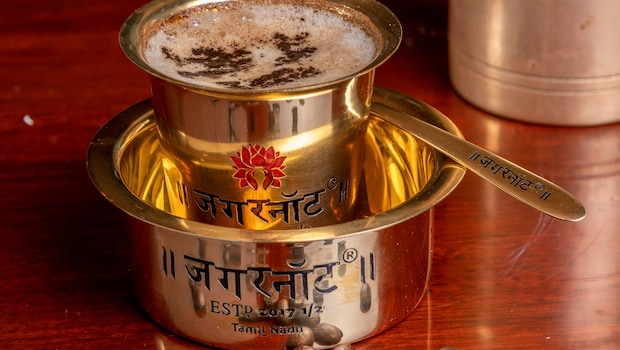
Filter coffee, unlike instant, is slow-brewed using a metal filter, distinct from the French press or pour-over. The South Indian coffee filter is a simple two-part stainless steel device: the upper chamber holds coffee powder with a perforated disc, and hot water is poured in. Gravity allows the thick, aromatic decoction to drip into the lower chamber over ten to fifteen minutes, resisting any rush. This method yields a unique coffee, intensely concentrated and deeply flavoured, akin to an espresso but smoother, lacking acidity or bitterness. Typically, it blends Arabica and Robusta beans with chicory for a bold, nutty taste.
The Chicory Question
Chicory, a plant with roots that produce a deep, earthy powder, was added to coffee for its cost-saving benefits during the British colonial era. It was cheaper and locally available than coffee, allowing blends to maintain flavour while reducing costs. Many believe chicory enhances coffee with a fuller body and rounder bitterness. Over time, this blend became the standard in South Indian filter coffee, with most blends containing 20 to 40 percent chicory, where the ratio is crucial for balance.
Also Read: 6 Clever Ways To Use Pomegranate Peels In Everyday Cooking
The Dabara-Tumbler Ritual
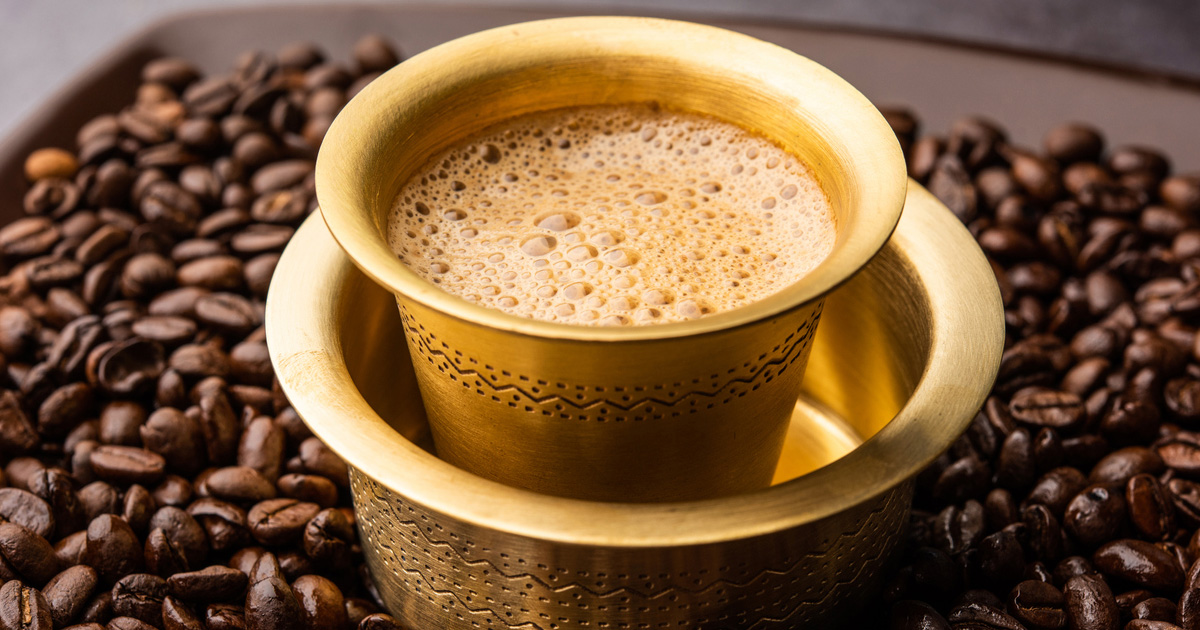
Now we get to the most theatrical part of the whole process: the pour. Filter coffee is served in a unique dabara set, a steel tumbler and bowl duo that keeps the coffee hot and allows for aerating it by skillfully pouring it back and forth. Watching the frothy liquid cascade from tumbler to bowl is mesmerising, a small yet elegant dance that turns coffee preparation into an art form.
The dabara and tumbler are almost always steel, not ceramic. Steel keeps the coffee hotter for longer. The wide base of the dabara gives you more surface area to cool the drink slightly if it is too hot, while the tumbler keeps the rest warm. The repeated pouring, sometimes done from a considerable height (which is its own kind of South Indian street performance), aerates the coffee and builds that signature froth on top.
This froth is not decorative. It signals that the coffee has been made properly. A kaapi without foam is a kaapi made in a hurry.
Kumbakonam Degree Coffee: A Special Mention
You cannot write about filter kaapi without pausing at Kumbakonam. This town in Tamil Nadu has become synonymous with a particular style of filter coffee known as "degree coffee," and it has a devoted following that borders on religious.
The name "degree" is said to come from the use of a lactometer, a device used to measure the purity of milk, historically calibrated in degrees. Kumbakonam degree coffee uses only full-fat, undiluted buffalo milk, no adulteration, no skimmed milk, no compromises. The result is a richer, creamier, more indulgent cup that has made Kumbakonam a coffee pilgrimage destination for anyone serious about their kaapi.
The town's coffee shops, often small and unassuming, have been serving the same recipe for generations. Regulars know their order before they walk in, and the kaapi arrives practically before they sit down.
The Art of Making Filter Kaapi at Home
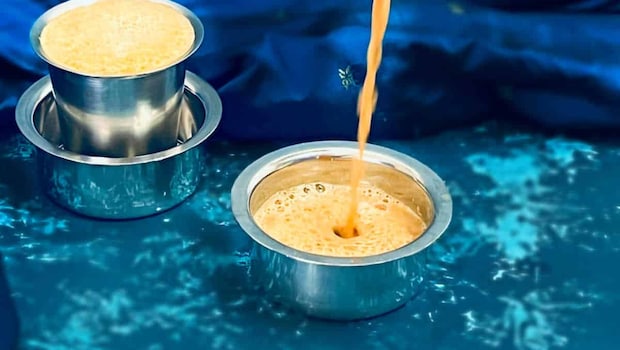
So, how exactly do you make filter kaapi from scratch? The steps are simple, but each one matters:
Step 1: Brew the decoction. Add two tablespoons of South Indian coffee powder to the upper chamber of the filter. Press it down gently with the perforated disc. Pour hot water over it, cover the filter, and let it drip. This takes 10 to 15 minutes. Be patient.
Step 2: Heat the milk. While the decoction drips, heat the whole milk (ideally full-fat) until it is just about to boil. Use a frother or whisk to create a light, creamy foam.
Step 3: Assemble. Pour two to three tablespoons of decoction into your tumbler. Add sugar to taste, then pour the hot milk in.
Step 4: The pour. Aerate the coffee by pouring it back and forth between the tumbler and bowl to create a velvety foam. This is also how you cool it to just the right drinking temperature.
Step 5: Serve hot. Ideally, in a steel dabara set. Ideally, with a small plate of biscuits or something savoury. Ideally, without anyone rushing you.
Why Filter Kaapi Feels Different
For those with South Indian roots, coffee is more than a drink; it's an emotion and a symbol of hospitality. The rich aroma of filter coffee signals a new day, a shared experience across Tamil Nadu, Karnataka, Andhra Pradesh, Kerala, and Telangana. Filter kaapi is integral to South Indian life, offered to guests before they sit, making them feel at home. Grandparents insist on making it from scratch, even with instant coffee available. In South Indian households, filter coffee is a welcoming gesture, steeped in tradition, emphasising relationships and community, unlike other coffee styles focused on technique or precision.
A Drink That Has Stood Its Ground
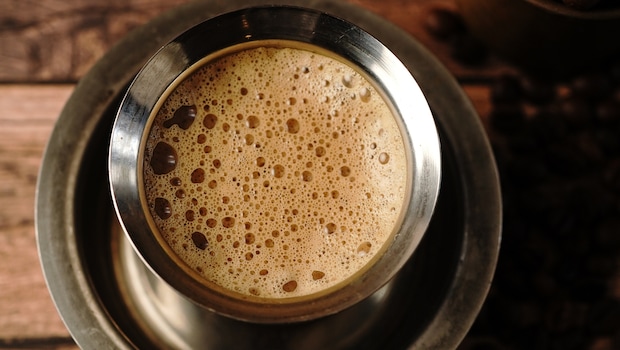
India's coffee culture has evolved with speciality cafes and trendy drinks like cold brew. Yet, filter kaapi thrives, gaining new fans globally and locally. It remains unchanged, proudly dripping as always, appreciated anew by those who grew up with it, now making it at home.
Also Read: Which City Is Known As The Samosa Capital Of India?
A Sip Worth Slowing Down For
Filter kaapi's story is ultimately a story about how a culture adopts something foreign and makes it entirely its own. Seven smuggled seeds became a plantation industry. Colonial-era cost-cutting with chicory became a beloved flavour signature. A simple steel device became the centrepiece of a morning ritual that has outlasted empires. In a world obsessed with fast coffee and fleeting moments, filter coffee invites us to slow down, savour, and connect. That invitation, offered in the form of a frothy, steaming tumbler, is one that South India has been extending for centuries. And honestly, there are very few reasons to say no.