




 Should Machines Decide Who Lives And Dies In A War? Ex-CIA Chief Answers
 Kriti Sanon Says Instagram Has No Option To Report AI-Generated Images Of Her
 What Anthropic, Monks And The Cusp Of Consciousness Teach About Tomorrow
 Nikhil Kamath's Big AI Bet: Why India Should Look Beyond Silicon Valley
 When Will India Get Its Own Apple, Samsung? Ashwini Vaishnaw Reveals Timeline
 Neeru Saini On Fitness, Focus & Her Love for Churma!
 NDTV Lifeline- Himanshu Saini on the Secret to Eating Well: More Greens, Healthier Desserts
 Hockey Champions Savita Punia & Neha Goel on Fitness, Recovery & The Meaning of Health
 Millets: The Superfood That's Good for You and the Planet
 Yoga, Millets, Vaccines: S Jaishankar On How India Is Building Stronger Ties | NDTV World Summit
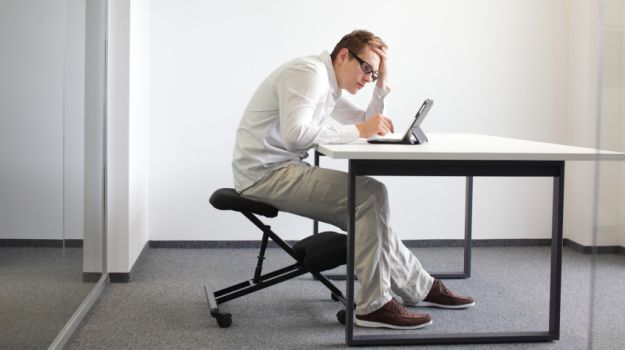
"Limiting the amount of time we spend sitting may be as important as the amount we exercise," said study lead author Stephanie Prince from University of Ottawa in Canada.
"Sitting, watching TV, working at a computer and driving in a car are all sedentary behaviours and we need to take breaks from them," Prince explained.
Previous research has shown that being sedentary increases the risk of cardiovascular disease but until now its effect on patients with established heart disease was unknown. The current study investigated levels of sedentary behaviour and the effect on health in 278 patients with coronary artery disease.
The patients had been through a cardiac rehabilitation programme which taught them how to improve their levels of exercise in the long term. Patients wore an activity monitor during their waking hours for nine days. The monitors allowed the researchers to measure how long patients spent being sedentary, or doing light, moderate or vigorous levels of physical activity.
The researchers also assessed various markers of health including body mass index (BMI) and cardio-respiratory fitness. Next they looked at whether the amount of time a person spent being sedentary (which was mainly sitting) was related to these markers of health. The results showed that patients who sat more had a higher BMI. They also had lower cardio-respiratory fitness.
The study was published in the European Journal of Cardiovascular Prevention.Inputs from IANS