

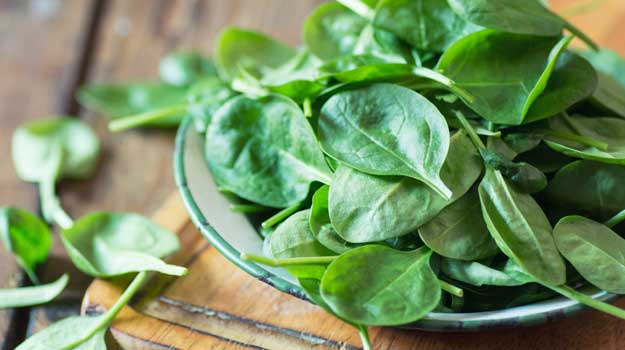
A new study has found that spinach which is rich in nitrates can boost sports performance particularly at high altitudes with low oxygen conditions.
Further, to assess differences in performance in different conditions, they included workouts in normal oxygen conditions and in hypoxia conditions, which are low oxygen levels such as those found in high altitudes. After five weeks, the muscle fibre composition changed with the enhanced nitrate intake when training in low oxygen conditions."This is probably the first study to demonstrate that a simple nutritional supplementation strategy, i.e. oral nitrate intake, can impact on training-induced changes in muscle fibre composition," said Peter Hespel, Professor at the University of Leuven.Athletes participating in sports competitions require energy production in conditions with limited amounts of oxygen.In these conditions, performing intense workouts requires high input of fast-oxidative muscle fibres to sustain the power. Enhancing these muscle fibre types through nutritional intake could very well boost the performance, the study said. "It would now be interesting to investigate whether addition of nitrate-rich vegetables to the normal daily sports diet of athletes could facilitate training-induced muscle fibre type transitions and maybe in the long term also exercise performance," Hespel said. The observations were published in the journal Frontiers in Physiology.
(This story has not been edited by NDTV staff and is auto-generated from a syndicated feed.)

 AI Law In India Soon? What Ashwini Vaishnaw Said At NDTV World Summit
 Eline van der Velden At NDTV Summit: AI Film Industry Will Create More Jobs
 'Delhi vs Mumbai? World's First AI Actress Picks 'Chaos' At NDTV World Summit
 Superintelligent AI Could Be A Year Away: Ex-Google DeepMind Researcher
 'Threat Very Real To India': Microsoft AI Expert At NDTV World Summit
 AI Law In India Soon? What Ashwini Vaishnaw Said At NDTV World Summit
 World's 1st AI Actor Tilly Norwood Was Asked If She Knew Hindi. A Conversation Followed
 Iran's Supreme Leader's Representative Says India Can Play 'Big Role' In Middle East Peace
 Palestine Ambassador Accuses Netanyahu Of Supported Hamas, Blocking Two-State Solution
 Palestine Ambassador On Conflict With Israel: "It's A Genocide"
Further, to assess differences in performance in different conditions, they included workouts in normal oxygen conditions and in hypoxia conditions, which are low oxygen levels such as those found in high altitudes. After five weeks, the muscle fibre composition changed with the enhanced nitrate intake when training in low oxygen conditions."This is probably the first study to demonstrate that a simple nutritional supplementation strategy, i.e. oral nitrate intake, can impact on training-induced changes in muscle fibre composition," said Peter Hespel, Professor at the University of Leuven.Athletes participating in sports competitions require energy production in conditions with limited amounts of oxygen.In these conditions, performing intense workouts requires high input of fast-oxidative muscle fibres to sustain the power. Enhancing these muscle fibre types through nutritional intake could very well boost the performance, the study said. "It would now be interesting to investigate whether addition of nitrate-rich vegetables to the normal daily sports diet of athletes could facilitate training-induced muscle fibre type transitions and maybe in the long term also exercise performance," Hespel said. The observations were published in the journal Frontiers in Physiology.
(This story has not been edited by NDTV staff and is auto-generated from a syndicated feed.)