






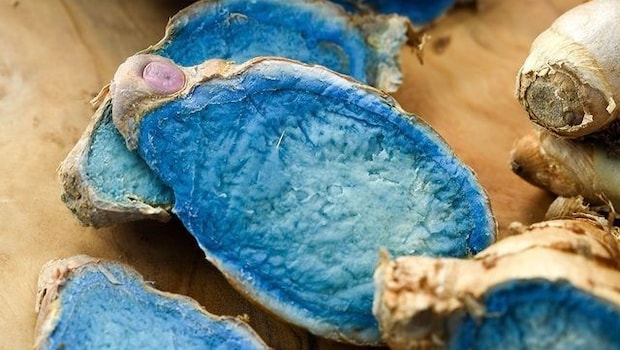
Turmeric, the vibrant yellow-orange spice derived from the Curcuma longa plant root, has long been a staple in Indian kitchens. Known for its antimicrobial and antioxidant properties, it contains a primary compound, curcumin, that supports skin health, immunity, digestion and heart health. But do you know about India's rare blue turmeric? Naturally bluish-purple at the centre, it is an Ayurvedic herb derived from the plant Curcuma caesia, also called black turmeric.
Also Read: Masque In Mumbai Wins The Art Of Hospitality Award 2026
Where Is Blue Turmeric Grown?

Widely used in Ayurveda and home remedies, blue turmeric is mainly grown in parts of Kerala, Tamil Nadu, Andhra Pradesh, Odisha and the Northeast, where the soil composition and climate are suitable.
In terms of appearance, blue turmeric looks different from regular turmeric because the inside of the root is dark or bluish-black rather than bright yellow. It has a stronger aroma and a bitter, camphor-like taste, which makes it less suitable for cooking.
Health Benefits And Uses Of Blue Turmeric
Blue turmeric offers a range of health benefits, which are as follows:
1. Anti-ageing properties
Blue turmeric is an innovative source of catechins, according to a study titled "Blue elixir of youth and wellness: The multicomponent-multitarget paradigm of Curcuma caesia Roxb." This novel antioxidant is believed to delay UVB-induced ageing in HaCat Cells.
Inflammation and joint discomfort
The study also states that blue turmeric has inflammatory, antibacterial, and anticancer properties, which is why it is used in making herbal medicines, cosmetics, essential oils and health supplements. Hence, blue turmeric is used for swelling, minor injuries and joint discomfort.
Prevents Diabetes
According to a study titled “Curcumin and Diabetes: A Systematic Review”, this also helps in preventing diabetes, including insulin resistance, hyperglycemia, hyperlipidemia and islet apoptosis and necrosis.
Respiratory health
“In traditional medicine, blue turmeric is used to support respiratory health and is sometimes given for cough, asthma, and congestion. Blue turmeric is also believed to help improve digestion by reducing gas and stomach discomfort,” Edwina Raj, Head of Services – Clinical Nutrition & Dietetics, Aster CMI Hospital, Bangalore, told the Indian Express.
Precautionary Steps For Blue Turmeric
According to experts, blue turmeric should be consumed in 1–2 grams per serving and should not be used as a regular kitchen spice. Additionally, consumption should be under proper medical guidance, especially for pregnant women or people with underlying health conditions.