




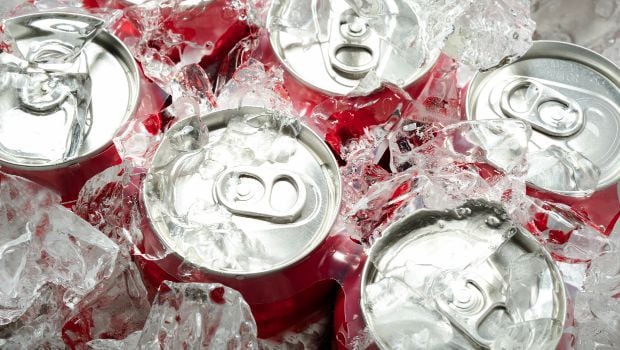
The U.N. health agency on Tuesday recommended that countries use tax policy to increase the price of sugary drinks like sodas, sport drinks and even 100-percent fruit juices as a way to fight obesity, diabetes and tooth decay.
Drawing on lessons from campaigns to fight tobacco use, WHO says imposing or increasing taxes on sugary drinks could help lower consumption of sugars, bringing health benefits and more income for governments such as to pay for health services. The health agency has long recommended that people keep intake of sugar to less than 10 percent of their total energy needs."Consumption of free sugars, including products like sugary drinks, is a major factor in the global increase of people suffering from obesity and diabetes," says Dr. Douglas Bettcher, who heads WHO's department for preventing non-communicable diseases. "If governments tax products like sugary drinks, they can reduce suffering and save lives."The World Health Organization receives funding from Bloomberg Philanthropies, which supports raising taxes on sugary drinks to reduce consumption.The International Council of Beverages Associations, which represents Coke and Pepsi, said in a statement that it is disappointed that the "discriminatory taxation solely of certain beverages" is being proposed as a solution to the "very real and complex challenge of obesity."WHO officials say that the U.S. is no longer the leading consumer of sugar-sweetened beverages — Chile and Mexico are now in front. They also noted rapid increase in consumption in China and sub-Saharan Africa. At least three in five adolescents in countries including Chile, Argentina and Algeria consume soft drinks daily, compared with 20 to 40 percent in the U.S. and much of Europe."Taxation policies can be a very important tool — just one tool among many — but a very important tool for the reduction of sugar-sweetened beverages," said Dr. Francesco Branca, who heads WHO's Department for Nutrition and Health. He pointed to "pioneering" efforts by Michael Bloomberg, during his time as mayor of New York, and other U.S. officials to reduce sugar consumption.The report was based on information collected in May last year, but WHO is coming forward with its recommendation on Tuesday because the evidence of the link between tax policy and reduced consumption coupled with health benefits has only recently emerged, said Temo Waqanivalu, coordinator of WHO's department for the prevention of non-communicable diseases.Waqanivalu said that "discussion is ongoing" with companies behind such beverages on efforts to reduce sugar consumption.(This story has not been edited by NDTV staff and is auto-generated from a syndicated feed.)

 Should Machines Decide Who Lives And Dies In A War? Ex-CIA Chief Answers
 Kriti Sanon Says Instagram Has No Option To Report AI-Generated Images Of Her
 What Anthropic, Monks And The Cusp Of Consciousness Teach About Tomorrow
 Nikhil Kamath's Big AI Bet: Why India Should Look Beyond Silicon Valley
 When Will India Get Its Own Apple, Samsung? Ashwini Vaishnaw Reveals Timeline
 Neeru Saini On Fitness, Focus & Her Love for Churma!
 NDTV Lifeline- Himanshu Saini on the Secret to Eating Well: More Greens, Healthier Desserts
 Hockey Champions Savita Punia & Neha Goel on Fitness, Recovery & The Meaning of Health
 Millets: The Superfood That's Good for You and the Planet
 Yoga, Millets, Vaccines: S Jaishankar On How India Is Building Stronger Ties | NDTV World Summit
Drawing on lessons from campaigns to fight tobacco use, WHO says imposing or increasing taxes on sugary drinks could help lower consumption of sugars, bringing health benefits and more income for governments such as to pay for health services. The health agency has long recommended that people keep intake of sugar to less than 10 percent of their total energy needs."Consumption of free sugars, including products like sugary drinks, is a major factor in the global increase of people suffering from obesity and diabetes," says Dr. Douglas Bettcher, who heads WHO's department for preventing non-communicable diseases. "If governments tax products like sugary drinks, they can reduce suffering and save lives."The World Health Organization receives funding from Bloomberg Philanthropies, which supports raising taxes on sugary drinks to reduce consumption.The International Council of Beverages Associations, which represents Coke and Pepsi, said in a statement that it is disappointed that the "discriminatory taxation solely of certain beverages" is being proposed as a solution to the "very real and complex challenge of obesity."WHO officials say that the U.S. is no longer the leading consumer of sugar-sweetened beverages — Chile and Mexico are now in front. They also noted rapid increase in consumption in China and sub-Saharan Africa. At least three in five adolescents in countries including Chile, Argentina and Algeria consume soft drinks daily, compared with 20 to 40 percent in the U.S. and much of Europe."Taxation policies can be a very important tool — just one tool among many — but a very important tool for the reduction of sugar-sweetened beverages," said Dr. Francesco Branca, who heads WHO's Department for Nutrition and Health. He pointed to "pioneering" efforts by Michael Bloomberg, during his time as mayor of New York, and other U.S. officials to reduce sugar consumption.The report was based on information collected in May last year, but WHO is coming forward with its recommendation on Tuesday because the evidence of the link between tax policy and reduced consumption coupled with health benefits has only recently emerged, said Temo Waqanivalu, coordinator of WHO's department for the prevention of non-communicable diseases.Waqanivalu said that "discussion is ongoing" with companies behind such beverages on efforts to reduce sugar consumption.(This story has not been edited by NDTV staff and is auto-generated from a syndicated feed.)