





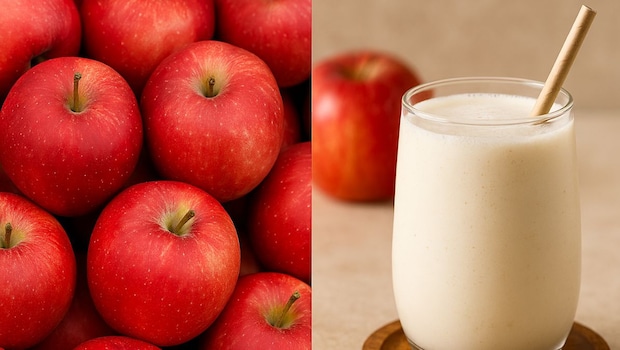
When it comes to gut health, even the simplest food choices can have surprising effects. Many of us enjoy apples as a light snack and milkshakes as a comforting treat, but are they really compatible with each other? Ayurvedic wisdom has long maintained that certain food combinations can either support digestion or disrupt it completely. Recently, Ayurvedic health coach Dimple Jangda explained on her Instagram why pairing apples with milk may not be as harmless as it seems. Her insights highlight how the qualities of these two foods influence digestion and long term wellbeing. If you have ever wondered whether an apple milkshake is good for your stomach, here is what Ayurveda has to say.
Also Read: Best Apples For Your Dessert: Complete Guide With 3 Recipes For Perfect Baking
Understanding Ayurveda's View: Rasa, Virya, Vipaka and Guna
Ayurveda evaluates food through four important concepts known as rasa, virya, vipaka and guna. Rasa refers to the taste of a food item. Virya describes whether the food produces heating or cooling energy in the body. Vipaka is the post digestive effect that influences metabolism. Guna explains the inherent quality of the food such as whether it is heavy or light in nature. According to Dimple Jangda, understanding these four factors helps us recognise how certain combinations may work against our digestive system.
Why Apple And Milk Behave Differently In The Body
Although apple feels refreshing, it is actually heating in nature and has a sour and astringent taste. Milk is sweet and cooling, which means its properties are the complete opposite of apples. Guna also plays a major role because apples are light and break down quickly with the help of salivary amylase in the mouth. Milk, however, is heavy and contains complex proteins like lactase and casein. These need far more time within the stomach and intestines to digest properly.
Once milk reaches the stomach, it reacts with hydrochloric acid and curdles, creating a semi solid mass that digests slowly. This is a natural process and supports the gradual breakdown of protein. When apples are added to milk, the citric and malic acids present in the fruit speed up the curdling process unnaturally. This leads to the formation of an undigested residue that the body struggles to process.
What Happens In The Gut When You Mix Apple With Milk
Because apple digests faster than milk, its simple sugars begin to ferment and move into the small intestine early. Milk, on the other hand, remains in the stomach for a longer period. This mismatch in digestive timing creates discomfort and symptoms such as bloating, gas and flatulence. If consumed repeatedly, this wrong food combination can slow down digestion and suppress metabolic fire. According to Dimple Jangda, it may also increase mucus formation and contribute to issues like cough, cold, sinus congestion and even certain skin reactions.
Even though some people may not feel immediate discomfort after having an apple milkshake, the long term effects may include sluggish digestion and delayed gastric emptying. Ayurveda suggests that harmony in food combinations is essential for a healthy gut, and apples mixed with milk does not offer that harmony.
Take a look at the post below:
So Which One Is Better For Gut Health
From an Ayurvedic perspective, consuming apple and milk separately is far more beneficial than blending them together. An apple eaten on its own provides fibre, natural sugars and heat that stimulate digestion gently. Milk consumed alone nourishes the body and cools the system while offering protein and healthy fats. Together, however, their opposing qualities create confusion within the digestive tract.
Also Read: Why Are Black Diamond Apples - The Most Expensive Variety - Good For You
Whether you prefer apples or milk, having them at different times ensures smooth digestion and better gut health. Ayurveda reminds us that the right combination matters as much as the food itself, and separating apples from milk is a simple choice that can support long term wellness.