




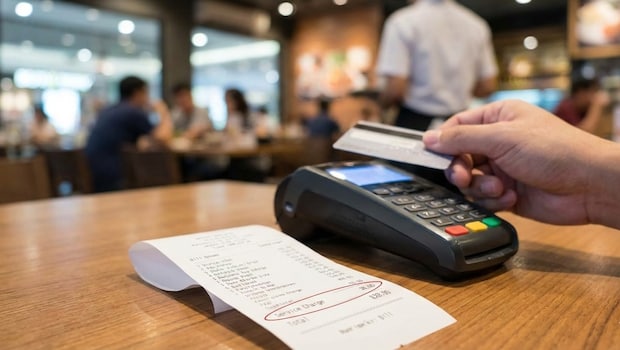
Service charges on restaurant bills are back in the spotlight after a Mumbai restaurant was penalised for adding the fee by default. The action has once again raised questions many diners still have: is service charge compulsory, and can a restaurant insist on it? Despite clear consumer protection guidelines, confusion remains, and many customers continue to pay the extra amount simply to avoid an argument at the counter. The Central Consumer Protection Authority (CCPA) has clearly stated that service charges cannot be added automatically and must always remain optional. For diners, this distinction is important. Here's what the law says, what restaurants can and cannot do, and what diners should know before paying the bill.
What Exactly Is A Service Charge?

Photo Credit: Unsplash
A service charge is an amount added by a restaurant for the service provided by its staff. It is not a tax, and it is not imposed by the government. Unlike GST, which is mandatory and regulated by law, a service charge is meant to be voluntary and linked to a customer's discretion, similar to a tip. The problem arises when restaurants add this charge automatically, making it appear compulsory.
Why the CCPA Stepped In
According to the CCPA, it received a large number of complaints through the National Consumer Helpline from diners who were charged a service fee by default, without being informed that it was optional. The authority observed that:
- Service charges were often added automatically to bills
- They were sometimes disguised under different names
- Customers were pressured to pay or denied service if they objected
- GST was being levied on top of the service charge
The CCPA concluded that these practices amount to unfair trade practices under the Consumer Protection Act, 2019.
Also Read: New GST Rates: How Much Will You Save On Your Next Restaurant Bill?
The Core Principles Behind The Guidelines
The guidelines are built on one simple idea: The price listed on the menu already includes the basic cost of service. When a customer places an order, they are agreeing to pay the menu price of the food and beverages, as well as applicable government taxes (like GST). Charging anything beyond this (without explicit, voluntary consent) is considered unfair under consumer law.

Photo Credit: Unsplash
The CCPA explained, "Only after completing the meal, a consumer is in a position to assess the quality and service and decide whether or not to pay tip or gratuity and if so, how much. The decision to pay tip or gratuity by a consumer does not arise merely by entering the restaurant or placing an order. Therefore, service charge cannot be added in the bill involuntarily, without allowing consumers the choice or discretion to decide whether they want to pay such a charge or not."
What Restaurants Are NOT Allowed to Do
Under the CCPA guidelines, restaurants and food establishments cannot:
- Add a service charge automatically or by default to the bill
- Collect service charge under any other name
- Force or pressure a customer to pay it
- Deny entry or service if a customer refuses to pay
- Add the service charge to the bill and then levy GST on the total amount
In short, if a service charge appears on your bill without your clear agreement, it is not allowed.
What Restaurants ARE Allowed to Do
Restaurants may still accept voluntary tips or gratuities. Establishments need to clearly inform customers that a service charge is optional, by allowing them to decide whether or not to pay it, and how much. Restaurants can build service costs into the menu prices themselves, instead of adding a separate charge. The key requirement is choice: the decision to pay any additional amount must rest with the customer.
Also Read: This Pune Restaurant Charges Extra For Wasting Food, Sparks Online Debate
The Bora Bora Case: How the Rules Are Being Enforced
The enforcement of these rules became evident in a recent case involving a Mumbai restaurant called Bora Bora, where the CCPA imposed a penalty on the restaurant operator. The restaurant added a 10% service charge by default to customer bills. The billing system was set up so the charge appeared automatically, as per reports. GST was also levied on the service charge. When a customer objected, the charge was initially not removed. Following a consumer complaint, the CCPA investigated and found the practice to be in direct violation of its 2022 guidelines.
The restaurant operator was fined Rs 50,000, and directions were issued to stop adding a service charge by default. The establishment was also asked to fix its billing system and grievance redressal process. This case made it clear that the guidelines are not merely advisory; they are enforceable.

Photo Credit: Unsplash
What Customers Can Do If A Service Charge Is Added
If you notice a service charge on your bill that you did not agree to, you can:
- Ask the restaurant staff to remove it from the bill
- Request a revised bill without the service charge
- If refused, file a complaint via:
- National Consumer Helpline (1915)
- The e-Daakhil consumer portal
- The District Collector or the CCPA directly
The law is clear: refusing to pay a service charge cannot be grounds to deny service or create pressure.
In short, service charges are not mandatory at restaurants in India. Recent enforcement suggests that consumer complaints do make a difference, and diners are well within their rights to question charges that go beyond the menu price and applicable taxes.