



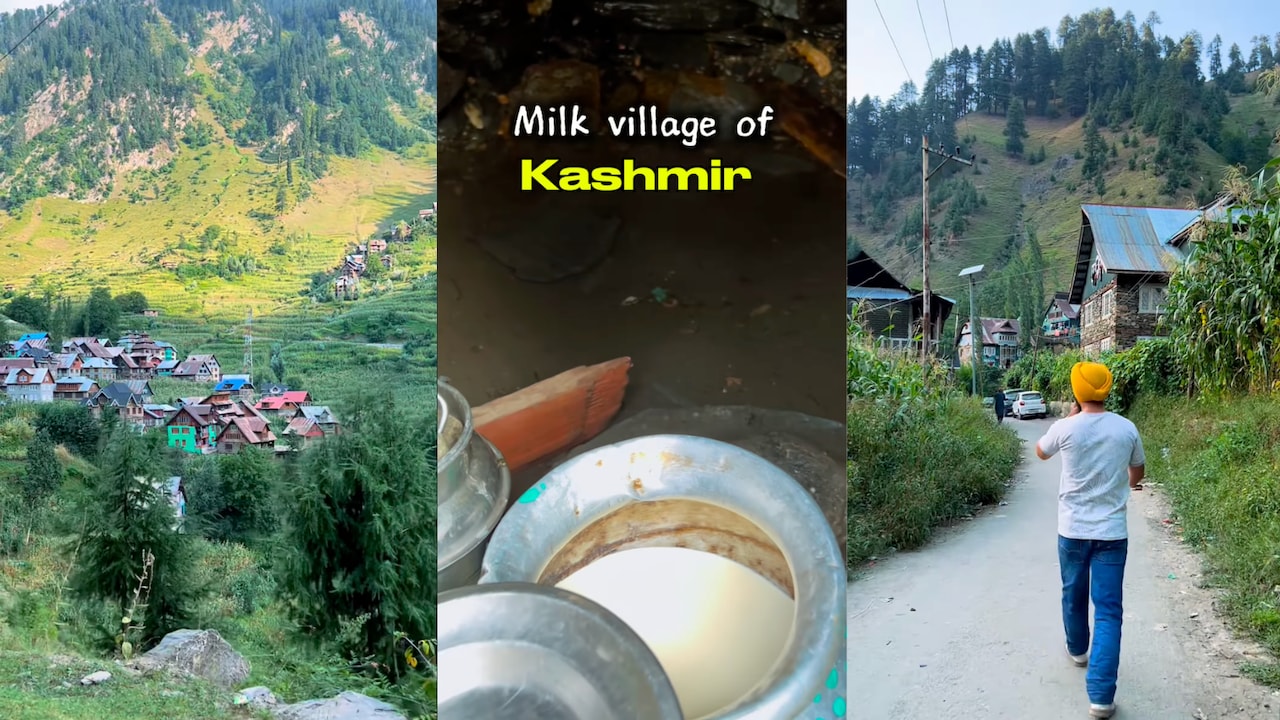
Deep in the forests and mountains of Kashmir, there is a village where locals preserve milk without using a refrigerator or electricity. Dudran, also known as the Milk Village, has kept this old method alive for generations.
The remote village has nearly 70 families, who continue to use the cold natural conditions around them to keep milk fresh for days. A content creator recently visited Dudran and got a look at this unusual way of life.
A local explained that the milk can be stored for 10 to 20 days, during which it freezes because of the cold weather. The stored milk is later used to make ghee, yoghurt and paneer.
Also Read: Kashmir Food, Culture Festival in City
On Instagram, the creator explained, “Did you know there's a village in Kashmir where people still don't use refrigerators to store milk and yoghurt? The name of this village is Duddaran, located in the Boniyar area of Baramulla district. The lifestyle here feels very different from modern cities. People here still live closely connected to nature and these small villages across Kashmir hold so many unique stories and traditions.”
Watch the full video below:
Speaking with The New Indian Express, Dudran's sarpanch Abdul Razzaq Sheikh said, “People construct small home-like structures near natural springs to maintain the temperature and moisture. The word Dudran means milk. Every household here trades with milk, yoghurt, butter, cheese, and other dairy items. And it's all natural.”
The village produces around 1800 litres of milk every day, while the Uri division produces nearly 19,000 tonnes of milk each month. Imran Nabi from the Animal Husbandry Department said the village's traditional milk storage structures, known as doud khots, are more than an old practice. He believes they also work well with the local climate and can help support dairy farming for a long time.
Also Read: India's First Igloo Cafe Opens In Kashmir And Twitter Is Loving It
These simple structures help local people store milk and continue their dairy work without depending on modern systems.