



Iodised salt sits on your dining table every day. You sprinkle it over dal, vegetables, salads and snacks without giving it a second thought. But did you know that the humble packet of iodised salt in your kitchen is the result of one of India's greatest public health experiments?
Long before iodised salt became the norm, thousands of villages across the Himalayan region were battling swollen necks, known as goitre. They were so common that they became a part of everyday life. In fact, many children suffered lifelong physical and mental disabilities because their bodies simply weren't getting enough iodine. Many experts believed nothing could be done. But then, one Indian scientist decided to prove them wrong.
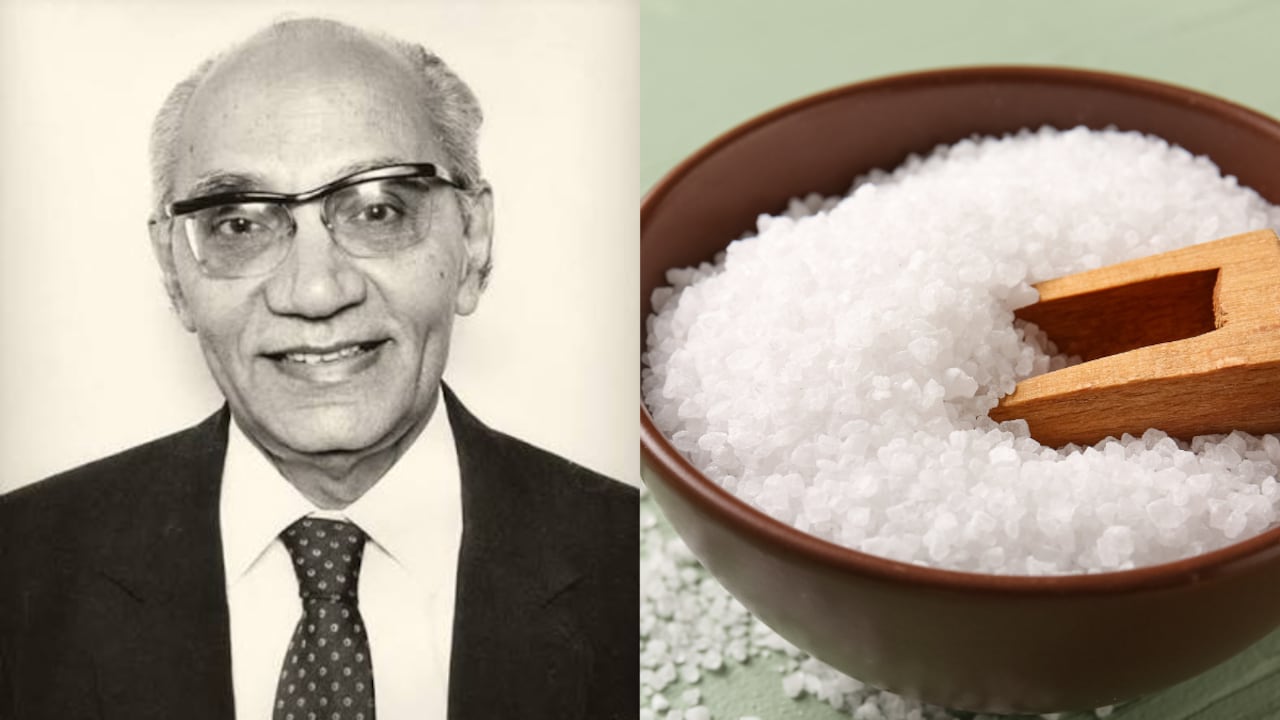
X user Parimal recently shared the fascinating story of the Kangra Valley Experiment, a study led by Indian medical scientist Dr. Vulimiri Ramalingaswami that helped prove iodised salt could prevent endemic goitre, despite many experts believing it would never work in India.
Experts Said Iodised Salt Would Fail In India
In the early 1950s, a silent shadow hung over the stunning valleys of the Himalayas. Across a belt stretching 1000s of KMs from Jammu & Kashmir through Himachal Pradesh & Uttar Pradesh to the North-East, ~50% of the population suffered from swollen necks, massive thyroid goitres… pic.twitter.com/FcZbpgPg1Z— Parimal (@Fintech03) July 27, 2026
Describing the situation in the 1950s, Parimal wrote, "A silent shadow hung over the stunning valleys of the Himalayas." He explained that across a vast belt stretching from Jammu & Kashmir through Himachal Pradesh and Uttar Pradesh to the Northeast, nearly half the population suffered from swollen necks, massive thyroid goitres and severe physical and mental stunting due to iodine deficiency.
According to the post, entire villages were trapped in a cycle of endemic goitre and cretinism, while many global experts believed the problem was too severe for a developing country like India to solve.
Also Read: Viral: Restaurant Runs Out Of Cheesy Momos, Wins Customer And The Internet With One Small Act
According to the viral post, Dr Vulimiri Ramalingaswami, then a young Oxford-trained pathologist working with the Indian Council of Medical Research (ICMR), believed otherwise. Instead of accepting that millions of children would continue to suffer, he launched the Kangra Valley Experiment in Himachal Pradesh.
More than one lakh villagers were divided into three groups:
- One received ordinary salt.
- One received salt fortified with potassium iodide (KI).
- The third received salt fortified with potassium iodate (KIO3).
As Parimal points out in the post, many scientists at the time argued that iodised salt wouldn't work in India.
They believed that:
- India's humid climate would destroy the iodine.
- Long transport through remote Himalayan villages would reduce its effectiveness.
- Traditional Indian cooking, which often involves prolonged boiling and frying, would break down the iodine.
Dr Ramalingaswami decided to test those assumptions instead of accepting them.
What The Research Found
According to Dr Ramalingaswami's research paper, "Prevention of Endemic Goitre with Iodised Salt," published in PubMed, the study followed communities for 16 years. The findings were clear. Villages using iodised salt saw a progressive and significant decline in goitre, while iodine metabolism returned to normal levels. The study concluded that "endemic goitre can be successfully controlled by iodisation of domestic salt."
Also Read: Viral Video: UK Man Ate So Many Fish Fingers In A Minute, It Became A World Record
The experiment also showed that potassium iodate remained stable despite India's humid weather, transportation and traditional cooking methods. The success of the experiment eventually led to India's National Goitre Control Programme in 1962, which later evolved into the National Iodine Deficiency Disorders Control Programme (NIDDCP).
As Parimal summed up in his post, "Every single day when we open a packet of salt in our kitchen, we are holding a life-saving chemical shield pioneered in the muddy tracks of the Kangra Valley."