








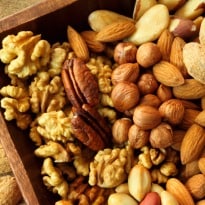
Nuts contain unsaturated fats, protein and a range of vitamins and minerals that lower cholesterol, inflammation and insulin resistance.
"Eating tree nuts is good for lowering risk for heart disease and other health problems such as diabetes and strokes," said John Sievenpiper, a physician at St Michael's Hospital in Toronto. However, the greatest benefit can be reaped only if they are consumed daily.The study found a "modest decrease" in blood fats known as triglycerides and blood sugars among people who added tree nuts to their diets compared to those who ate a control diet. To reach this conclusion, Sievenpiper screened 2,000 articles published in peer-reviewed journals and found 49 randomised control trials with 2,000 participants.Sievenpiper says that the largest reductions in triglycerides and blood glucose were seen when tree nuts replaced refined carbohydrates rather than saturated fats. He also added that there was no adverse impact on the other risk factors for metabolic syndrome or weight gain, even though nuts are high in calories. "Fifty grams of nuts can be easily integrated into a diet as a snack or as a substitute for animal fats or refined carbohydrates," Sievenpiper noted.

 Should Machines Decide Who Lives And Dies In A War? Ex-CIA Chief Answers
 Kriti Sanon Says Instagram Has No Option To Report AI-Generated Images Of Her
 What Anthropic, Monks And The Cusp Of Consciousness Teach About Tomorrow
 Nikhil Kamath's Big AI Bet: Why India Should Look Beyond Silicon Valley
 When Will India Get Its Own Apple, Samsung? Ashwini Vaishnaw Reveals Timeline
 Neeru Saini On Fitness, Focus & Her Love for Churma!
 NDTV Lifeline- Himanshu Saini on the Secret to Eating Well: More Greens, Healthier Desserts
 Hockey Champions Savita Punia & Neha Goel on Fitness, Recovery & The Meaning of Health
 Millets: The Superfood That's Good for You and the Planet
 Yoga, Millets, Vaccines: S Jaishankar On How India Is Building Stronger Ties | NDTV World Summit
"Eating tree nuts is good for lowering risk for heart disease and other health problems such as diabetes and strokes," said John Sievenpiper, a physician at St Michael's Hospital in Toronto. However, the greatest benefit can be reaped only if they are consumed daily.The study found a "modest decrease" in blood fats known as triglycerides and blood sugars among people who added tree nuts to their diets compared to those who ate a control diet. To reach this conclusion, Sievenpiper screened 2,000 articles published in peer-reviewed journals and found 49 randomised control trials with 2,000 participants.Sievenpiper says that the largest reductions in triglycerides and blood glucose were seen when tree nuts replaced refined carbohydrates rather than saturated fats. He also added that there was no adverse impact on the other risk factors for metabolic syndrome or weight gain, even though nuts are high in calories. "Fifty grams of nuts can be easily integrated into a diet as a snack or as a substitute for animal fats or refined carbohydrates," Sievenpiper noted.