




Every year, as temperatures climb and the first batches of raw green mangoes show up at your local sabzi mandi, something shifts in Indian kitchens. The pressure cooker comes out. Mustard seeds hit hot oil. A grandmother somewhere is already making a batch of something that her mother taught her. Mango season in India is not just about eating the fruit as it is, juicy, sweet, sticky-fingered; it is about cooking with it in ways that are specific to where you grew up, what language your family cooks in, and which seasonal ritual matters most in your home. From Kerala to Kashmir, from Bengal to Maharashtra, the mango transforms into pickles, curries, drinks, dals, and desserts that are completely distinct from one another.
Also Read: Which State Is Known As The Rice Capital Of India?
Here Are Ten Regional Ways To Cook With Mangoes
1. Aam Panna (North India / Maharashtra)
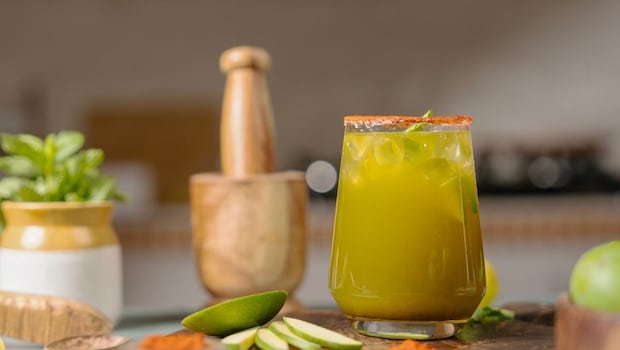
Photo Credit: Canva
Let's start with the one that probably already lives in your summer memory. Aam Panna is a raw mango cooler that is made across North India and Maharashtra, and it goes by different names depending on where you are. In Madhya Pradesh, it is called Aam Jhora. In Bengal, it becomes Aam Pora Shorbot, where the mango is roasted directly over a flame instead of boiled, giving it a beautiful smoky depth. In Maharashtra and Gujarat, the same drink is called Kairi Panha.
The base, though, is consistent: unripe green mangoes cooked until soft, their pulp blended with sugar or jaggery, black salt (kala namak), roasted cumin, and mint. The result is tangy, cooling, and genuinely refreshing, the kind of thing you want after walking in from 42-degree heat.
Recipe (serves 4-5):
- 2 large raw green mangoes
- 5-6 tablespoons sugar (or jaggery, to taste)
- 1 teaspoon roasted cumin powder
- ½ teaspoon black salt
- A pinch of regular salt
- A small handful of fresh mint leaves
- Chilled water
Method:
Pressure cook the peeled, chopped mangoes with a cup of water for 2-3 whistles. Let them cool, scoop out the pulp, and discard the seeds. Blend the pulp with sugar, black salt, cumin, and mint until smooth. This is your concentration. Store it in the fridge for up to 3-4 days. To serve, mix 2-3 tablespoons of concentrate into a tall glass of cold water, add ice, and garnish with fresh mint.
Tip: If you want the Bengali Aam Pora Shorbot version, roast the whole mangoes directly over a gas flame, turning occasionally, until the skin chars and blisters. The smoky pulp inside is what makes it different.
2. Mango Shrikhand / Amrakhand (Maharashtra / Gujarat)
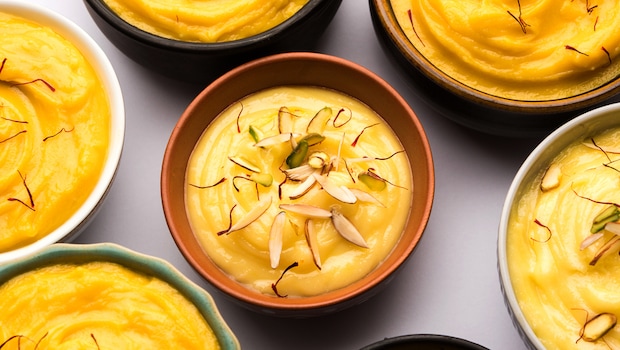
Photo Credit: iStock
If Aam Panna is the drink of summer, Amrakhand is its dessert. A beloved recipe in both Maharashtrian and Gujarati households, this is thick hung curd folded with sweet ripe mango pulp and perfumed with cardamom and saffron. It is traditionally served on Gudi Padwa, the Marathi New Year, alongside hot puris and batata bhaji. But honestly, the combination is too good to save for one day a year.
The best mango for this is Alphonso (Hapus) or Kesar, sweet, low in fibre, with a brilliant orange colour that makes the shrikhand glow.
Recipe (serves 4):
- 500g full-fat dahi (or Greek yoghurt)
- ½ cup fresh ripe mango pulp (from Alphonso or Kesar mangoes)
- 4-5 tablespoons powdered sugar
- ½ teaspoon cardamom powder
- A pinch of saffron soaked in 1 tablespoon of warm milk
- Chopped pistachios to garnish
Method:
Hang the dahi in a muslin cloth overnight (or for at least 6-8 hours) to drain the whey completely. If using Greek yoghurt, 3-4 hours is enough. Transfer the thick hung curd to a bowl and whisk until smooth and creamy. Add the mango pulp, powdered sugar, cardamom, and bloomed saffron. Mix gently until everything is combined. Chill for at least an hour before serving. Garnish with pistachios and small chunks of fresh mango.
Tip: Do not use sour dahi. The hung curd should be fresh, mild, and creamy. If your dahi has any tang to it, balance it with a little extra sugar.
3. Mango Rice / Mavinakayi Chitranna (Karnataka / Tamil Nadu / Andhra Pradesh)

Raw mango rice is one of South India's most practical and satisfying summer dishes. In Karnataka, it is called Mavinakayi Chitranna. In Tamil Nadu, a similar version goes by Maangai Sadam. The concept is simple: cooked rice gets tossed with a flavourful tempering of mustard seeds, curry leaves, dried red chillies, urad dal, turmeric, peanuts, and freshly grated raw mango. The mango provides tartness in place of tamarind, making it lighter and more seasonal.
This is the kind of dish that turns leftover rice from dinner into something worth waking up for the next morning.
Recipe (serves 3-4):
- 2 cups cooked rice (cooled)
- 1 medium raw mango, peeled and grated
- 2 tablespoons oil (coconut or groundnut works well)
- 1 teaspoon mustard seeds
- 1 teaspoon urad dal
- 1 teaspoon chana dal
- 2 dried red chillies
- 10-12 curry leaves
- ½ teaspoon turmeric
- 2 tablespoons roasted peanuts
- Salt to taste
- Fresh coriander to garnish
Method:
Heat oil in a pan and add mustard seeds. Once they splutter, add urad dal, chana dal, and red chillies. Cook until the dals turn golden. Add curry leaves, turmeric, and the grated raw mango. Sauté for 2-3 minutes. Add the roasted peanuts and mix well. Now add the cooled rice, season with salt, and toss gently until everything is combined. Serve warm or at room temperature.
Tip: Cooling the rice before adding it to the tempering prevents it from turning mushy. The mango should be finely grated, so it distributes evenly through the rice.
4. Mambazha Pulissery (Kerala)
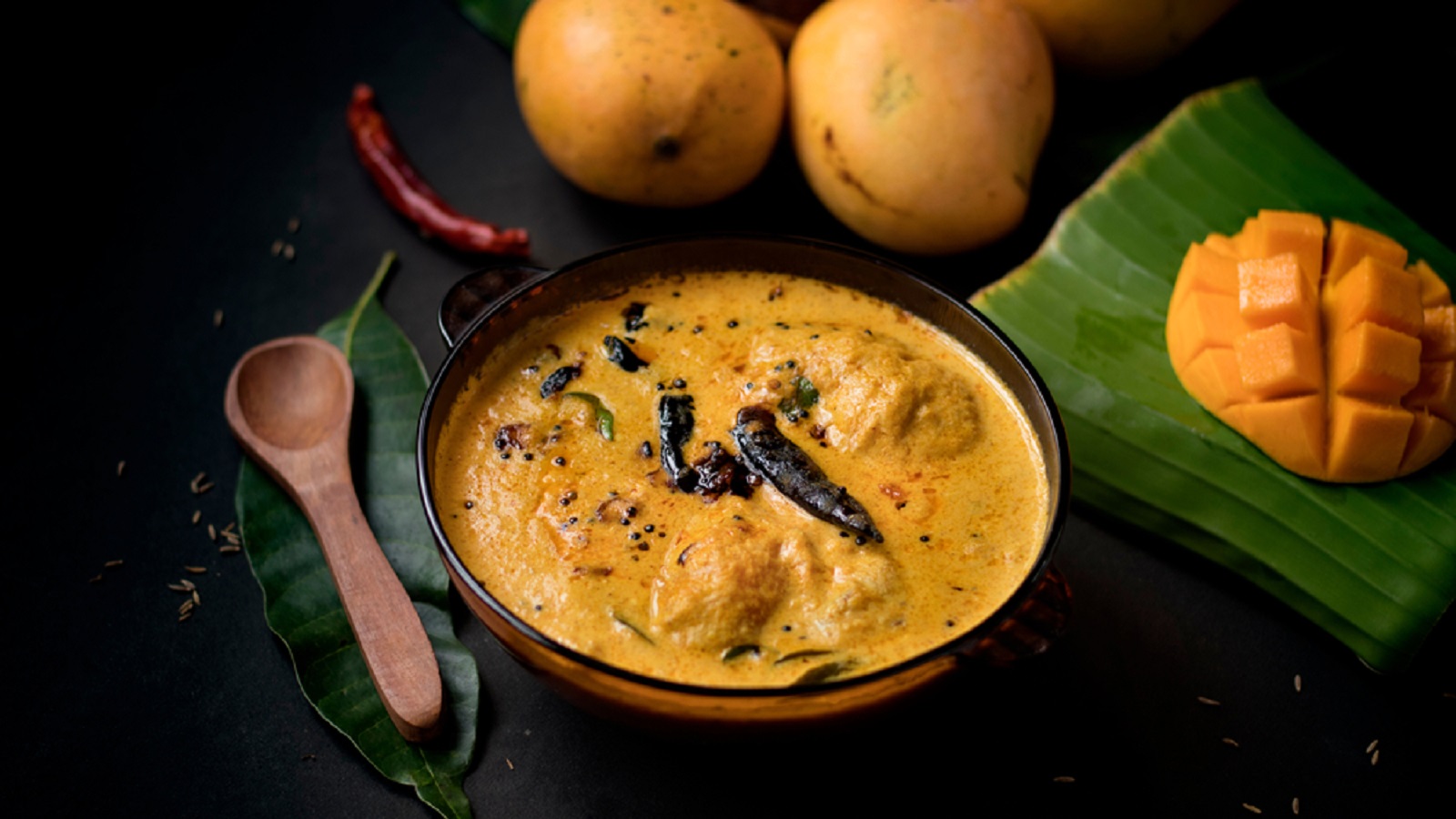
Kerala has a genius when it comes to the sweet-sour-spicy balance, and Mambazha Pulissery (also called Mango Pulissery) is one of the best examples. This is a ripe mango curry made with coconut and yoghurt, part of the traditional Kerala Sadya spread served on banana leaves. It is simultaneously sweet from the mango, sour from the yoghurt, and earthy from the spice tempering. The texture is somewhere between a raita and a thin curry, poured generously over rice; it is deeply satisfying.
Recipe (serves 4):
- 2 ripe but slightly firm mangoes, peeled and cut into chunks (keep the skin if you don't mind it)
- ½ cup fresh grated coconut
- 1 teaspoon cumin seeds
- 2 green chillies
- ½ teaspoon turmeric
- 1 cup thick plain yoghurt, whisked
- Salt to taste
For tempering:
- 1 tablespoon coconut oil
- ½ teaspoon mustard seeds
- 2 dried red chillies
- 8-10 curry leaves
Method:
Cook the mango pieces with turmeric, green chillies, a pinch of salt, and enough water to cover. Simmer for 8-10 minutes until the mango softens. Meanwhile, grind grated coconut with cumin and a little water into a smooth paste. Add this paste to the mango and cook for 3-4 more minutes. Remove from the heat, wait for it to cool slightly, then stir in the whisked yoghurt. Do not boil after adding yogurt or it will split. Finish with a tempering of mustard seeds, red chillies, and curry leaves in coconut oil. Serve hot with steamed rice.
5. Raw Mango Dal / Kachchi Kairi Dal (Maharashtra / North India)
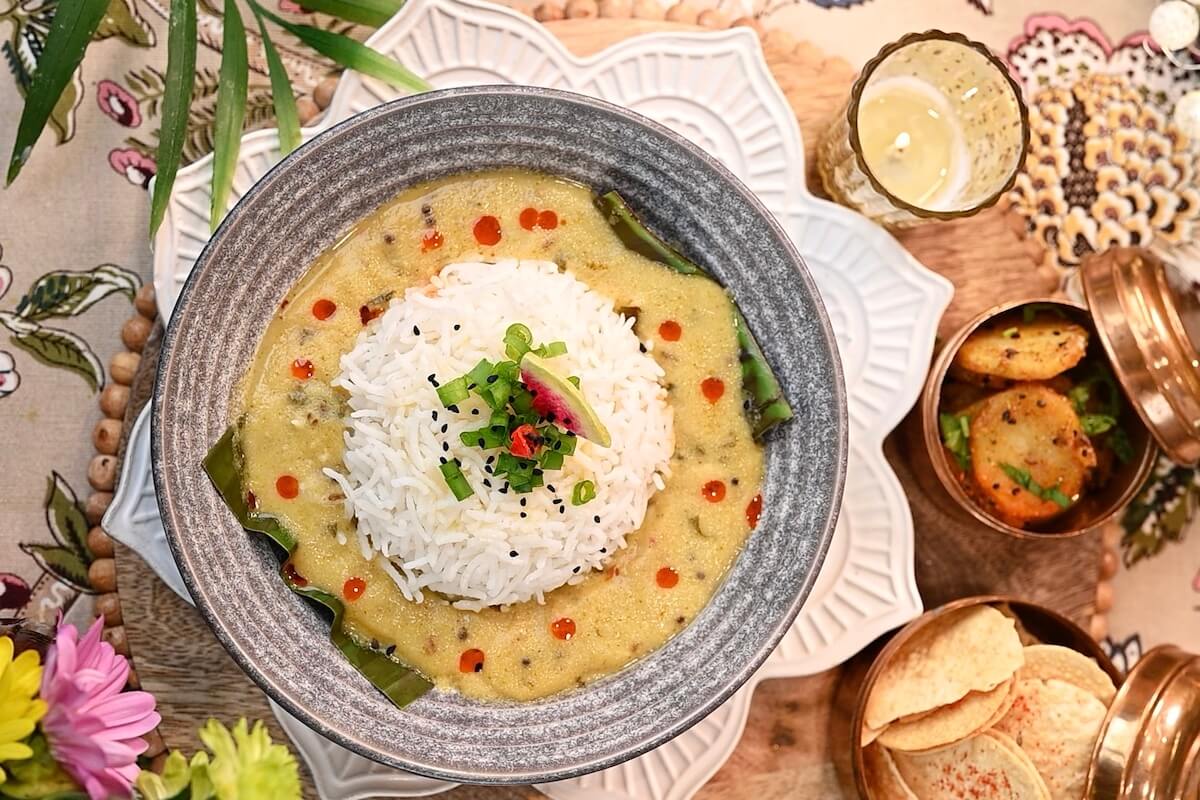
One of the most comforting and understated mango preparations is raw mango dal. It is exactly what it sounds like: toor dal or moong dal cooked with pieces of raw mango, which replaces the tamarind or amchur that would otherwise provide sourness. The result is a dal that is brighter, cleaner, and distinctly seasonal.
In Maharashtra, it is often used toor dal with raw mango and a simple tadka of mustard, cumin, and hing. In North Indian homes, the same idea shows up in different forms, sometimes made with moong dal for a lighter texture.
Recipe (serves 4):
- 1 cup toor dal (arhar dal), washed
- 1 medium raw mango, peeled and cut into pieces
- ½ teaspoon turmeric
- Salt to taste
- 1 tablespoon ghee or oil
- 1 teaspoon mustard seeds
- 1 teaspoon cumin seeds
- A pinch of hing (asafoetida)
- 2 green chillies, slit
- 8-10 curry leaves
- 1 dried red chilli
Method:
Pressure cook the toor dal with raw mango pieces, turmeric, salt, and 2.5 cups of water for 3-4 whistles. Once the pressure releases, mash lightly. The mango pieces will have cooked down, and the dal should be smooth with a pleasant tanginess. For the tadka, heat the ghee and add mustard seeds. Once they splutter, add cumin, hing, curry leaves, red chilli, and green chillies. Pour this over the dal. Serve hot with rice or chapati.
Also Read: Aam Panna to Kokum, 10 Indian Sharbats Made For Peak Summer
6. Mango Rasam (Tamil Nadu / Andhra Pradesh)

Rasam is one of those South Indian staples that quietly does everything; it is a digestive, a comfort food, a cold remedy, and a palate cleanser all at once. During mango season, a beautiful version emerges where raw mango replaces tamarind entirely. The result is slightly sweet, sharply tangy, and deeply fragrant.
This is a dish that people in Tamil and Telugu homes have been making for generations, and it is one of those things that feels like a cure the moment you smell it cooking.
Recipe (serves 4):
- 1 small raw mango, pressure-cooked and pulp extracted (about 3-4 tablespoons pulp)
- 2 tablespoons toor dal (cooked and mashed)
- ½ teaspoon turmeric
- 1 teaspoon rasam powder (or a mix of coriander, cumin, black pepper, and chilli powder)
- Salt to taste
- 2 cups water
For tempering:
- 1 teaspoon ghee
- ½ teaspoon mustard seeds
- 1 dried red chilli
- A pinch of hing
- 8-10 curry leaves
- Fresh coriander to garnish
Method:
Mix the mango pulp, mashed dal, turmeric, rasam powder, salt, and water in a pot. Bring to a boil and simmer for 5 minutes. The consistency should be watery and broth-like, not thick. Prepare the tadka with ghee, mustard seeds, red chilli, hing, and curry leaves. Pour over the rasam and finish with fresh coriander. Serve as a soup, or pour over rice with a side of papad.
7. Raw Mango Chutney / Kairi Chutney (Across India, many versions)
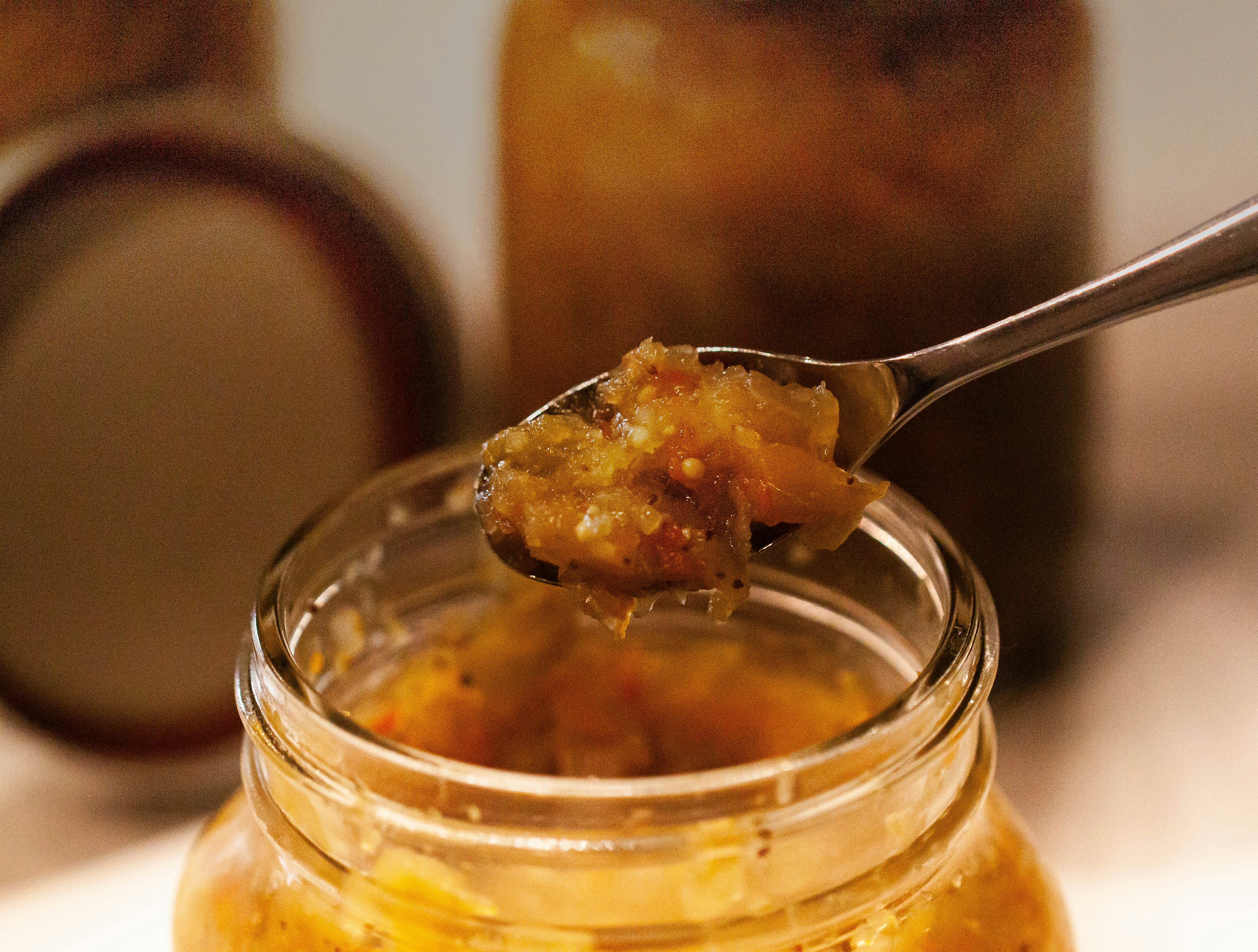
Every region has its own version of raw mango chutney. Andhra Pradesh makes a fiery one ground with green chillies and fresh coconut, meant to go with dosas and idlis. In Bengal, a sweet and spicy version called Kacha Aam'er Chutney is cooked with mustard seeds and jaggery and served at the start of a meal. In North India, a simpler raw version is ground with coriander, mint, and green chillies to become the green chutney that goes with everything from parathas to chaat.
Here is a quick Bengali-style cooked version that is a brilliant accompaniment to any meal:
Recipe (serves 6-8 as a condiment):
- 2 medium raw mangoes, peeled and cut into small chunks
- 3-4 tablespoons jaggery (adjust to taste)
- 1 teaspoon panch phoron (Bengali five-spice blend)
- 2 dried red chillies
- 1 tablespoon oil
- ¼ teaspoon turmeric
- Salt to taste
Method:
Heat oil in a small pan and add panch phoron and dried red chillies. Once they crackle, add the raw mango pieces, turmeric, and salt. Cook on medium heat for 5-6 minutes until the mango softens. Add jaggery and stir until it melts and coats the mango. Cook for another 3-4 minutes until the chutney thickens slightly. Cool before serving. It keeps in the fridge for 4-5 days.
8. Aam Ka Achaar (Punjabi / across North India)

Photo Credit: istock
No feature about cooking with mangoes is complete without pickling. Mango pickle, specifically the North Indian oil-based achaar, is one of the most iconic uses of the raw mango, and it is a deeply seasonal, almost ceremonial activity in many families. Large batches are made in summer, left to mature in earthenware jars in the sun, and eaten through the rest of the year.
The Punjabi version is probably the most well-known, made with raw mango pieces, mustard powder, red chilli, turmeric, and mustard or groundnut oil. It is bold, sharp, and intensely flavoured.
Recipe (makes 1 medium jar):
- 500g raw mango, cut into large pieces (unpeeled)
- 3 tablespoons coarse mustard powder (or crushed mustard seeds)
- 2 tablespoons red chilli powder
- 1 teaspoon turmeric
- 2 teaspoons salt
- 1 teaspoon fennel seeds
- ½ teaspoon nigella seeds (kalonji)
- 4-5 tablespoons mustard oil, heated and cooled
Method:
Wash and thoroughly dry the mango pieces. Any moisture will cause the pickle to spoil. In a large bowl, mix the mango with all the spices and salt. Add the cooled mustard oil and mix well. Transfer to a sterilised glass jar. Leave covered with a thin cloth in a sunny spot for 3-5 days, shaking the jar once daily, before sealing. The pickle develops in flavour over 2-3 weeks.
9. Aam Ki Launji / Sweet Mango Chutney (Rajasthan / UP)
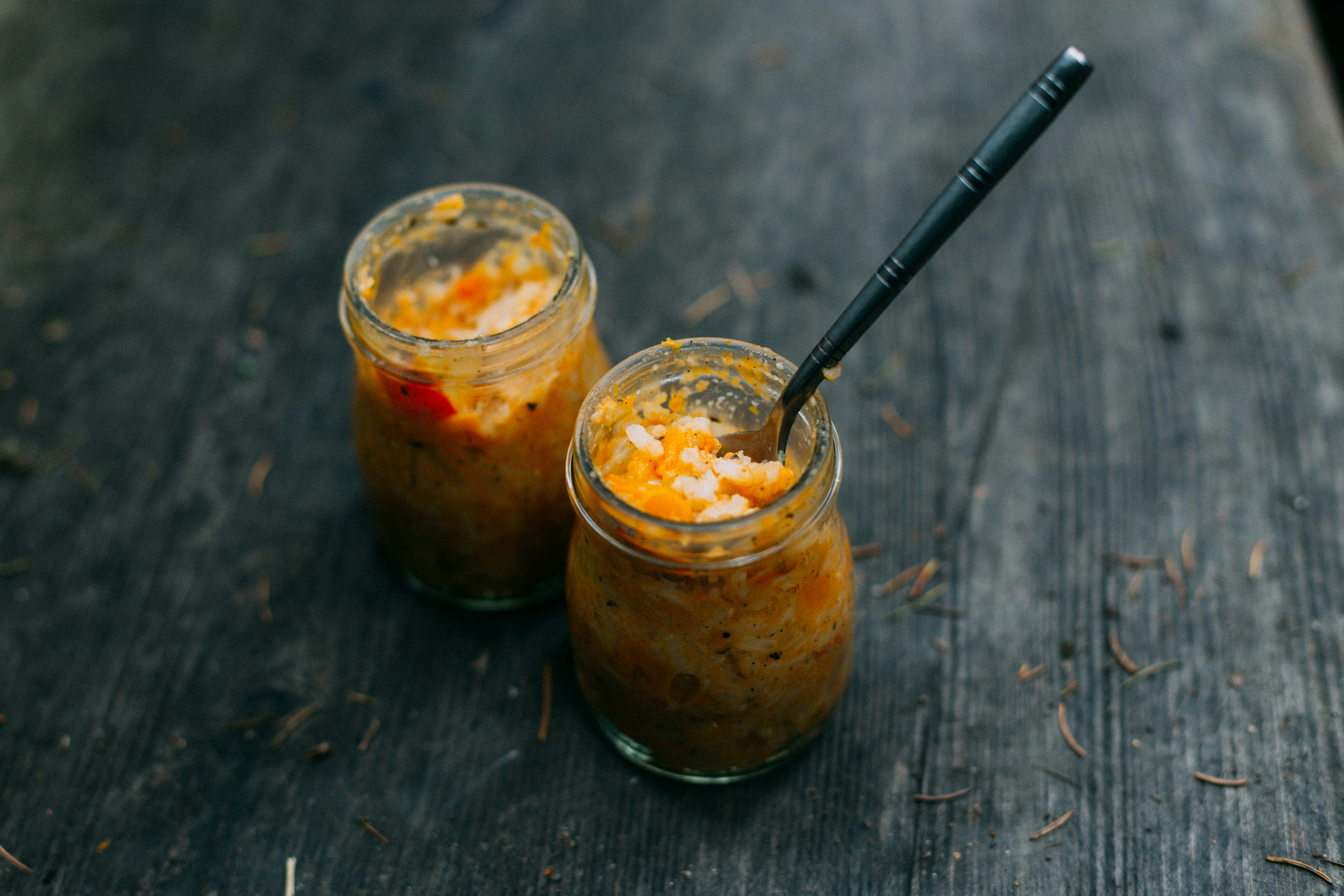
Launji is a sweet, jammy condiment made from raw mango that is particularly popular in Rajasthan and parts of UP. Unlike the sharp, uncooked green chutneys, launji is cooked slowly with sugar or jaggery, fennel seeds, nigella seeds, and dried chillies until it becomes a thick, sweet-sour relish. It is typically served as a side with dal-baati, parathas, or even just plain rotis on a summer afternoon when nothing else sounds appealing.
Recipe (serves 6-8):
- 2 medium raw mangoes, peeled and cut into thin slices or small pieces
- 5-6 tablespoons sugar
- ½ teaspoon fennel seeds (saunf)
- ¼ teaspoon nigella seeds (kalonji)
- ½ teaspoon red chilli powder
- ¼ teaspoon turmeric
- 1 teaspoon oil
- Salt to taste
- ½ cup water
Method:
Heat oil in a small pan. Add fennel and nigella seeds and let them sizzle for 30 seconds. Add the raw mango pieces and cook for 4-5 minutes until they begin to soften. Add turmeric, chilli powder, salt, and water. Cook covered for 5 minutes. Add sugar and stir until dissolved. Cook uncovered on low heat for another 8-10 minutes until the launji thickens and turns glossy. Serve at room temperature.
10. Ambe Sasam / Mango Coconut Curry (Konkan / Mangalorean Coast)
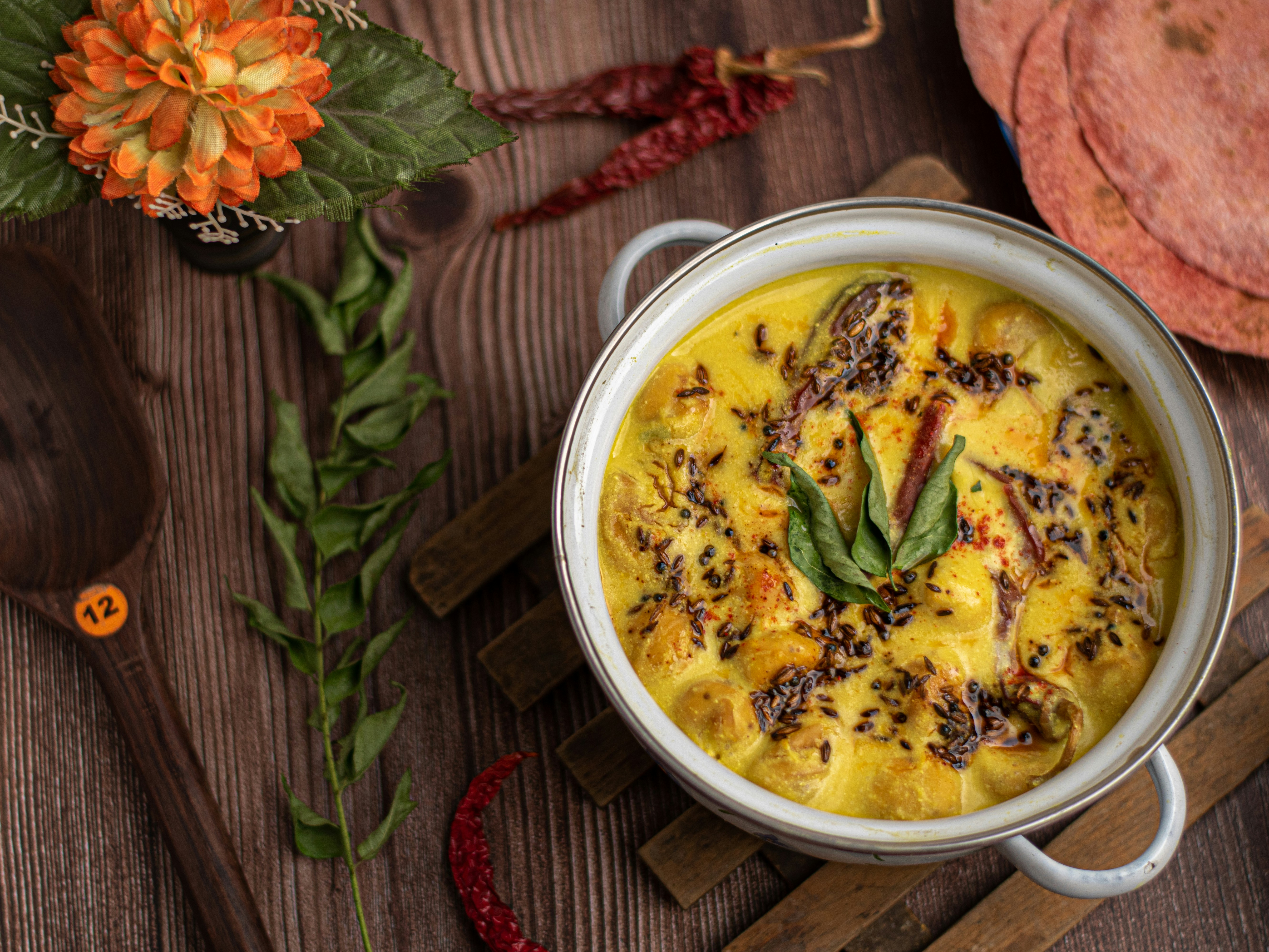
The Konkan coast, stretching from Maharashtra down through Goa and into coastal Karnataka and Kerala, has its own relationship with the mango that is distinctly coconut-forward. Ambe Sasam is a Konkani-Mangalorean preparation where ripe mango pieces are cooked in a sweet, tangy coconut curry. It is spicy, sweet, and salty all at once, with a creaminess that coats the rice beautifully. This is a festive dish, traditionally served at weddings and special occasions on banana leaves, and it represents the coastal philosophy of letting a good seasonal ingredient be the star.
Recipe (serves 4):
- 2 medium semi-ripe or ripe mangoes, peeled and cut into large pieces
- ½ cup fresh grated coconut
- 1 teaspoon cumin seeds
- 2-3 dried red chillies (Byadagi variety for a Mangalorean flavour)
- 2-3 tablespoons jaggery
- Salt to taste
For tempering:
- 1 tablespoon coconut oil
- ½ teaspoon mustard seeds
- 1 teaspoon urad dal
- 1-2 dried red chillies
- A sprig of curry leaves
Method:
Cook the mango pieces with a pinch of turmeric, salt, jaggery, and just enough water to cover. Simmer for 8-10 minutes. Meanwhile, grind coconut with cumin and red chillies into a fine paste with a little water. Add this paste to the cooked mango and simmer for another 5 minutes, adjusting the jaggery and salt balance. The curry should taste sweet, sour, and faintly spicy in equal measure. Finish with a tempering of mustard seeds, urad dal, red chillies, and curry leaves in coconut oil. Serve with rice.
Also Read: Radhikka Madan's Unique Chaas Ice Cubes Are A Must-Try This Summer
Beyond The Slice
India's relationship with the mango goes far beyond eating it straight out of hand or blending it into a lassi. Every region has adapted this fruit to its own kitchen logic, its own climate, its own celebration calendar. A Konkan grandmother making Ambe Sasam and a Punjabi aunty packing jars of achaar in the sun are both doing the same essential thing: honouring a season that will not last. These recipes are how Indian kitchens have always marked time, not with a calendar, but with what is available, fresh, and worth preserving. So the next time you spot a pile of green mangoes at the market, pick up a kilo or two extra. There is clearly a lot more you can do with them than you might think.