





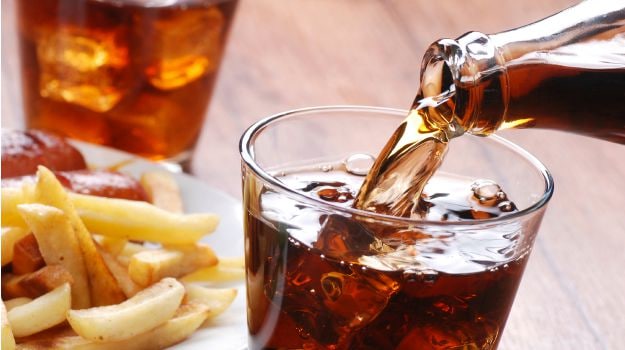
It is not without reason that processed and packaged food are called 'junk food'. While they may bring about instant relief to sudden hunger pang and delight the taste buds with the lipsmacking flavours, in the long run they could actually cause some serious harm to the body.
"We have known for some time that components of diet, both healthy and unhealthy, have a rapid impact on aspects of the brain that affect hippocampal size and function, but up until now these studies have only been done in rats and mice,” said lead study author Felice Jacka, associate professor at the University."This is the first study to show that this also appears to be the case for humans,” Jacka noted.The researchers used magnetic resonance imaging to measure the size of hippocampi (there are two in the brain - left and right) in Australian adults aged 60-64 years. Older adults who ate more unhealthy foods, such as sweet drinks, salty snacks and processed meats, had smaller left hippocampi, the findings showed. Those who ate more nutrient-rich foods, such as vegetables, fruits and fish, had larger left hippocampi."These findings have relevance for both dementia and mental health," said Jacka."As the hippocampus is critical to learning and memory throughout life, as well as being a key part of the brain involved in mental health, this study underscores the importance of good nutrition for children, adolescents and adults of all ages,” she pointed out.The study was published in the journal BMC Medicine.

 Nikhil Kamath's Big AI Bet: Why India Should Look Beyond Silicon Valley
 When Will India Get Its Own Apple, Samsung? Ashwini Vaishnaw Reveals Timeline
 "We Don't Have 5 Years": Celebrated American General Sounds Alarm On War
 Is AI Bubble Waiting To Burst? Nikhil Kamath Warns Of Tougher Months Ahead
 "Certainty Is A Problem": Nikhil Kamath On Marriage, Children And Future
 Yoga, Millets, Vaccines: S Jaishankar On How India Is Building Stronger Ties | NDTV World Summit
 When Will India Get Its Own Apple, Samsung? Ashwini Vaishnaw Reveals Timeline
 From Geopolitics To Gen Z: Shashi Tharoor's Candid Conversation At NDTV World Summti
 Neha Goyal Makes Stunning Asian Games Gold Revelation At NDTV World Summit 2026
 RBI Governor Sanjay Malhotra Drops Big Hint On Tata Sons Listing Row At NDTV World Summit
"We have known for some time that components of diet, both healthy and unhealthy, have a rapid impact on aspects of the brain that affect hippocampal size and function, but up until now these studies have only been done in rats and mice,” said lead study author Felice Jacka, associate professor at the University."This is the first study to show that this also appears to be the case for humans,” Jacka noted.The researchers used magnetic resonance imaging to measure the size of hippocampi (there are two in the brain - left and right) in Australian adults aged 60-64 years. Older adults who ate more unhealthy foods, such as sweet drinks, salty snacks and processed meats, had smaller left hippocampi, the findings showed. Those who ate more nutrient-rich foods, such as vegetables, fruits and fish, had larger left hippocampi."These findings have relevance for both dementia and mental health," said Jacka."As the hippocampus is critical to learning and memory throughout life, as well as being a key part of the brain involved in mental health, this study underscores the importance of good nutrition for children, adolescents and adults of all ages,” she pointed out.The study was published in the journal BMC Medicine.