





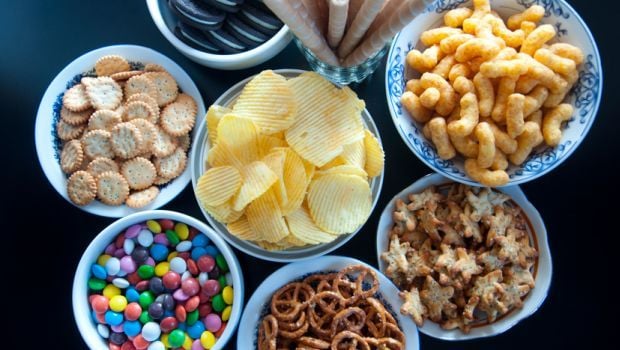
The overt response of your kids to advertisements of burgers, pizzas and french-fries may be the result of a key obesity gene influencing their brain to respond more to food advertisements and other cues to eat, a study has found.
"By examining the still-developing brain and its reward-related structures, our findings help explain why children who are genetically at-risk for obesity may be prone to over-eating unhealthy foods," said lead author Kristina M. Rapuano, a graduate student at Dartmouth College in New Hampshire, US.Previous studies have showed that children with this same genetic obesity risk factor are more likely to overeat after watching food advertisements on TV, even when they are not hungry.For the study, the team examined 78 children, aged nine to 12 years old, who watched a children's television show in an MRI scanner, which included 12 minutes of commercial breaks -- half were advertisements for fast food and the other half for non-food items.The brain scans suggest that these children may be especially vulnerable to food cues and that limiting food advertisement exposure could be an effective way to combat child obesity."About one-third of commercials children see on network television are food advertisements, and each one is a prompt to eat," added Diane Gilbert-Diamond, Assistant Professor at Dartmouth College.The findings are published in the Proceedings of the National Academy of Sciences (PNAS).(This story has not been edited by NDTV staff and is auto-generated from a syndicated feed.)

 Should Machines Decide Who Lives And Dies In A War? Ex-CIA Chief Answers
 Kriti Sanon Says Instagram Has No Option To Report AI-Generated Images Of Her
 What Anthropic, Monks And The Cusp Of Consciousness Teach About Tomorrow
 Nikhil Kamath's Big AI Bet: Why India Should Look Beyond Silicon Valley
 When Will India Get Its Own Apple, Samsung? Ashwini Vaishnaw Reveals Timeline
 Neeru Saini On Fitness, Focus & Her Love for Churma!
 NDTV Lifeline- Himanshu Saini on the Secret to Eating Well: More Greens, Healthier Desserts
 Hockey Champions Savita Punia & Neha Goel on Fitness, Recovery & The Meaning of Health
 Millets: The Superfood That's Good for You and the Planet
 Yoga, Millets, Vaccines: S Jaishankar On How India Is Building Stronger Ties | NDTV World Summit
"By examining the still-developing brain and its reward-related structures, our findings help explain why children who are genetically at-risk for obesity may be prone to over-eating unhealthy foods," said lead author Kristina M. Rapuano, a graduate student at Dartmouth College in New Hampshire, US.Previous studies have showed that children with this same genetic obesity risk factor are more likely to overeat after watching food advertisements on TV, even when they are not hungry.For the study, the team examined 78 children, aged nine to 12 years old, who watched a children's television show in an MRI scanner, which included 12 minutes of commercial breaks -- half were advertisements for fast food and the other half for non-food items.The brain scans suggest that these children may be especially vulnerable to food cues and that limiting food advertisement exposure could be an effective way to combat child obesity."About one-third of commercials children see on network television are food advertisements, and each one is a prompt to eat," added Diane Gilbert-Diamond, Assistant Professor at Dartmouth College.The findings are published in the Proceedings of the National Academy of Sciences (PNAS).(This story has not been edited by NDTV staff and is auto-generated from a syndicated feed.)