




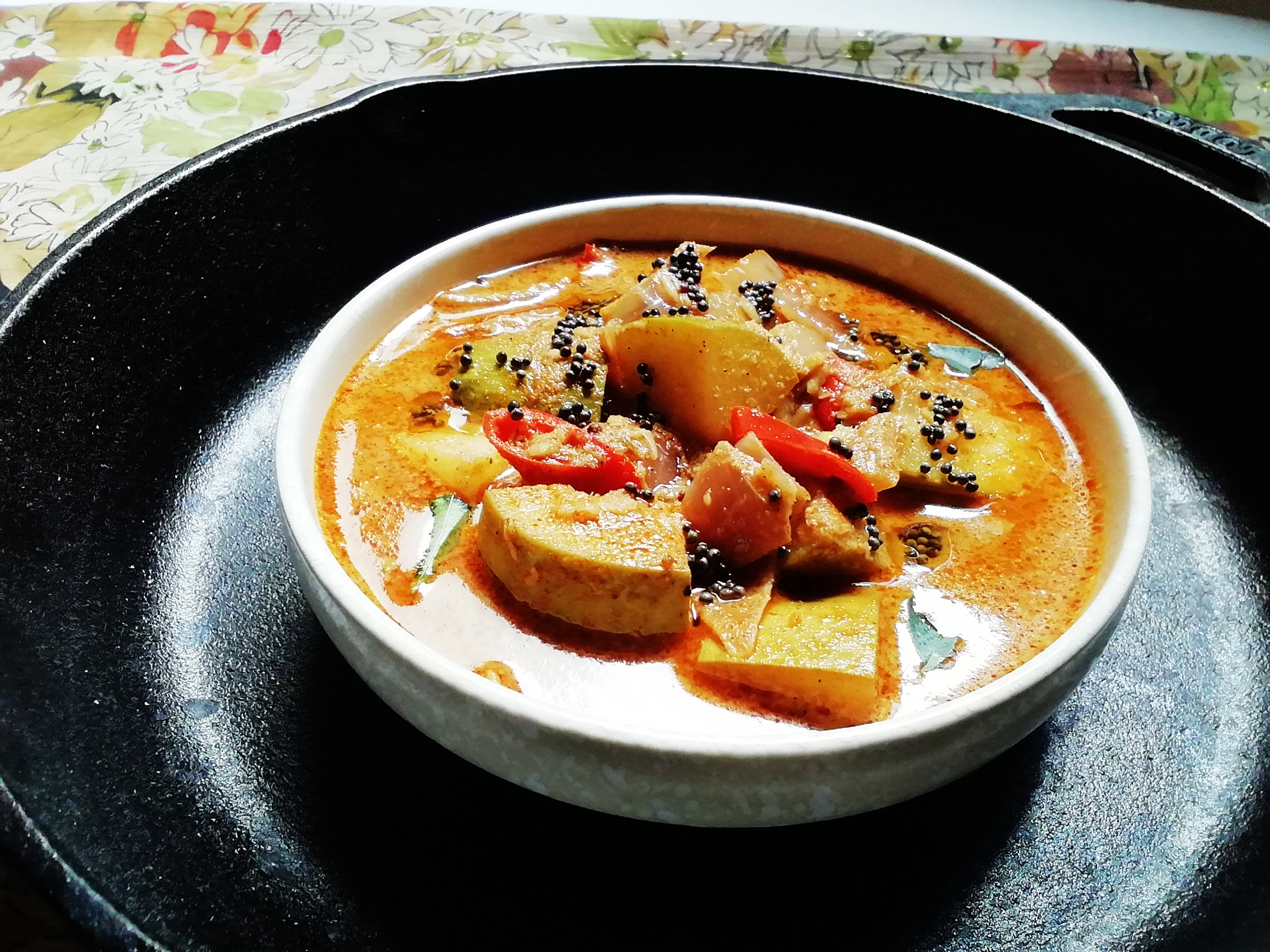
Certain ingredients belong so completely to one season that cooking with them feels less like a kitchen decision and more like a ritual. Raw mango, kairi, as it is known across much of India, is one of them. That hard, sour, intensely flavoured green fruit that arrives in the market before its ripe counterparts and disappears all too quickly is one of the most versatile and underused ingredients in Indian summer cooking. Most people pickle it, make aam panna with it, or eat it sliced with salt and chilli. Far fewer make a proper curry with it. That is a shame, because a well-made raw mango curry is genuinely one of the best things you can cook during these months: cooling in the Ayurvedic sense, deeply satisfying, and so alive with flavour that it makes eating rice feel like an event.
Also Read: Stop Eating Sad Desk Lunches: 8 Filling Sandwich Recipes Worth Packing
Why Raw Mango Curry Makes Sense In Summer
Raw mango is high in vitamin C, considerably higher than ripe mango, since the vitamin C content actually decreases as the fruit ripens. It is also believed in traditional Indian food wisdom to have cooling properties, which is consistent with Ayurvedic thinking about sour tastes and their effect on internal heat. The sourness of raw mango acts as a souring agent in a curry, the way tamarind or kokum does, but with a sharper, more vegetal flavour that is distinctly its own. It also pairs naturally with coconut, jaggery, and dry red chillies, a combination that appears across multiple coastal South Indian cuisines and creates a remarkably balanced sweet-sour-spicy-savoury profile in a single dish.
Raw mango curries appear in many forms across India's coastal communities: the Goan GSB (Gowd Saraswat Brahmin) version is called Amlecho Ross, where amli means raw mango and ross means curry. The Konkani version uses roasted sesame seeds and coconut to build a thicker, more intense sauce. The Kerala version tends towards a thinner, spiced coconut curry. All of them share the same philosophy: let the mango's natural sourness do the heavy lifting, balance it with sweetness and heat, and serve with plain rice so the curry can speak for itself.
The version here draws most directly from the Goan and Konkani traditions, both of which are minimalist in their spicing, a handful of ingredients, no elaborate masala, and a result that is more than the sum of its parts.
A Note On Choosing The Right Mango
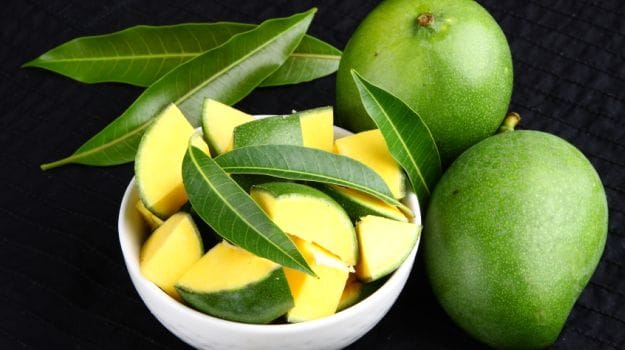
This curry does not work with every raw mango, and it is worth understanding the difference before you go shopping.
You want a mango that is firm, green, and sour but not violently so. The mangoes that are overly sour, watery, and still hard at the core can make the curry unpleasantly sharp. On the other hand, mangoes that are just beginning to ripen at the stem end, with a faint yellowing and a slightly softer flesh, work particularly well; they have developed some sweetness that balances the sourness beautifully and hold their shape better during cooking without disintegrating.
Small to medium-sized raw mangoes are better for this curry than the large ones, partly because the ratio of skin and seed to flesh is better and partly because they tend to have a more concentrated flavour. If you are buying from your local market, tell the vendor you are making a curry and not pickling, and they will usually know which ones to pick for you.
Totapuri and local Konkani varieties work best. Dasheri or Alphonso, before ripening, also give excellent results if you come across them while the season is transitioning.
The Recipe: Raw Mango Coconut Curry (Serves 3 to 4)
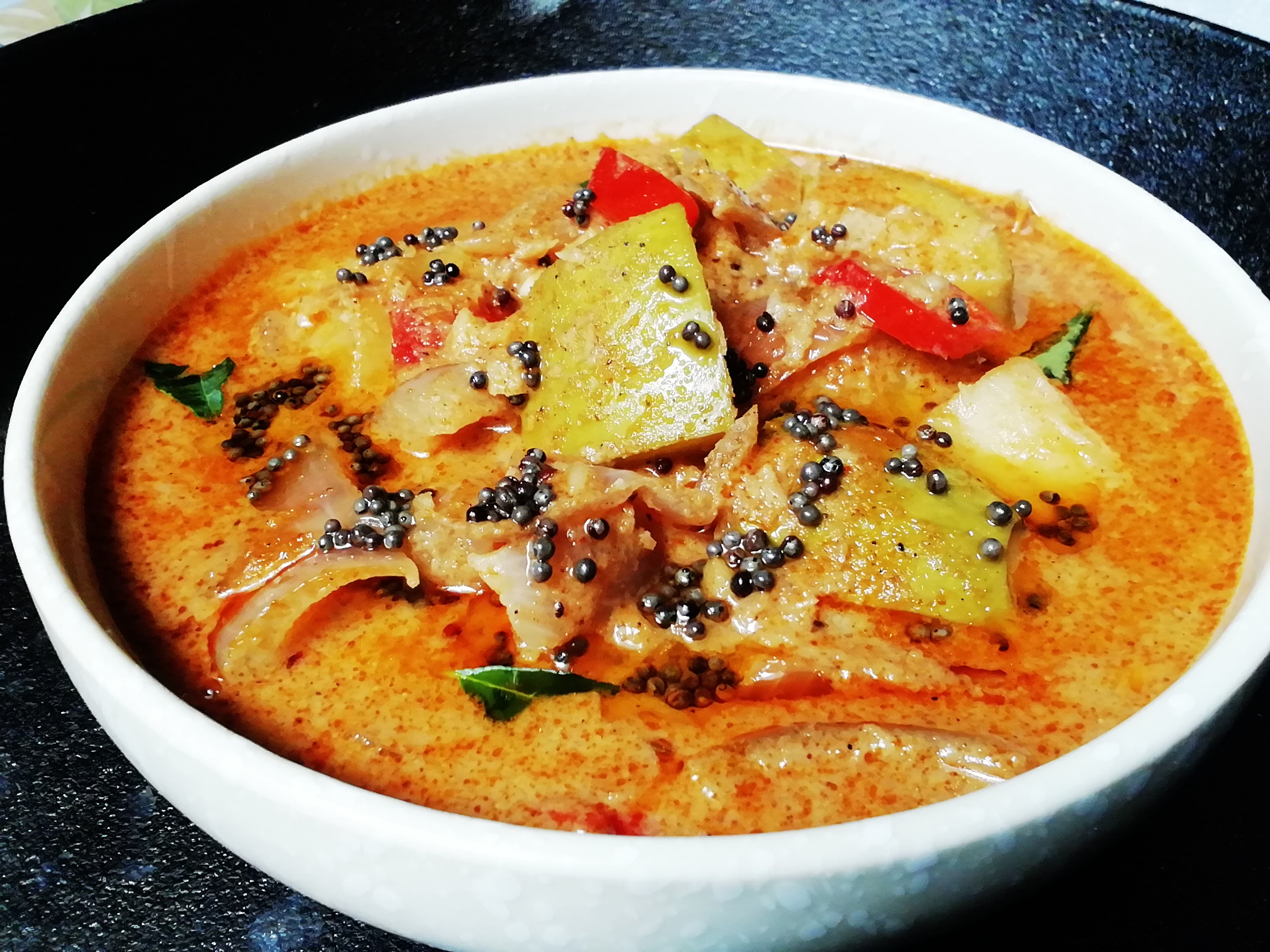
Time: 30 minutes
Serves with: Plain steamed rice, a dry sabzi on the side
Ingredients
For the curry base:
- 2 medium raw mangoes, firm and sour
- 1 cup fresh grated coconut (or ¾ cup if using desiccated coconut soaked briefly in warm water)
- 3 to 4 whole dry red chillies (use 2 Kashmiri chillies for colour and 1 to 2 hotter chillies for heat)
- ¼ teaspoon turmeric powder
- 1½ to 2 tablespoons jaggery, grated or powdered (adjust to taste)
- 1 teaspoon urad dal (split black gram)
- 1 teaspoon coriander seeds (optional, for added depth)
- Salt to taste
- Up to 1½ cups water
For the tempering:
- 1 tablespoon coconut oil (strongly preferred, it makes a significant difference to the flavour)
- ½ teaspoon mustard seeds
- A pinch of asafoetida (hing)
- 5 to 6 fresh curry leaves
Method
Step 1: Prepare the mango
Wash the raw mangoes thoroughly. Peel them and cut into large pieces. Do not discard the seed; leave some flesh on it and add the whole seeded piece to the curry. The flesh around the seed is the most flavourful part and, as anyone who has grown up eating raw mango curry knows, sucking the flesh off the cooked seed at the table is genuinely one of the pleasures of this dish.
The pieces should be chunky rather than thin, roughly 3 to 4 centimetre cubes or large wedge shapes. They will soften during cooking, and you want them to hold their shape rather than dissolve into the sauce.
Step 2: Make the coconut masala paste
In a dry pan on medium heat, roast the urad dal until it turns lightly golden and fragrant, about one to two minutes. Set aside. In the same pan, briefly toast the coriander seeds if using, for thirty seconds.
Add the fresh grated coconut, dry red chillies (soaked in warm water for five minutes beforehand to soften slightly), turmeric, roasted urad dal, and coriander seeds to a blender. Add a small amount of water, just enough to get the blender moving, and grind to a smooth, creamy paste. The consistency should be like a thick sauce, not watery at all. If it is too thin, the curry will lack body. Keep grinding until the coconut is as smooth as your blender can manage.
Step 3: Cook the mango
In a heavy-bottomed pot, heat the coconut oil on medium flame. Add mustard seeds and let them splutter, then add hing and curry leaves. Add the raw mango pieces and stir to coat them in the tempered oil. Add about half a cup of hot water, the jaggery, and salt. Stir well, cover, and cook on medium-low heat for eight to ten minutes until the mango is almost fork-tender but still holding its shape. It should give when pressed gently but not collapse.
This is the point to taste the mango. If it is very sour, you may want to add a little more jaggery. If it is not quite sour enough, you can add a small squeeze of lemon at the end.
Also Read: World Tuberculosis Day 2026: What TB Patients Should Eat For Better Recovery
Step 4: Add the coconut paste
Pour the coconut masala paste into the pot with the cooked mango. Stir gently to combine. The paste will thicken the curry quickly. Add a little more water if the curry looks too thick; it should have the consistency of a medium-bodied curry, not a paste. Cook on low heat, covered, for another two to three minutes.
Taste the curry at this point and adjust the balance. This is the most important step in the recipe. The curry should have a clear sour note from the mango, a gentle sweetness from the jaggery that rounds the sourness rather than cancelling it, warmth from the chillies, and the rich, slightly nutty background of the coconut. If it is too sour, add a touch more jaggery. If it is flat, add a pinch more salt. If it needs more heat, a small amount of red chilli powder stirred in works well.
Step 5: Rest and serve
Turn off the flame and let the curry rest for at least ten to fifteen minutes before serving. This resting period is not optional, it is when the flavours fully integrate and deepen. The curry will also thicken slightly as it rests.
Serve with plain steamed rice. If you want a fuller meal, a simple stir-fry of beans or raw banana on the side, or a small bowl of papad, completes the lunch without competing with the curry.
A Few Notes For Getting It Right
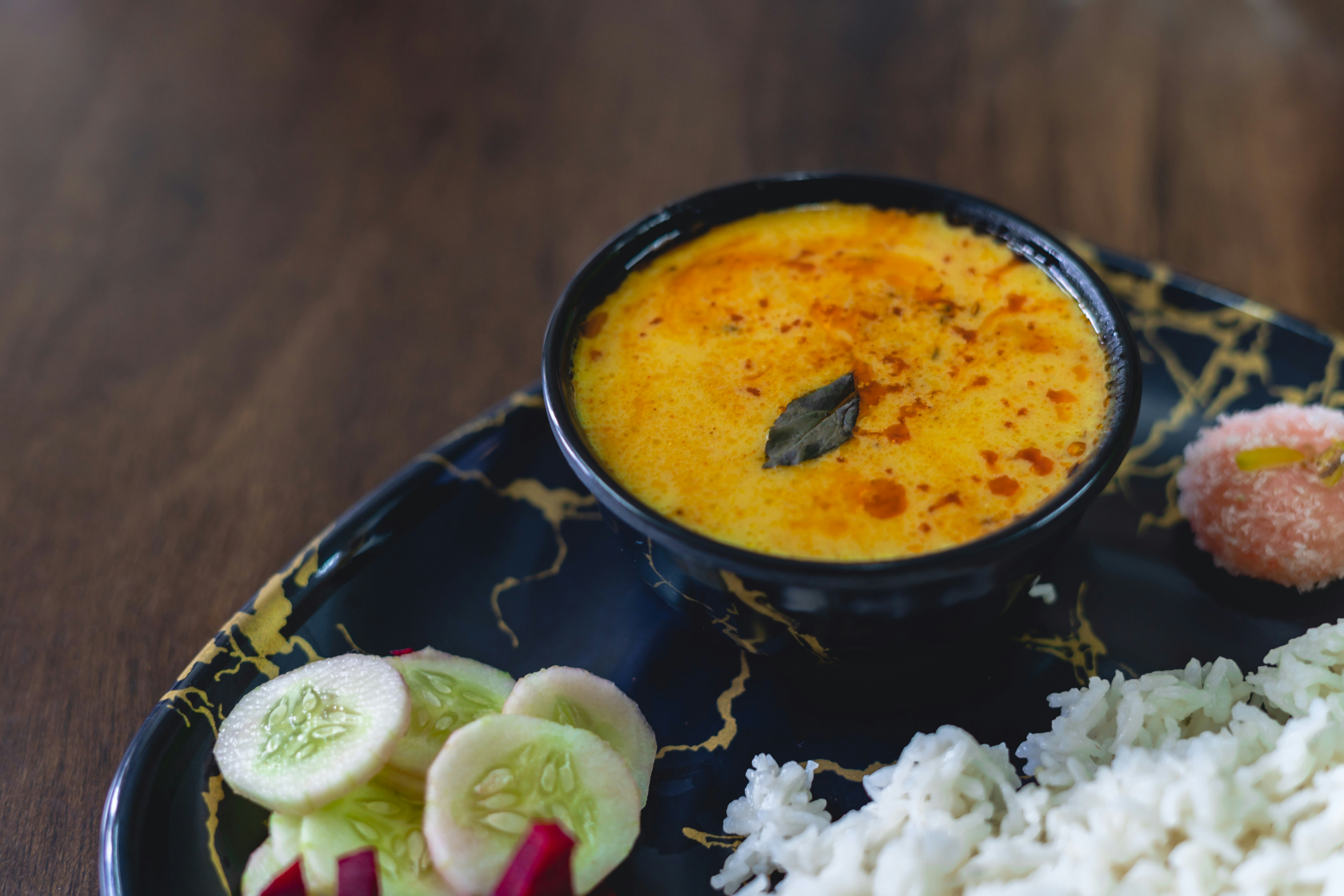
Use coconut oil. Groundnut or sunflower oil will not give you the same flavour. The coconut oil in the tempering is what ties the whole dish together. If you have never cooked with coconut oil before, this is a good first recipe for it, the flavour it adds here is immediately apparent.
Do not rush the coconut paste. A coarse or watery coconut paste will produce a thin, textureless curry. Blend thoroughly, even if it takes a few minutes. Strain through a fine sieve if you want an exceptionally smooth result.
The jaggery balance is everything. Start with one and a half tablespoons and taste before adding more. The jaggery should soften the sourness of the mango rather than make the curry taste sweet. If you add too much, a few extra drops of lemon juice at the end will bring the balance back.
Let it sit. Every coconut curry is better after a rest. If you can make it an hour before you eat it, the flavour will be noticeably more developed. It also keeps well in the refrigerator for a day, and the leftover curry with fresh rice for the next day's lunch is arguably even better than the first serving.
Also Read: You Need Five Types Of Dals To Make Rajasthani-Special Panchmela Dal (Recipe Inside)
Tastes Like Summer
Raw mango season is short, and this curry is one of the very best reasons to use it while it lasts. It requires minimal cooking skill, a handful of ingredients that most South Indian kitchens keep in stock, and about thirty minutes of your time. What you get in return is something that tastes genuinely of the season, sharp and cooling and comforting all at once, in the way that only summer food made from summer produce can be. Make it on a weekend when you have good raw mangoes, serve it with plain rice, and eat it at the table rather than in front of a screen. It earns that much.