



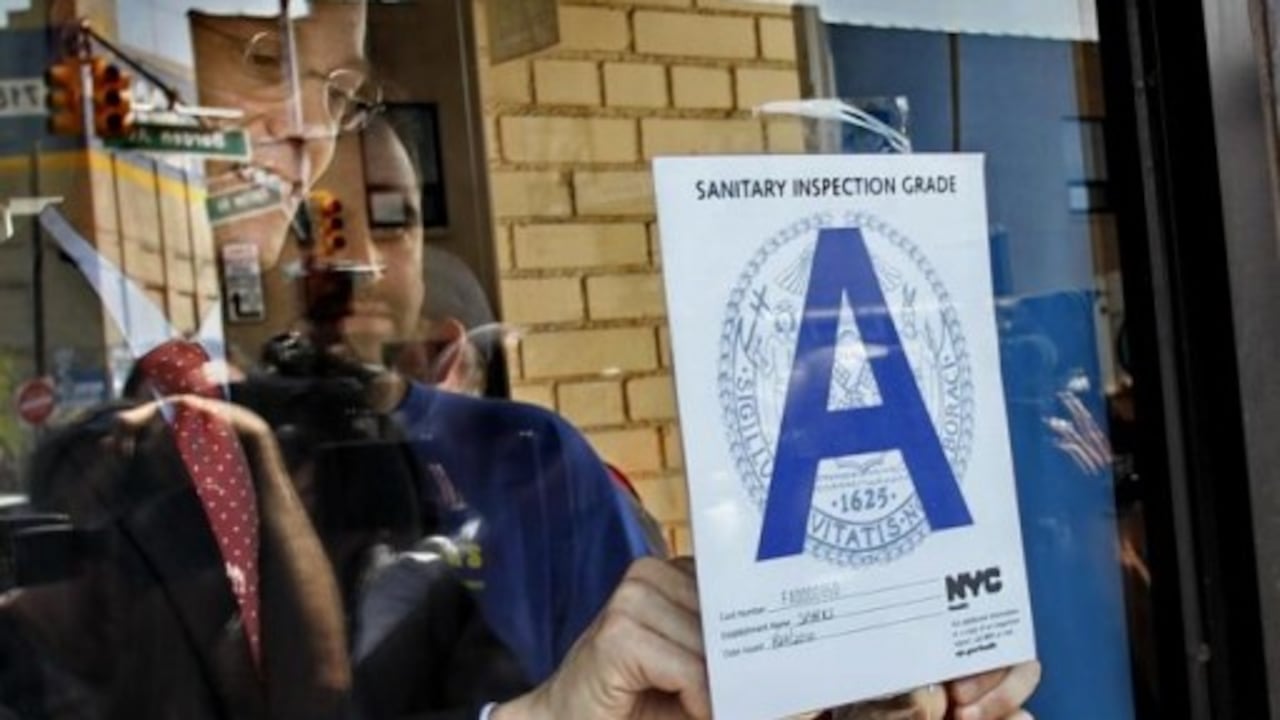
Replacing inspection methods that had remained largely unchanged since 1964, the Municipal Corporation of Delhi (MCD) is introducing a New York-style hygiene grading system for restaurants across the capital.
Under the new public grading system, eateries will receive ratings from 'A' to 'D' based on factors such as kitchen cleanliness, food-handling practices, pest control, waste management, and staff hygiene.
The Hygiene Rating Certificate must be displayed prominently at the entrance of every establishment. Failure to do so will itself be treated as a violation of licence conditions. This will allow diners to assess a restaurant's hygiene standards before deciding to eat there.
An Exam-Style Marking System For Delhi Restaurants
Every establishment will start with a score of 100 during inspections.
One point will be deducted for every minor violation, four points for each major violation and 10 points for every critical violation before a final hygiene grade is determined.
Grading System:
According to the guidelines, establishments scoring:
- between 90 and 100: Grade 'A'
- between 75 and 89: Grade 'B'
- between 60 and 74: Grade 'C'
- below 60: Grade 'D'
Any establishment found with two or more critical violations will automatically be assigned Grade 'D', irrespective of its final score.
"The grading system is intended to increase transparency. Customers will be able to see how an establishment performed during inspections, while businesses that maintain higher standards will also benefit," a senior MCD official told PTI.
Also Read: Maharashtra Bans Fake 'Analogue' Paneer For 1 Year In All Hotels And Restaurants
New Style Of Inspections
The inspection process itself is also being overhauled.
Officials said that instead of brief and largely standard inspections focused mainly on paperwork, inspectors will now assess a comprehensive set of food safety and hygiene parameters, including:
- food preparation and storage
- kitchen sanitation
- cleanliness of utensils and equipment
- hand hygiene of food handlers
- pest-control measures
- waste segregation
- ventilation
- first-aid facilities
- overall health of kitchen staff
Hygiene Rules For Food Handlers
- wear clean uniforms and head coverings
- maintain proper hand hygiene
- avoid wearing jewellery while preparing food
- stay away from food preparation if suffering from fever, diarrhoea or skin infections
Establishments will also be required to maintain written standard operating procedures for food preparation, cleaning and waste disposal.
"Earlier, inspections followed a fairly uniform format and could often be completed within minutes. Under the revised system, inspections will be carried out using a standardised checklist and may take up to an hour depending on the type of establishment. The focus is on identifying actual public health risks rather than simply reviewing documents," the official told PTI.

Photo Credit: Pexels
New Risk-Based Inspection System: High, Medium, Low
The MCD has also rolled out a risk-based inspection framework under which food establishments will be categorised as high, medium or low risk.
This classification will be based on:
- seating capacity
- nature of operations
- compliance history
- complaints received
- previous enforcement action
Also Read:QR Codes Installed At Kanwar Yatra Food Outlets In Moradabad
Different Inspection Frequency For Small And Big Outlets
Large banquet halls, food courts and establishments with a record of serious violations will be inspected more frequently.
Low-risk establishments, such as small eateries and takeaway outlets with a strong compliance record, will generally undergo inspections once a year or when complaints are received.
"A small takeaway outlet and a banquet hall serving hundreds of customers daily cannot be regulated in the same way. Inspection schedules will now be linked to the risk profile of each establishment rather than a one-size-fits-all model," the official said, adding that surprise inspections may still be conducted when there is credible information or an urgent public health concern.
Classification Of Food Businesses
The guidelines divide food businesses into seven categories, each with its own operational requirements. These include restaurants and banquet halls, cloud kitchens, takeaway outlets, dhabas, catering units, food courts and terrace dining facilities.
The guidelines also introduce dedicated requirements for barbecue, tandoor and grill operations.
Establishments where cooking is visible to customers will be required to install protective barriers, maintain adequate ventilation and ensure the safe disposal of charcoal and ash.
How Restaurants Are Reacting To The Change
Members of restaurant associations said businesses in the organised sector already follow strict hygiene standards, but welcomed the move towards a more uniform inspection system.
"In the organised sector, hygiene and public health are treated with utmost importance, and there is no compromise on those standards. At present, the industry is going through a transition phase following the de-linking of the Health Trade Licence and the shift towards FSSAI certification," Sandeep Anand Goyle, Delhi chapter head of the National Restaurant Association of India, told PTI.
The revised guidelines came into effect last month following the deregulation of the Health Trade Licence regime. The new framework takes into account the rapid expansion of cloud kitchens, delivery-only outlets, food courts and other modern food businesses.