

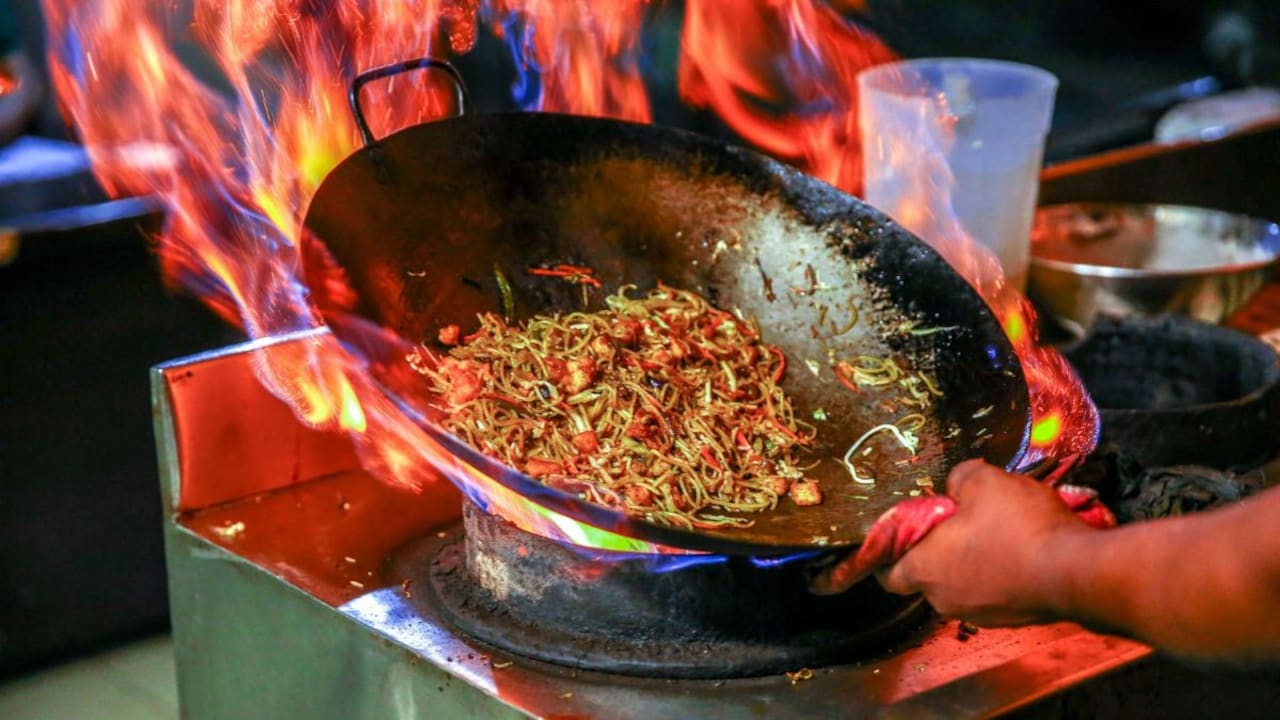
Have you ever wondered why people pause to watch Chinese food being cooked? Well, it is something that I do every time I watch an Instagram video or if I go to a restaurant with live kitchen.











You can see a chef standing over a blazing stove, tossing noodles, vegetables or rice in a wok. Everything moves quickly, and then out of nowhere, for a brief moment, flames shoot up around the pan. It looks like it is a part of cooking, but those flashes of fire are not just for show. There is actually very interesting science behind it. So, what exactly causes those dramatic flames? Let's find out.
ALSO READ | Video: Indians React To Viral Japanese Mint That Freshens Burps, Say, "Pudin Hara Hai"
Why Do Flames Appear In The Wok?
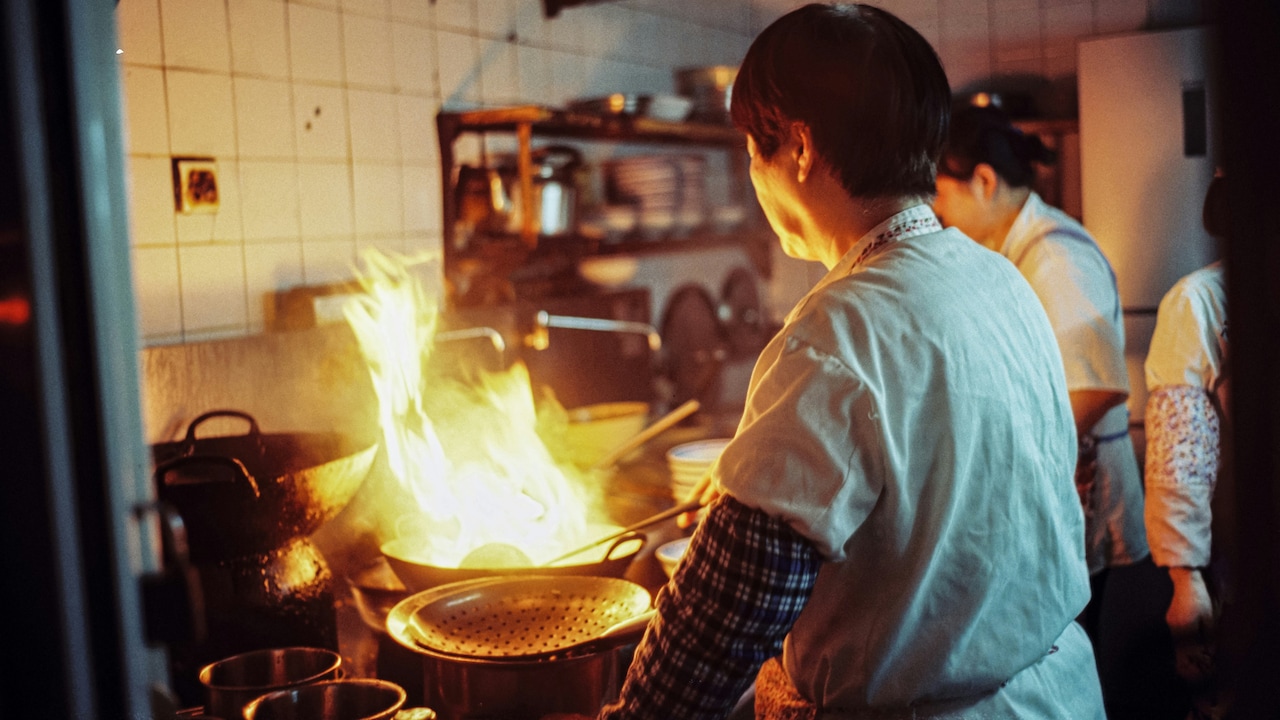
Photo: Unsplash
The answer appears in a mix of high heat, hot oil and powerful gas burners. In many restaurant kitchens, woks are heated temperatures much higher than what most home stoves can get.
As the oil heats up, some of it turns into vapour and tiny droplets. When the chef tosses the food, these droplets rise above the wok and can briefly come into contact with the burner flame. That is when the flare-up happens.
The flames usually last only a second or two before disappearing, and the cooking continues as normal.
Does The Fire Create The Smoky Flavour?
To some extent. The smoky, slightly charred taste often found in stir-fries is known as wok hei, a Cantonese term that roughly translates to "breath of the wok." It is considered one of the characteristics of a good stir-fry.
Wok hei develops when food is cooked very quickly over intense heat. Ingredients brown rapidly, picking up deeper flavours instead of releasing moisture and steaming in the pan. When tiny droplets of oil briefly meet an open flame, they can add to the aroma as well.
Just as important is the chef's constant movement of the wok. Tossing the ingredients helps them cook evenly while exposing them to different heat levels, creating the texture and flavour that many stir-fries are known for.
Can You Recreate It At Home?
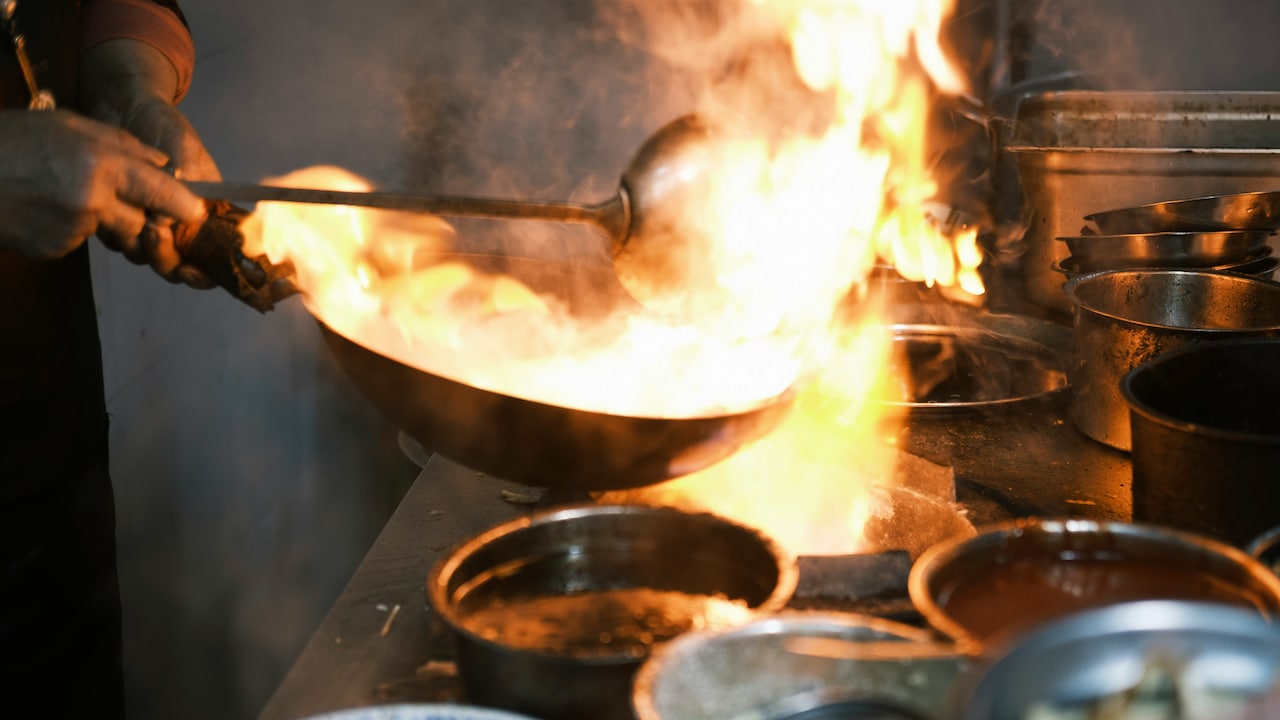
Photo: Unsplash
To some extent, yes, but it is not easy. As mentioned above, restaurant wok burners are far more powerful than most household stoves, which is why the same dish can taste slightly different when made in a professional kitchen.
But that doesn't mean you can't get similar results at home. If you preheat the wok well, cook in small batches and avoid overcrowding the pan, you can get the taste and texture of your favourite dishes to some extent.
ALSO READ | Video: Traveller Finds A Store Where Lay's Packets Are Bigger Than She Is
Too many ingredients at once lower the temperature and make it harder to achieve the quick searing that stir-frying relies on.
One thing you should not do is try to create the flames on purpose. Throwing oil towards a flame can be dangerous and may lead to an uncontrolled grease fire.
So, the next time you spot a wok bursting into flames at a Chinese restaurant, you will know it is not just kitchen theatre!