









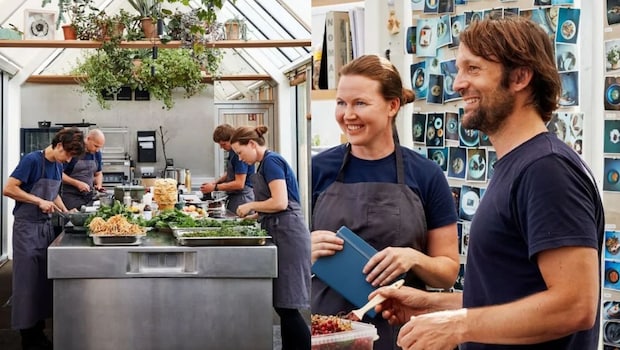
Noma, the world-renowned Copenhagen restaurant led by chef Rene Redzepi, is facing scrutiny after a dozen former employees accused the head chef of subjecting staff to years of physical and psychological abuse. Redzepi has now apologised for the misconduct.
The acclaimed establishment - celebrated for its innovative Nordic cuisine and its many accolades on the global dining stage-has long been considered one of the most influential restaurants in the world. However, a former Noma staff member told The New York Times that its reputation was built on abusive working conditions, including violent punishments and psychological harassment by chef Rene Redzepi. "He just went down the line and punched us in the chest," said Ben, a chef who worked at Noma in 2012. He added that the head chef would punish all employees for one person's mistake, and that it had become routine.
One former cook reported that in 2011, Redzepi slammed him against a wall and then punched him twice in the stomach after he left a tiny tweezer mark on a flower petal while plating a dish. "Going to work felt like going to war," shared Alessia, now a chef in London, adding, "You had to force yourself to be strong, to show no fear." She also revealed that she was part of that culture and asked that her surname not be used, fearing retaliation. Several other accusations were made against the chef, leading to widespread criticism on social media.
Chef Rene Redzepi Issues Apology For His Actions
Following these reports, Redzepi issued a public apology for his past harmful behaviour toward staff in his kitchen and for his overall management style. Acknowledging the incidents involving his leadership, he expressed deep regret for the suffering caused and promised to take steps to change.
In a series of image-based messages posted on Instagram, he wrote, "I want to address past stories around my leadership in the kitchen that have resurfaced recently. Although I don't recognise all details in these stories, I can see enough of my past behavior reflected in them to understand that my actions were harmful to people who worked with me. To those who have suffered under my leadership, my bad judgment, or my anger, I am deeply sorry, and I have worked to change."
Reflecting on his personal experiences in a toxic kitchen early in his career, he continued, "When I first started cooking, I worked in kitchens where shouting, humiliation, and fear were simply part of the culture. I remember standing there as a young cook thinking that if I ever had my own kitchen one day, I would never lead like that. But after we opened Noma and the pressure began to grow, I found myself becoming the kind of chef I had once promised myself I would never be. No matter how real this pressure felt to me at the time, it should never justify losing my temper."
Also Read: Doctor Flags 'Puffed' Milky Mist Paneer Packets Weeks Before Expiry; Company Clarifies
This is not the first time the chef has acknowledged his poor behaviour toward staff. He shared, "A decade ago, I began speaking openly about my behaviour in the kitchen - the outbursts, the anger, and at times even physical aggression, where I shouted and pushed people, acting in ways that are unacceptable," adding, "I was not able to handle the pressure; small mistakes could feel enormous to me, and I reacted in ways that I regret deeply today. I knew I needed to change, and I wanted to change. Since then, I have been determined to understand my anger and deal with it differently."
Also Read: "Chat Support Worse After AI": Zomato User's X Post Sparks Debate Online
In the same statement, he revealed that he has been undergoing therapy over the past decade, which involved deep reflection and stepping away from leading day-to-day service. He shared that he has been finding better ways to manage his anger and is still learning. "The organisation we are today is very different from the one we started with. I'm grateful for our team and the way they have helped transform our kitchen culture, and for their dedication to moving the industry forward. They are a team that makes me want to do better every day. I cannot change who I was then, but I take responsibility for it and will keep doing the work to be better," he concluded.
The developments have sparked broader discussions about behaviour and accountability in professional kitchens.