






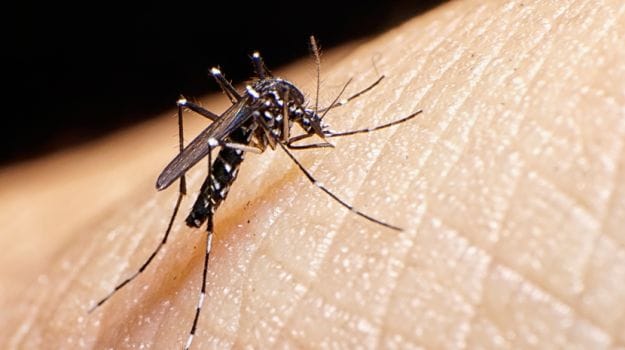
A specialised area of the mosquito brain mixes tastes with smells to create unique flavours, scientists have revealed, suggesting the development of a powerful odourant that can make "human flavour" repulsive to malaria-bearing species.

 Should Machines Decide Who Lives And Dies In A War? Ex-CIA Chief Answers
 Kriti Sanon Says Instagram Has No Option To Report AI-Generated Images Of Her
 What Anthropic, Monks And The Cusp Of Consciousness Teach About Tomorrow
 Nikhil Kamath's Big AI Bet: Why India Should Look Beyond Silicon Valley
 When Will India Get Its Own Apple, Samsung? Ashwini Vaishnaw Reveals Timeline
 Neeru Saini On Fitness, Focus & Her Love for Churma!
 NDTV Lifeline- Himanshu Saini on the Secret to Eating Well: More Greens, Healthier Desserts
 Hockey Champions Savita Punia & Neha Goel on Fitness, Recovery & The Meaning of Health
 Millets: The Superfood That's Good for You and the Planet
 Yoga, Millets, Vaccines: S Jaishankar On How India Is Building Stronger Ties | NDTV World Summit
Because smell is essential for mosquito survival, each mosquito has three pairs of "noses" for sensing odours: two antennae, two maxillary palps and two labella.To better understand how an gambiae mosquitoes that cause malaria receive and process olfactory information from so many sensory regions, Potter's team wanted to see where olfactory neurons from those regions go to in the brain.They used a powerful genetic technique to make certain neurons "glow" green.The green glowing label was designed to appear specifically in neurons that receive complex odours."This is the first time researchers managed to specifically target sensory neurons in mosquitoes. Now, we can study the sense of smell in the insects that spread malaria," added Olena Riabinina, postdoctoral fellow at Imperial College London.The team was surprised by how well genetic technique worked and how easy it was to see the smell-detecting neurons."That finding suggests that perhaps mosquitoes don't just like our smell, but also our flavour," Potter noted.It's likely that the odourants coming off our skin are picked up by the labella and influence the preferred taste of our skin, especially when the mosquito is looking for a place to bite.This suggests that a combination of repellants could keep mosquitoes from biting humans."We hope to find an odourant that is safe and pleasant-smelling for us but strongly repellant to mosquitoes at very low concentrations," said Potter in a paper appeared in the journal Nature Communications.(This story has not been edited by NDTV staff and is auto-generated from a syndicated feed.)