



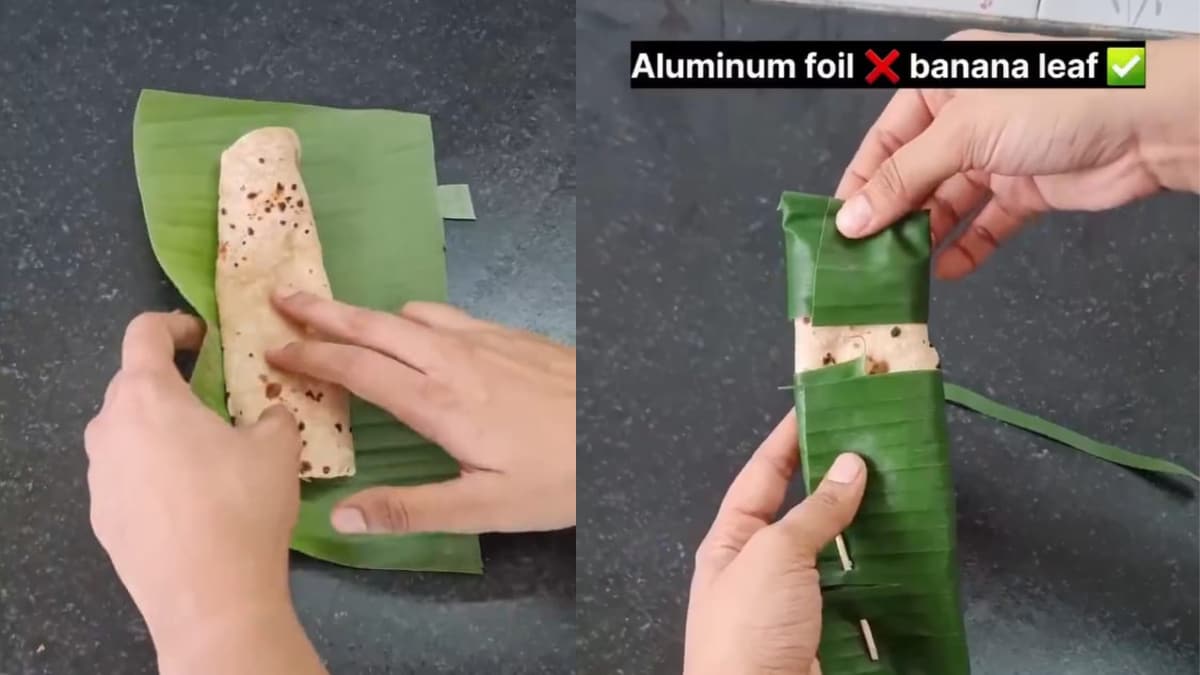
Kitchen hacks for packing food often receive a lot of interest online. These viral hacks generally show unique methods to wrap, seal and/or transport various common dishes. Some may rely on traditional ideas while others are more experimental. Recently, a video promoting the use of banana leaves in place of aluminium foil for wrapping food went viral on social media. In it, a woman can be seen demonstrating a step-by-step technique for wrapping a roti using a part of the big green leaf. She uses toothpicks to secure it carefully.
Sister has shown us a new way to pack and eat rolls ❤️❤️❤️
Avoid aluminium foils or plastic. Go for Banana Leaves. Eco friendly hack 🔥🔥🔥
Loved the ending where she shows how to unwrap. Crazy...#FIpic.twitter.com/3qVpigOWdH— Fundamental Investor ™ 🇮🇳 (@FI_InvestIndia) December 29, 2025
The viral video was reshared on X, where it sparked a debate about the pros and cons of using banana leaves in this way (especially as a substitute for foil). Read some of the reactions below.
Love how sustainable choices don't always have to be complicated.— Anupama Singh (@anupamaasingh) December 29, 2025
Banaa leaves are expensive , plus when packed hot will add to the flavor palate of the food— MannyG (@MannyG1107) December 29, 2025
Banana leaves tear easily….not easily available when actually needed. ….food does not remain warm— Pramod Shetty (@pramodshetty123) December 29, 2025
I appreciate this idea, but it may not be practical during busy hours.— Maya (@Maya_Auraa) December 30, 2025
That's a very good idea. 👍👍— Ramesh Shivadekar🇮🇳 (@Race_Ramesh) December 30, 2025
Is Banana Leaf A Realistic Substitute For Aluminium Foil For Wrapping Food?
Banana leaves have long been used across Asia, Africa, and Latin America for cooking and packing food. The key question isn't whether it is "better" than aluminium foil, but where banana leaves can genuinely do the job and where foil still has a clear advantage.
What Makes Banana Leaf A Viable Alternative?
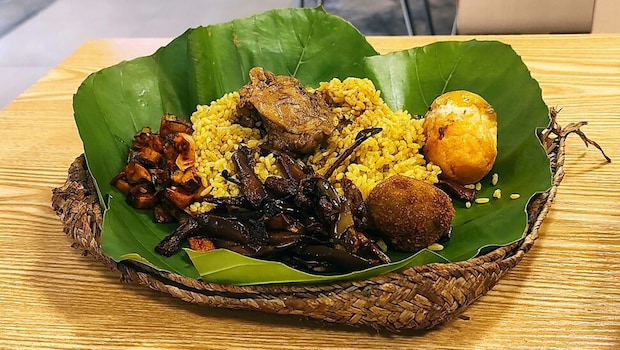
Photo Credit: Unsplash
Banana leaves come with a few built-in benefits. Their slightly waxy surface helps hold moisture without trapping too much steam, and they can handle moderate heat. They don't react with salty, acidic, or spiced foods, which makes them suitable for marinades and spice rubs. They also give food a mild aroma that many people consider a plus.
From a sustainability point of view, they're biodegradable and compostable, which avoids the disposal concerns linked to single-use foil. While banana leaves won't work in every situation, they're more practical than many people expect.
Also Read: Are 'Microwave-Safe' Containers Actually Safe? Experts Break It Down
Where Banana Leaves Perform Well
1. Steaming
Banana leaves are reliable for steaming dishes like idlis, momos, tamales, and fish parcels. They don't stick easily, they withstand steam well, and they let heat circulate naturally.
2. Grilling and Light Roasting
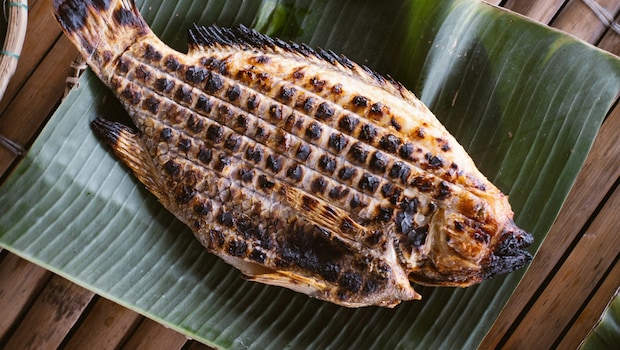
Photo Credit: Unsplash
On a grill or in a moderate oven, banana leaves act as a protective layer. They help keep food moist and prevent direct contact with flames or strong heat. They may brown or weaken, but using a double layer usually keeps things intact.
3. Short-Term Wrapping and Transport
For a few hours of storage, like packing meals for travel, picnics, or (select) tiffins, banana leaves generally hold up well. They're breathable, which prevents food from getting overly sweaty or damp. Of course, it's important that they are not subjected to harsh movements.
4. Serving and Presentation
They also function well as serving sheets, offering a clean, natural surface. Many restaurants and home kitchens use them to enhance presentation without adding extra waste.
Where Banana Leaves Cannot Fully Replace Foil

1. Long-Term Storage and Freezing
Banana leaves dry out and crack over time in the fridge or freezer. They aren't built for long-term storage.
2. Airtight Sealing
They don't naturally create a tight seal. To secure them, you need string, toothpicks, or extra layers, and even then they're not leak-proof.
3. High-Temperature Oven Use
Very high heat can scorch or break the leaves down. For heavy roasting or high-temperature baking, foil still performs better.
4. Packing Liquids, Oily Foods, or Curries
Runny or oily dishes can seep through banana leaves. In situations where containment is essential, foil remains more dependable.
Concerns About Aluminium Foil
There are a few reasons people are rethinking foil use. Small amounts of Aluminium can transfer to food, especially when foil is used with acidic or salty ingredients or at high heat. While this doesn't automatically make foil unsafe, it is worth being aware of how and when it's used. Wrapping hot food tightly for long periods is also not ideal for the same reasons. Some experts warn against the constant/frequent use of aluminium foil for packing food. Environmental concerns play a role too. Foil that comes in contact with grease or sauces is often not recyclable, and being single-use means it adds to household waste.
Also Read: Do You Store Your Food In Aluminium Foil? Here's Why You Should Stop
Practical Tips For Using Banana Leaves For Wrapping Food
- Warm the leaf briefly over the heat to soften it and reduce tearing.
- Double-layer for grilling or oven use.
- Secure edges with string or toothpicks.
- Pair with parchment if both structure and aroma are needed.
Banana leaves can realistically replace aluminium foil in several everyday cooking situations. They offer a natural, low-waste option with a few other benefits. At the same time, aluminium foil still has a role in the kitchen for airtight sealing, high heat, and long-term storage. The practical approach is not to treat either material as the default. Instead, choose based on what the task needs.