







There are some dishes that are just quietly, confidently brilliant. No drama, no elaborate plating, no ten-step sauce. Just good ingredients, a bit of patience, and a result that makes you wonder why you ever reached for a packet of biscuits when you were hungry. Handvo is exactly that kind of dish. It is a savoury, spiced cake from Gujarat, packed with lentils, rice, and vegetables, that has been feeding families at breakfast tables and evening snack sessions for generations. It is hearty without being heavy, filling without making you feel like you need a nap, and deeply, properly flavourful. If you have never made it at home, this is the article that will change that.
Also Read: Food Festivals And Exciting Events To Check Out Across India In March And April 2026
What Exactly Is Handvo?
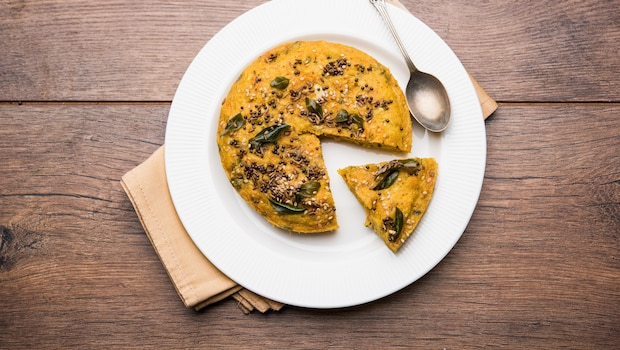
Handvo is a traditional Gujarati dish that sits somewhere between a savoury cake and a thick, pan-cooked bread. The base is a fermented batter made from rice and a combination of lentils, most commonly chana dal, tuvar dal, and urad dal, which is soaked, ground, and left to ferment overnight. Vegetables are then folded in, the batter is seasoned generously, and the whole thing is cooked low and slow on the stovetop until both sides are golden and crisp.
There is, in fact, a special handvo cooker, a thick, cast-like aluminium vessel, that is a staple in many Gujarati kitchens. But you do not need it. A heavy non-stick pan, an iron kadai, or a pressure cooker will do the job perfectly well.
What makes handvo special is the fermentation. Like idli and dosa batter, the overnight rest transforms the mixture into something lighter, tangier, and far more complex in flavour. The lactic acid that develops also makes the dish easier to digest, something Gujarati grandmothers have always known, long before anyone put a probiotic label on it.
The Vegetables, The Spices, And The Eno

The most traditional handvo uses bottle gourd (lauki or doodhi) as its primary vegetable. Lauki has a high water content that keeps the handvo moist, and a mild flavour that does not compete with the spices. Beyond that, grated carrots add sweetness, cabbage adds texture, and fresh coriander brightens everything up. Spinach, methi leaves, or green peas work well too. The general rule: if it can be grated or finely chopped, it probably belongs in handvo.
One useful tip: once you mix your vegetables into the batter with salt, leave it for ten minutes before cooking. The salt draws out moisture from the vegetables, which loosens the batter slightly. This is normal. Do not add water. If it feels too runny, a tablespoon or two of fine sooji will sort it out.
On the spice front, handvo is savoury, mildly spicy, and has a gentle sweetness that might surprise you. A small amount of sugar in the batter is classic Gujarati, and it balances the tang of fermentation against the heat of the ginger and chilli. Do not skip it. The spice mix itself is turmeric, red chilli powder, fresh ginger-chilli paste, and asafoetida (hing). Hing appears twice — in the batter and again in the tempering, and it is doing a lot of the flavour work both times.
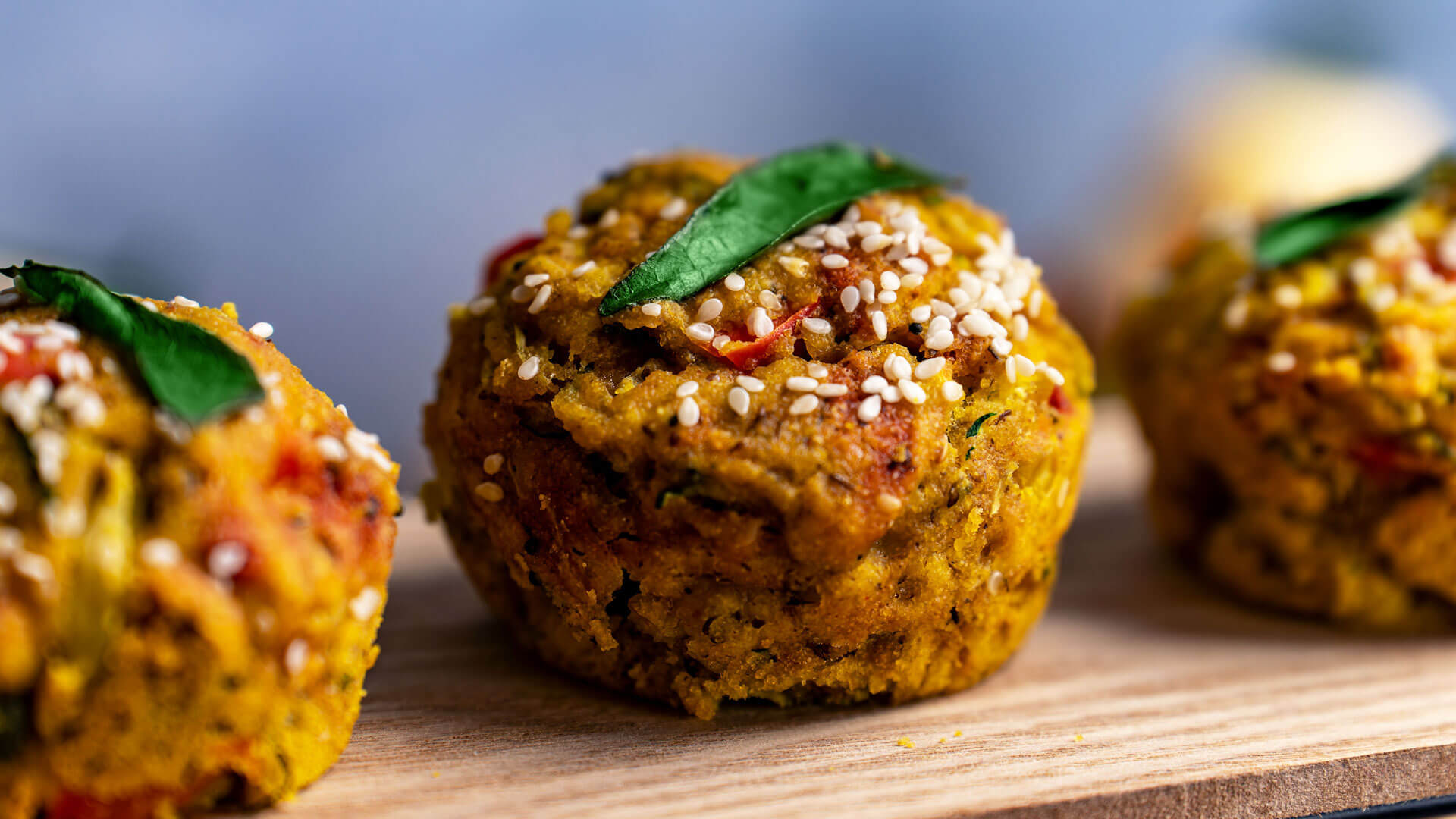
The tempering, poured directly over the batter in the pan just before the lid goes on, is what really finishes the dish. Mustard seeds, cumin seeds, sesame seeds, and curry leaves bloom in oil to form a crunchy, nutty crust on the outside of the handvo that is genuinely one of the great textural pleasures in Indian snack cooking.
Then there is Eno. The same fruit salt you reach for when your stomach is upset is an essential leavening agent here, as it is in dhokla and muthia. Added just before cooking, it creates tiny bubbles that make the handvo lighter and more porous. Once you add it and stir, move immediately — you have about a minute before the reaction fades. Add it portion by portion if you are cooking the batter in batches; adding it to the whole batch at once will result in a flat, dense result.
The Full Recipe
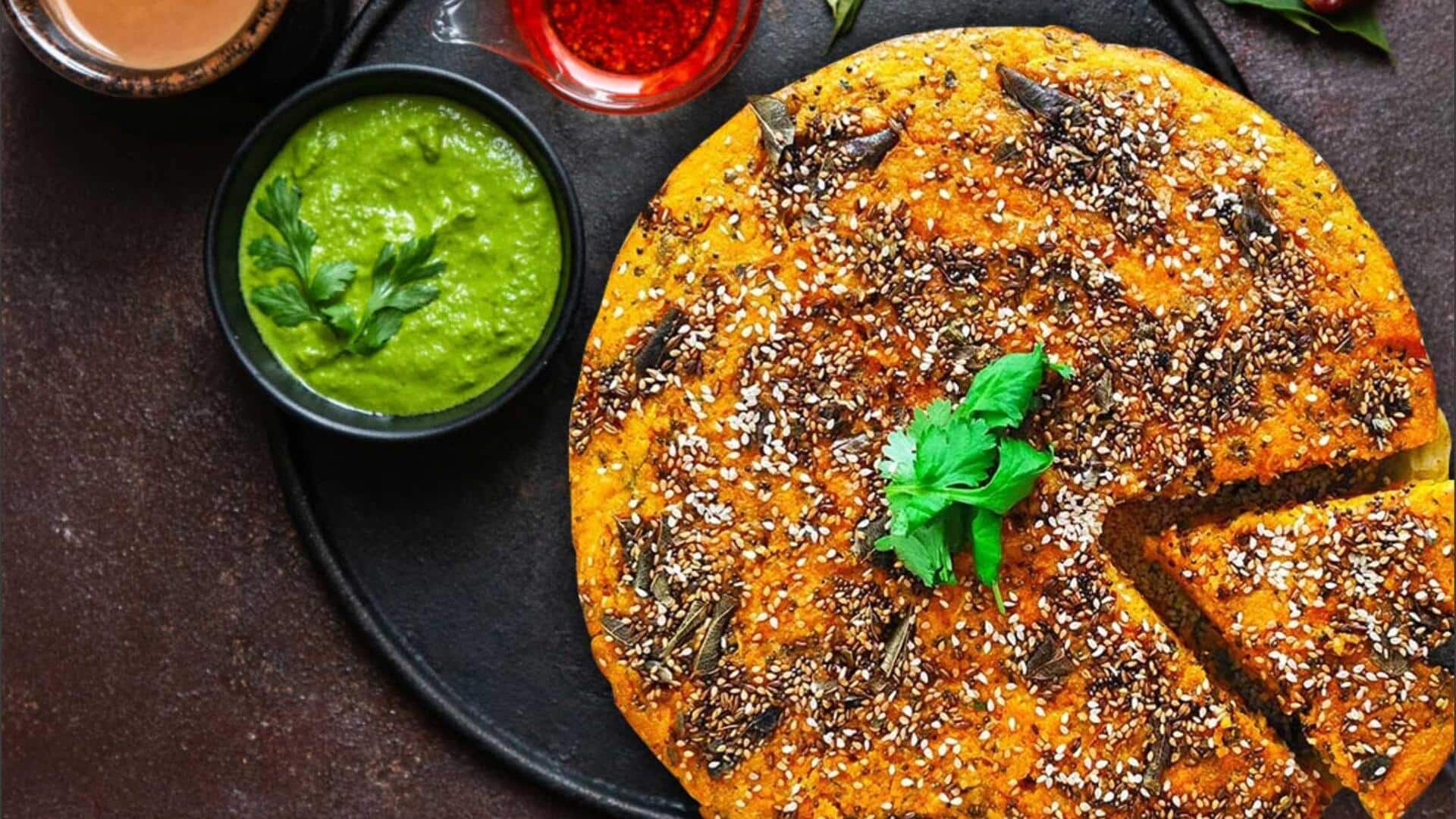
Makes: 4 to 5 servings | Prep time: 10 to 12 hours (soaking and fermentation) | Cook time: 25 to 30 minutes
For The Batter
- 1 cup rice
- ½ cup chana dal
- ¼ cup tuvar dal
- 2 tablespoons urad dal
- ½ cup fresh curd (not sour)
For The Vegetables And Seasoning
- 1 cup grated bottle gourd (lauki), lightly squeezed
- ½ cup grated carrots
- ½ cup finely grated cabbage
- ½ cup fresh coriander, chopped
- 2 tablespoons ginger-green chilli paste
- Salt to taste
- ⅔ teaspoon turmeric powder
- 1 tablespoon red chilli powder
- ½ teaspoon asafoetida (hing)
- 1½ tablespoons sugar
- 1½ tablespoons oil
- ½ teaspoon Eno fruit salt (per batch being cooked)
For The Tempering
- 2 tablespoons oil
- ½ teaspoon mustard seeds
- ½ teaspoon cumin seeds
- 1 tablespoon sesame seeds
- A few curry leaves
- A pinch of asafoetida
Method
Step 1: Soak. Combine the rice and all three dals, rinse well, and cover with fresh water. Soak for at least four to five hours, though overnight gives a better result. A small handful of masoor dal can be added too — it blends nicely into the batter.
Step 2: Grind. Drain and blend with the curd and just enough water to get the blades moving. Keep it thick and slightly coarse, smooth batter makes for a denser handvo. Transfer to a wide bowl and whisk for a minute to get some air in. Use fresh, non-sour curd. The batter will develop its own tang during fermentation, and starting with sour curd makes it uncomfortably acidic.
Step 3: Ferment. Cover loosely and leave in a warm, dry spot for six to eight hours or overnight. The batter will not rise dramatically, but it will lighten noticeably and smell pleasantly tangy. That is exactly right.
Step 4: Add vegetables and spices. Stir the fermented batter well, then fold in all the vegetables, the ginger-chilli paste, salt, turmeric, red chilli powder, hing, sugar, and oil. Mix thoroughly and leave for ten minutes. If the batter loosens too much, add a tablespoon of sooji.
Pro tip: Only add vegetables to however much batter you plan to cook right now. Keep the rest of the fermented batter plain in the fridge and add fresh vegetables each time. Batter with salt and vegetables already mixed in can turn watery and will not cook as well.
Step 5: Cook. Heat a heavy-bottomed pan over medium flame and add two tablespoons of oil. Add Eno to your portion of batter, drizzle a little water directly onto it, and stir quickly. The batter will turn slightly foamy — pour it into the pan immediately and spread into an even layer about an inch thick.
Now prepare the tempering fast: heat oil in a small pan, add mustard seeds and let them splutter, then add cumin, curry leaves, sesame seeds, and hing. Let the sesame toast for thirty seconds until golden, then pour everything directly over the batter in the pan. Cover and cook on low flame for eight to ten minutes, until the edges are dark and crispy and the surface looks set.
Step 6: Flip and finish. Flip the handvo with a flat spatula — do it confidently, as hesitation leads to breakage. If you are nervous, cook the batter in two smaller portions. Cover again and cook on low for five to six more minutes until the second side is equally golden. Cut into wedges or squares and serve hot.
Also Read: How To Make Traditional Uttarakhandi Chaunsa Dal Using Roasted Urad Dal
How To Serve It (And What To Do With Leftovers)

Handvo is best served hot with fresh green coriander chutney; the cool, sharp contrast against the warm, spiced cake is exactly what it needs. Plain curd on the side works beautifully too, or a quick raita made by blending curd with a little coriander and a pinch of chaat masala. It works as a full breakfast, a filling evening snack, or a light dinner. Leftovers reheat well in a pan with a tiny splash of oil, which brings the crust back to life. Avoid the microwave, it makes the edges soft and slightly sorry for themselves.
If you would rather bake than cook on the stovetop, preheat your oven to 180°C, pour the batter into a greased tin, add the tempering on top, and bake for thirty to thirty-five minutes until golden and cooked through. The oven version is slightly fluffier; the stovetop version has a better crust. Both are worth making.
Also Read: 5 Coconut Water Recipes That Actually Make The Heat Bearable
The Snack That Does It All
Handvo rewards patience. The soaking, the fermentation, the slow flame, none of it is difficult, but all of it takes time. What you get in return is something genuinely nourishing, packed with protein from the lentils, fibre from the vegetables, and the quiet benefits of fermentation. It is the kind of dish that tastes even better when made at home than it does anywhere else, and there is a reason it has stayed in Gujarati kitchens for as long as anyone can remember. Make it on a slow weekend, or prep the batter overnight on a weekday, and you will find yourself wondering why it took you this long to try it.