

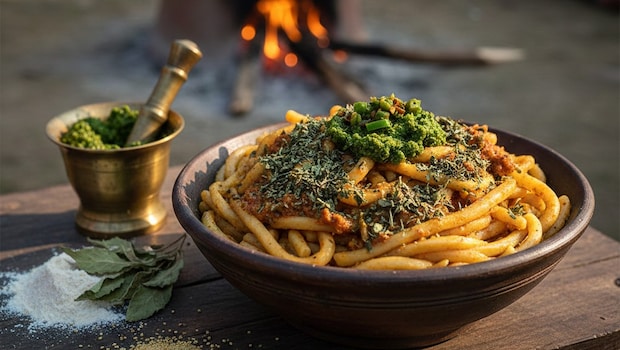
At the Rashtrapati Bhavan banquet hosted in honour of European Union leaders recently, the menu signalled a conscious shift away from familiar state-dinner classics. Curated by Chef Prateek Sadhu, the spread focused on Himalayan regional cuisines, highlighting ingredients and techniques shaped by mountain life. One of the lesser-known dishes served was sundarkala, a handmade noodle preparation from Uttarakhand. Its inclusion was notable not because it is rare or luxurious, but because it is ordinary. This home-style delicacy is fascinating for several reasons, as you shall discover:
What Is Sundarkala?
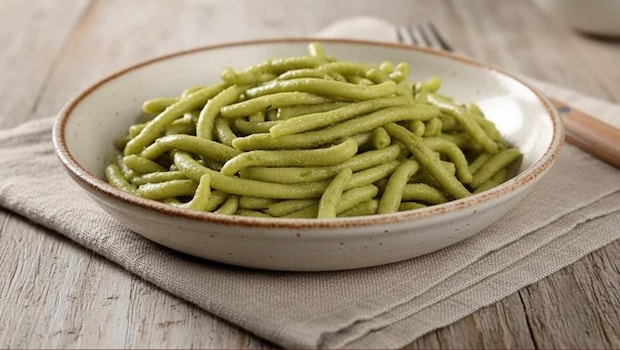
Sundarkala (often called "Pahadi noodles" or "Garhwali pasta" in popular writing) is a hand-rolled noodle made traditionally from whole wheat flour, and sometimes mixed with mandua (finger millet) flour. The noodles are thicker and chewier than the regular noodles many of us are used to: they are an artisanal product of the palm-and-thumb technique rather than a machine. The name is regionally specific to parts of Chamoli and neighbouring Garhwal villages, where the dish developed as a winter, home-made preparation.
Sundarkala Ingredients: Minimal, Local, And Meaningful
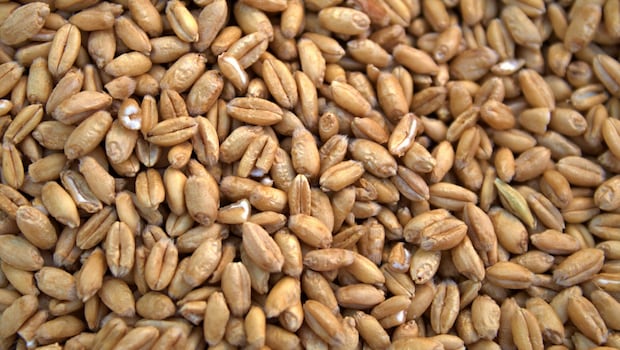
Photo Credit: Unsplash
Sundarkala is made using whole wheat or a wheat+mandua mix, salt, sometimes a pinch of turmeric for colour and shelf-life, and water. The use of mandua/finger millet (where employed) gives the noodle an earthier taste and higher fibre content. Finishing flavours are local and immediate: mustard oil, fresh or sautéed garlic leaves, green chillies, and occasionally aromatic wild spices or temperings characteristic of Garhwali kitchens.
Sundarkala is versatile in its simplicity. At its most humble, it is a bowl of boiled noodles dressed with mustard oil, salt and green chillies. It can also be tossed with sauteed garlic leaves, local greens, or served alongside pickles and hot tea. In some homes, a light dal, vegetable curry or broth may accompany the noodles. Regional households vary in the use of turmeric (for colour and preservation) and whether they add a measure of ghee or mustard oil for richness.
Texturally, sundarkala is toothy. It has a satisfying chew that is distinct from refined semolina pastas or rice vermicelli. If made with mandua, there is a subtle nuttiness and denser mouthfeel. The seasoning tends to let the grain's flavour speak, punctuated by pungent mustard oil, bright chillies, and the grassy perfume of garlic leaves or wild aromatics when available. The result is a delight that is warming and unmistakably rustic.
Cultural Significance Of Sundarkala
As per reports, sundarkala is not just sustenance; it is a social act. The noodle-rolling often involves multiple hands: a shared winter labour in Uttarakhand that brings people together. Its presence at a household table signals seasonality and kinwork. Moreover, across the Himalayas and in many mountain cultures, hand-made dough products fill the same functional niche: uncomplicated, filling, and easy to pair with simple condiments. Sundarkala shares this resemblance with other hill preparations.
Short Recipe For Sundarkala
For readers who want to try a hill-inspired version at home:
- Mix 2 cups whole wheat flour + 1 cup mandua (optional), 1 tsp salt, and a pinch of turmeric.
- Add water gradually and knead to a firm dough. Rest for around 15-30 minutes.
- Divide into small balls, roll each into long ribbons using palms/board.
- Boil in salted water until done (5-8 minutes, depending on thickness). Drain.
- Toss in mustard oil, minced garlic leaves or garlic, slit chillies and a pinch of salt. Serve hot.
This is a simplified adaptation; traditional techniques and proportions can differ.
In an age of instant noodles, sundarkala offers a different kind of delight. It is not haute cuisine, and that is precisely its point. Relishing such handmade noodles requires us to slow down and recognise the work of hands, the taste of place, and a calendar of seasons.