


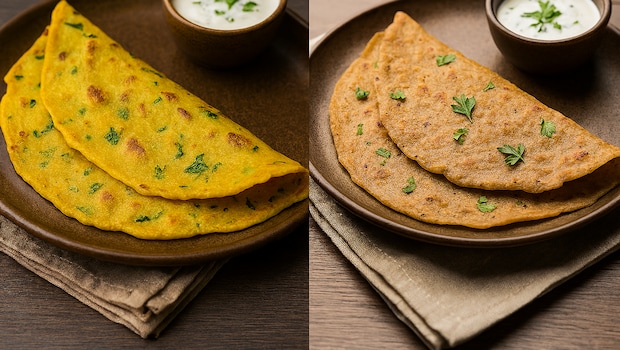
If you are trying to lose weight, choosing the right breakfast or snack can make a big difference to your progress. You need something that is filling, nutritious and easy to prepare without adding unnecessary calories. In many Indian homes, cheelas are a popular choice because they are savoury, versatile and quick to cook. Among the most loved versions are besan cheela and dal cheela, both made without refined flour and generally considered healthy. But when weight loss is the goal, their nutritional differences matter more than taste alone. To decide which one works better, it helps to look at their protein content, digestion profile and what nutrition experts recommend.
Also Read: 5 Smart Tips To Cook Ragi Cheela That Is Soft, Tasty And Nutritious
Besan Cheela: High Protein And Steady Energy
Besan cheela is made from gram flour, which comes from chickpeas and is naturally rich in plant protein and dietary fibre. According to nutritionist Pooja Malhotra, besan-based foods help stabilise blood sugar levels because chickpea flour has a low glycaemic index. This means besan cheela provides steady energy and helps reduce sudden hunger pangs, making it suitable for people trying to control portions during the day.
Studies published in the Journal of Nutrition have shown that diets higher in protein and fibre can improve feelings of fullness and support weight management. Besan also contains resistant starch, which supports gut health and slows digestion. When cooked with minimal oil and combined with vegetables like onion, spinach or lauki, besan cheela becomes a nutrient-dense meal that keeps you full for longer without adding many calories.
Because it does not require soaking or grinding, besan cheela is also convenient, which helps maintain consistency, an often-overlooked factor in long-term weight loss.
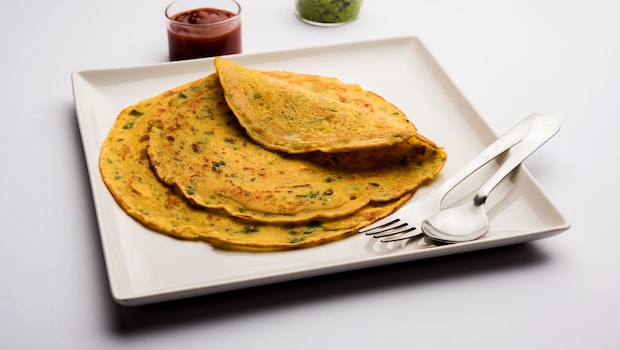
Photo Credit: iStock
Dal Cheela: Lighter And Easier On Digestion
Dal cheela is usually made using soaked and ground lentils such as moong dal or a mix of dals. Moong dal, in particular, is known for being light on the stomach and easy to digest. Moong dal is an excellent option for people with sensitive digestion or those who experience bloating, as it provides protein without heaviness.
Lentils are rich in soluble fibre and plant protein, and research from the National Institutes of Health suggests that regular consumption of pulses can help reduce body weight and waist circumference when incorporated into calorie-controlled diets. Dal cheela is generally lower in fat and calories compared to besan cheela, especially when made without added oil, making it a good choice for people aiming for a lighter meal.
However, because dal cheela tends to be softer and slightly lower in fibre compared to besan cheela, it may not keep you full for as long, especially if eaten on its own without vegetables or a protein-rich accompaniment.
Besan Cheela vs Dal Cheela: Which Supports Weight Loss Better?
Both besan cheela and dal cheela can fit well into a weight-loss diet, but they serve slightly different purposes. Besan cheela has an edge when it comes to satiety, thanks to its higher fibre content and slower digestion. It is particularly helpful if you struggle with frequent snacking or long gaps between meals.
Dal cheela works better if you prefer something light, easy on digestion and lower in calories. It can be a smart option for dinner or for days when your activity level is low, as it does not feel heavy yet still provides essential protein.
Also Read: How To Make Sooji Cheela: An Instant Breakfast That Is Sure To Delight
For weight loss, besan cheela may be the better option if your goal is to stay full for longer and manage cravings throughout the day. Dal cheela, on the other hand, suits those who want a lighter, protein-rich meal that is gentle on the stomach. When eaten mindfully, both can support healthy and sustainable weight loss.