



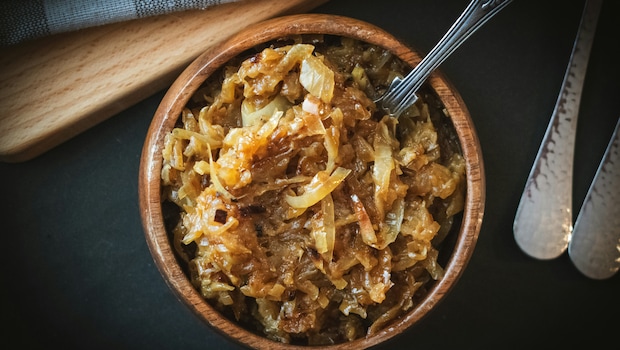
There is a jar sitting in the fridge of every serious home cook. It is not glamorous, it costs almost nothing to make, and the ingredients list is barely two lines long. But it is the thing that gets pulled out when a dal feels flat, when a sandwich needs something more, when a gravy needs depth at ten minutes' notice, when eggs need company on a Sunday morning. That jar contains caramelised onions. Slow-cooked, golden-brown, jammy, sweet, and deeply savoury all at once, caramelised onions are one of the most transformative things you can make in a kitchen. They take about an hour of mostly unattended cooking and reward you with something that functions like a flavour cheat code across an extraordinary range of dishes.
Also Read: Which Spice Is Known As The King Of Spices?
What Actually Happens When You Caramelise An Onion

Understanding the science of cooking can enhance your culinary skills. A raw onion is sharp due to sulphur compounds released when its cells are broken. However, cooking it over low heat for an extended period transforms it. The Maillard reaction creates new flavour compounds, while the onion's sugars caramelise, turning it golden-brown and sweet. The sulphur compounds break down into pleasant-smelling molecules. The result is a sweet, savoury, and umami-rich taste with a jammy texture, nothing like a raw onion. This transformation requires patience, taking 45 minutes to an hour, unlike the misleading 15-minute recipes online.
Caramelised Onions And The Indian Kitchen: Closer Than You Think
The Indian kitchen has long embraced caramelised onions, known as beresta in Bengali cooking, forming the base of biryani and korma. Mughlai gravy uses a browned onion paste, while ‘pyaaz ka tadka' in curries is another form of caramelisation. Both Indian and Western traditions share this process: patience, low heat, and a good pan create magic. The difference lies in use; Western cuisine spreads them on sandwiches and pasta, while Indian cuisine incorporates them into gravies for depth. The article suggests a middle path: prepare caramelised onions, store them in the fridge, and use them as a versatile condiment in various dishes.
How To Make Caramelised Onions: The Proper Method
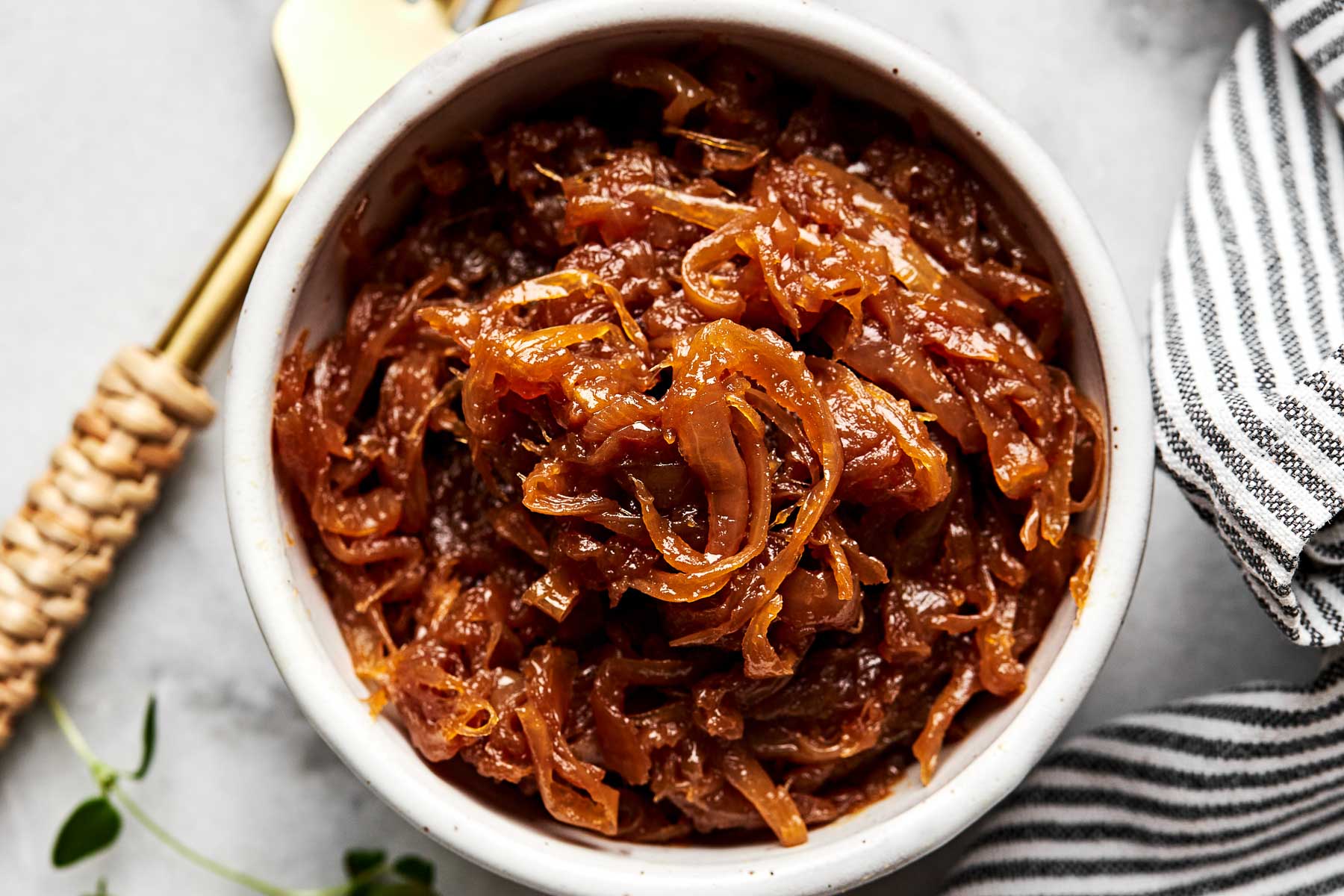
This is the baseline recipe. Make this once, store it, and use it across everything listed in the next section. The quantities below yield roughly a cup to a cup and a half of caramelised onions, which will last in the fridge for about two weeks, or can be frozen for up to three months.
Ingredients:
- 1 kg yellow or brown onions (about 6 to 8 medium onions)
- 3 tablespoons ghee, butter, or a neutral oil (ghee gives the best flavour for Indian applications; butter works beautifully for everything else)
- 1/2 teaspoon salt
- 1 teaspoon sugar (optional, but helps the process along)
- 1 tablespoon balsamic vinegar or apple cider vinegar (optional, added at the end for brightness)
Method:
- Peel and slice onions thinly and uniformly; a mandoline is quick, but a sharp knife works too. Uniform slices ensure even cooking. Heat ghee or butter in a wide, heavy-bottomed pan over medium heat. A wider pan allows more surface area for cooking and moisture evaporation. A kadhai, wide non-stick, or cast-iron pan is ideal.
- Add all onions at once; they will fill the pan. Don't worry, as they shrink significantly during cooking. One kilogram of raw onions reduces to about a cup and a half of caramelised onions. Add salt immediately to draw out moisture and speed up softening. Stir and cook, stirring every few minutes.
- After 10 to 15 minutes, the onions will soften and release liquid. Lower the heat to medium-low. Avoid increasing heat, as it can burn the onions, resulting in bitterness. Continue cooking, stirring every 5 minutes, and scrape up stuck bits with a splash of water. Cook for another 30 to 40 minutes until onions darken from pale gold to deep reddish-brown.
- If using sugar, add it in the last 10 minutes for extra caramelisation. For vinegar, add in the last 2 to 3 minutes to balance the sweetness. Cool completely before storing in a jar in the fridge for up to 2 weeks or freeze in ice cube trays.
12 Ways to Use Caramelised Onions in Your Kitchen
This is where the real value of keeping a jar in the fridge becomes clear. Caramelised onions are not a single-use ingredient, they are a flavour Swiss Army knife. Here is how to deploy them across a range of Indian and global dishes.
In Indian Cooking:
1. As a Biryani and Pulao Base
Stir two to three tablespoons of caramelised onions into your rice at the layering stage. They add the depth and sweetness that biryanis traditionally get from slow-fried beresta — and they are significantly less effort. They also work beautifully in simple pulao, stirred through the rice at the end.
2. To Deepen Any Curry or Sabzi
A tablespoon of caramelised onions added to the onion-tomato-masala base of a curry adds immediate depth. You are essentially adding an hour's worth of flavour to a dish that might only take twenty minutes to cook. This works particularly well in rajma, chole, and any cream-based gravy like makhani or korma.
Also Read: Kerala's Rs 40 Kulukki Sarbath Is Shaken Like A Cocktail And Served On The Streets
3. On Your Eggs
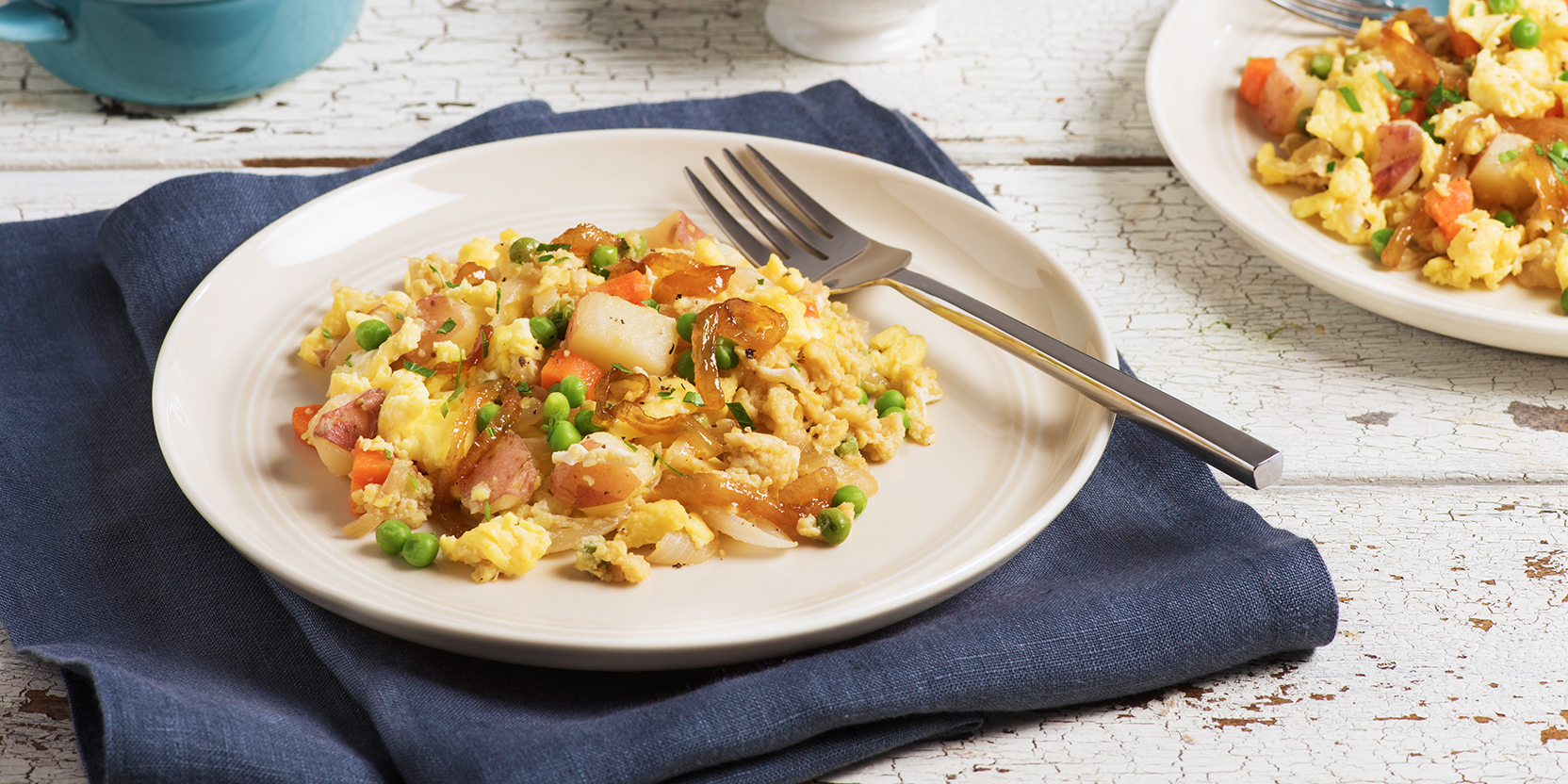
A spoonful of caramelised onions scrambled into eggs right at the end of cooking transforms a basic anda bhurji. Add a slit green chilli and some fresh coriander, and you have something genuinely extraordinary. They also make a brilliant topping for a masala.
4. In Dal
Stir a tablespoon into your regular dal tadka before adding the tempering. The onions blend into the dal and give it a body and sweetness that makes it taste slow-cooked even when it was not. This works in toor dal, masoor dal, and moong dal equally well.
5. In Parathas and Stuffed Breads
Mix caramelised onions with grated paneer or mashed aloo for a paratha filling that is noticeably more interesting than the standard version. The sweetness of the onions plays beautifully against the spice of the potato filling.
6. With Curd or Raita
Stir a tablespoon into thick hung curd along with some black pepper and salt. You get an onion dip that functions as an upmarket raita, deeply savoury, sweet, and cool all at once. Excellent with rotis or as a dip for vegetable crudites.
Beyond the Indian Kitchen:
7. On Toast and Sandwiches
Spread caramelised onions directly on toast under a fried egg. Or layer them into a sandwich with cheese, grilled paneer works brilliantly here, but processed cheese melted over caramelised onions on toast is one of the best quick snacks in existence. The French onion soup concept works the same way: bread, caramelised onions, melted cheese. Hard to improve on.
8. In a Pizza or Flatbread Topping
Use caramelised onions as a base sauce on homemade pizza instead of or in addition to tomato sauce. Top with sliced olives, crumbled paneer, and fresh herbs. The sweetness of the onions against the savoury toppings makes for a genuinely exceptional pizza.
9. In Pasta
Cook pasta, reserve some pasta water, toss the drained pasta in caramelised onions with a splash of pasta water to loosen, a handful of Parmesan or processed cheese if you have it, and a pinch of chilli flakes. This is one of those ten-minute dinners that tastes like you have been cooking for an hour.
10. In Soups
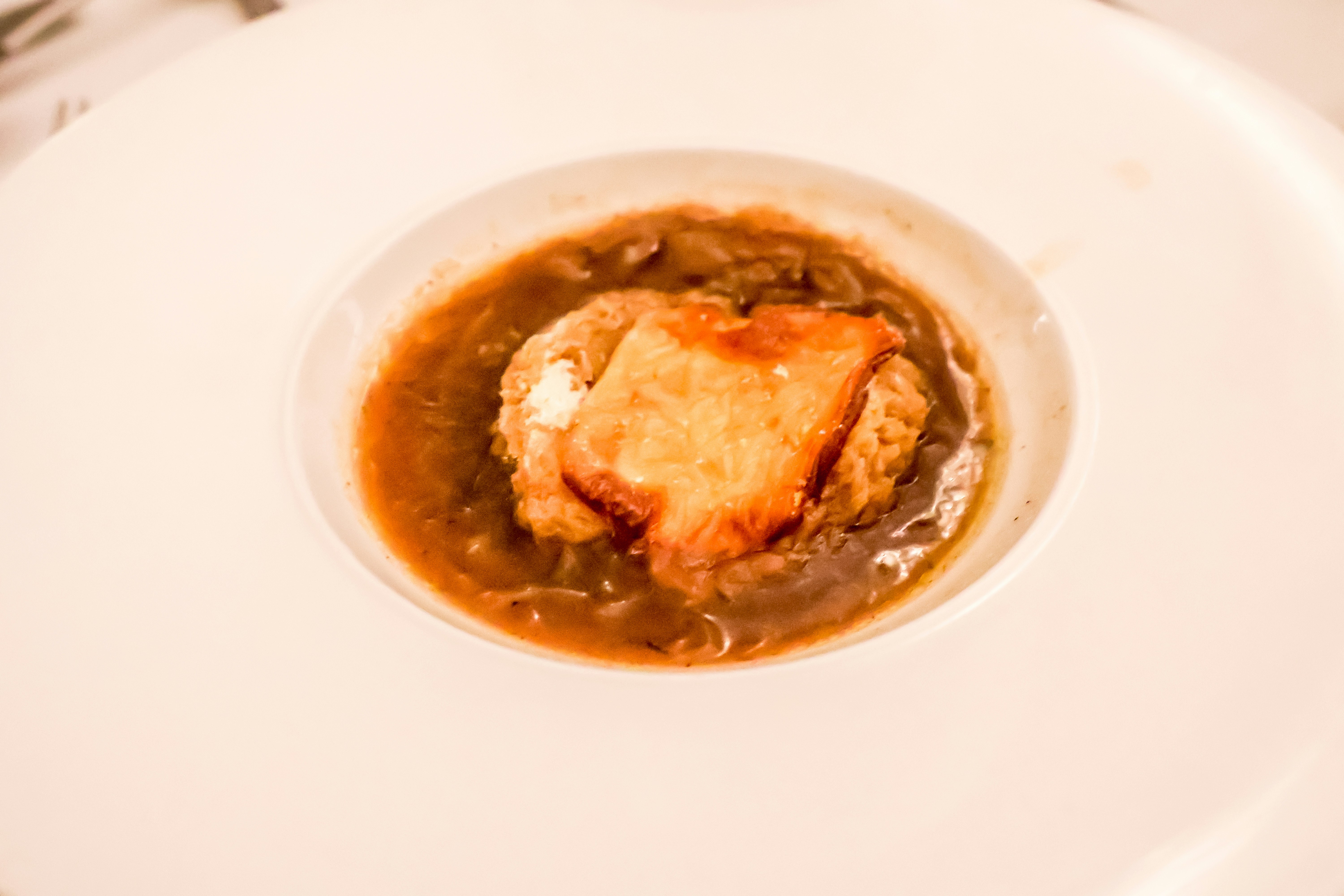
Stir two tablespoons into a vegetable or tomato soup as it cooks. They dissolve into the soup and give it the depth and sweetness that makes homemade soup taste like something from a restaurant kitchen. This is the trick that the jar-of-caramelised-onions-in-the-fridge habit is built on.
11. As a Burger or Kathi Roll Topping
A tablespoon of caramelised onions on a vada pav or kathi roll takes the whole thing to another level. The sweetness contrasts with the spice of the filling and the acidity of any pickle or chutney. This is the single quickest upgrade you can make to a street food-style meal at home.
12. As a Condiment in Its Own Right
Serve caramelised onions in a small bowl alongside dal-chawal or any simple meal, the way you would serve a pickle or a chutney. They do the same work, cutting through richness, adding complexity, but with a gentleness and sweetness that pickles do not always have. Once people at your table discover they can do this, the jar will not last long.
Keeping Caramelised Onions on Hand
The whole point of making a large batch is that the effort is concentrated into one session, and then the rewards are distributed across an entire fortnight of meals. A jar of caramelised onions in the fridge changes the way you cook on ordinary weeknights. You have instant access to something that usually takes an hour, and that freedom makes you more likely to cook well even when you are tired or short of time.
Store in a clean glass jar, covered with a thin layer of oil if you want them to last towards the two-week end of their shelf life. Freeze in ice cube portions if you want to keep them longer. Label the jar with the date, not because you will need to check it (you will use them up well before two weeks), but because it is good kitchen practice.
Also Read: Is Your Turmeric Powder Adulterated With Yellow Clay? Food Authority Tells How To Find Out
Sweet And Savoury Addition
Caramelised onions are the rare kitchen preparation that costs almost nothing, uses an ingredient available in every grocery shop and bazaar in the country, and yet delivers a result that makes every dish it touches noticeably better. The hour they take is mostly unattended; you stir occasionally, you adjust the heat, and the chemistry does the rest. What you end up with is a jar of concentrated, deeply savoury flavour that belongs in every serious cook's fridge. Make a batch this weekend. Put it in a jar. Then spend the next fortnight discovering just how many things are improved by one small golden-brown spoonful. The answer will surprise you.