

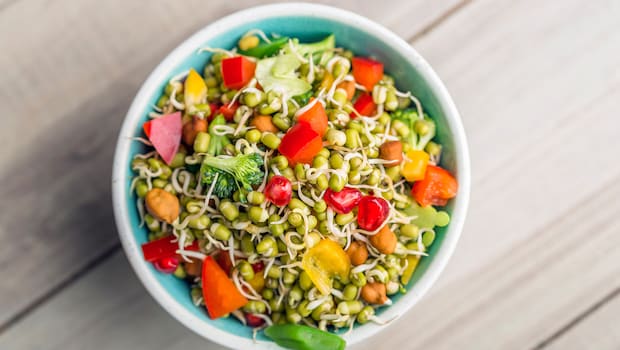
Sprouts have been a part of global cuisine since time immemorial. And with people recognising their nutritional value over the years, they are now becoming a staple in mainstream health and fitness regimes. Sprouts are essentially the new shoots of plants that grow from germinated seeds, and commonly, you'll find chana, rajma, and moong being sprouted for everyday consumption. But the question here is, should you eat sprouts raw or boiled? There's a bit of debate around this. While some say the raw version helps you make the most of sprouts' nutrients, others believe boiling kills bacteria and makes them easier to digest.
The best part? You can easily make sprouts at home with minimal effort, and if convenience is your priority, you can even order them through an online food delivery app. In this article, we'll delve deeper to uncover the truth behind both claims and separate fact from fiction. Read on.
Also Read: Why Are Sprouts Good For Immunity? Key Benefits Explained











Photo Credit: Unsplash
Nutrients In Sprouts: Why Is Sprouting Considered Healthy?
As per health experts, sprouting tends to enhance the nutritional value of the legumes. During the process of germination, a compound called phytic acid is produced that helps lock the important nutrients in the sprouts. The process also enhances the goodness of the enzymes, further inhibiting indigestion and other gut-related issues. As per nutritionist Sheela Sehrawat, "Sprouts provide antioxidants and increase the activity of chlorophyll which helps detoxify your body by preventing oxidative stress."
Boiled Vs Cooked: What Is The Best Way To Eat Sprouts?
If you scroll through the internet, you would find multiple recipes showing how to eat sprouts. Some of these recipes include raw sprouts, while some boil them in the process - even a simple sprout chaat follows two versions of the recipe. So much information often leaves people utterly confused. Fret not, as always, we have got your back. We will help you find out whether you should eat sprouts raw or cooked.
Do Raw Sprouts Lead To Food Poisoning?
Several expert articles link raw sprouts with food poisoning. They state that the process of sprouting happens in warm and humid conditions, which often leads to the growth of harmful bacteria such as e.coli and salmonella in the legumes and beans. If eaten raw, these infected sprouts may lead to health hazards including diarrhoea, upset stomach, vomiting etc, further affecting our overall immunity.

The Right Method Of Eating Sprouts:
Nutritionist Munmum Ganeriwal states that raw sprouts can be difficult to digest, especially for the ones who already have gut-related troubles. Cooking or boiling sprouts before eating not only makes the food digestible but also helps absorb all the essential nutrients. "If you are eating sprouts, have them cooked not raw," the nutritionist adds.
Now, you might think boiling or cooking the sprouts kill nutrients and vitamins in them. While we agree on cooking process eliminates some amount of nutrients, but not so much that they do not still hold any health benefits.
Besides boiling, you could also saute or blanch them before consumption. Like this, you can kill the harmful bacteria in the food, without destroying the nutritional profile much. Moreover, blanching also helps keep up the taste and texture of sprouts.
Also Read: Cooking Hack: 6 Simple Tips To Keep Sprouts Fresh For Longer

Photo Credit: iStock
Bottom Line:
Sprouting helps enhance the nutritional value of legumes and grains. But make sure you heat them briefly at a high temperature before consumption to enjoy the benefits fully, without any fear of gut problems or food poisoning. The best part? You can easily sprout legumes at home with minimal effort, and if convenience is what you're after, you can even order ready-to-eat sprouts through an online food delivery platform. Meanwhile, we bring you a list of our favourite sprout-based recipes to try. Click here to know more.
Disclosure: This article may contain links to third-party websites or resources. However, this does not affect the integrity of the content, and all recommendations and views are based on our independent research and judgment.