

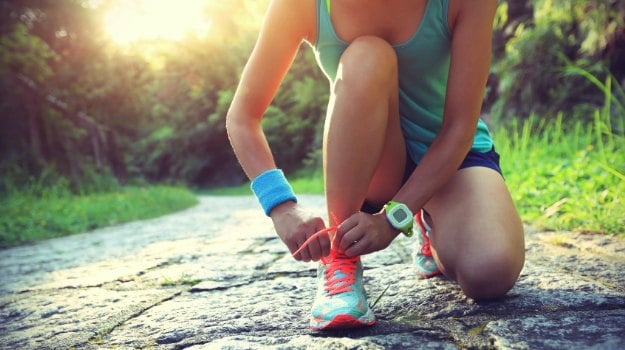
Moreover, the team provided evidence that test subjects can be positively or negatively influenced in this regard before engaging in the exercise. The researchers invited 76 men and women aged between 18 and 32 years to their research laboratory, where they had to exercise for 30 minutes on a bicycle ergometer. Beforehand, the test subjects were separated into different groups and shown one of several short films that either praised the positive effects of cycling on health or not.
In addition, the researchers asked the test subjects whether they had already believed in the positive effects of physical activity before beginning the study. The participants filled out questionnaires asking them about their well-being and their mood before and after the exercise. The researchers also measured the participants' brain activity with an electroencephalogram (EEG).
"The results demonstrate that our belief in how much we will benefit from physical activity has a considerable effect on our well-being in the manner of a self-fulfilling prophecy," said Mothes. The results provide evidence for a placebo effect during exercise, researchers said. Test subjects who already believed the physical activity would have positive effects before participating in the study enjoyed the exercise more, improved their mood more, and reduced their anxiety more than less optimistic test subjects.
The study also showed a neurophysiological difference between the test subjects. According to the measurements of brain activity, the participants with greater expectations before the beginning of the study and those who had seen a film about the health benefits of cycling beforehand were more relaxed on a neuronal level.
The results likely also apply to other endurance sports like jogging, swimming, or cross-country skiing, said Mothes. "Beliefs and expectations could possibly have long-term consequences, for instance on our motivation to engage in sports.
"They can be a determining factor on whether we can rouse ourselves to go jogging again next time or decide instead to stay at home on the couch," Mothes said. The study was published in the Journal of Behavioural Medicine.

 Who Is Rajiv Mehta? Lilavati Hospital Trustee To Speak At NDTV World Summit 2026
 Alain Ebobisse, Africa50 CEO, To Attend NDTV World Summit 2026. All About Him
 Kriti Sanon At NDTV World Summit: A Look At Her Career And Business Ventures
 Ex-CIA Director To Decode 'War In Times Of AI' At NDTV World Summit
 Who Is Vikram Rai, CEO, South Asia GE Aerospace, Set To Attend The NDTV World Summit 2026
 World-Class Chefs, Food And Music: The Fun Side Of NDTV World Summit 2026
 AI, Consciousness And Dharma: Why Ancient Indian Wisdom Matters Now
 NDTV World Summit: What To Expect From PM Modi's Keynote Address
 NDTV World Summit 2026: What To Watch Out For | PM Modi, Jaishankar, AI And Global Power Shifts
 A World Between Orders: What To Expect At NDTV World Summit 2026