


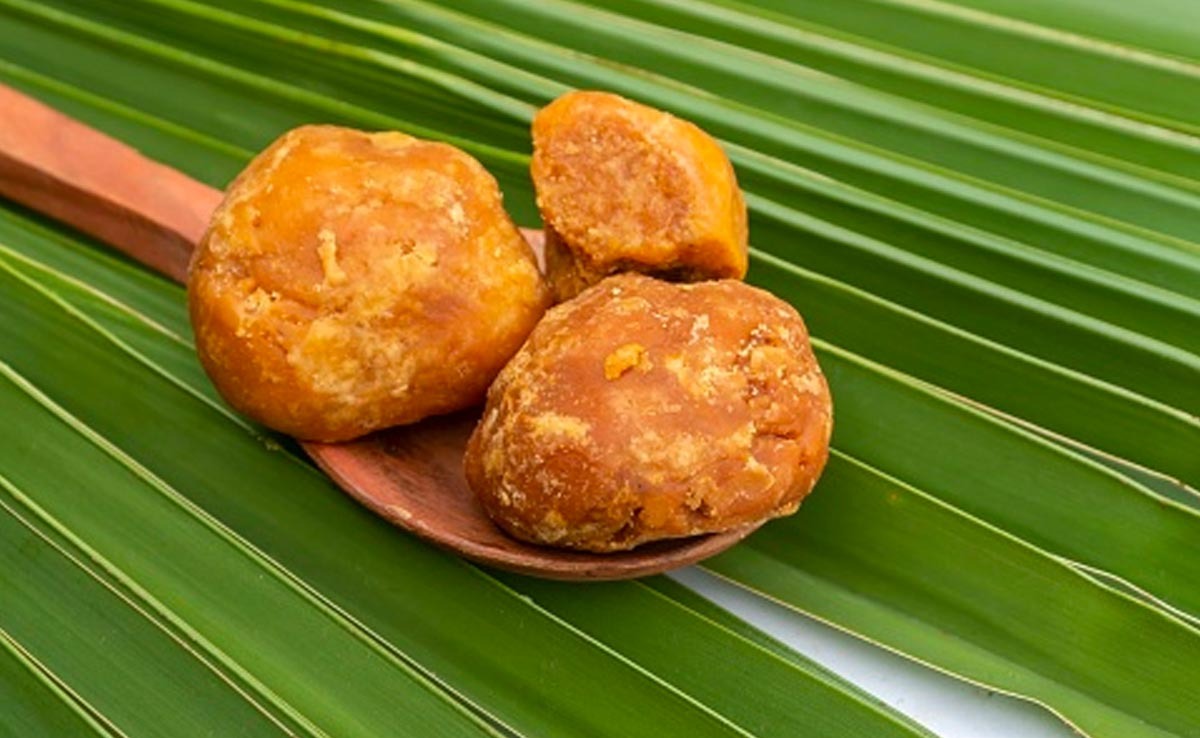


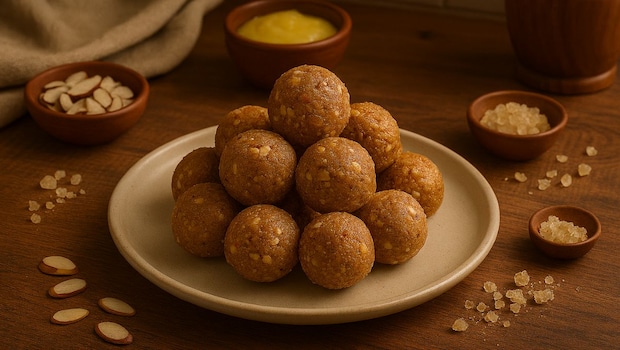
As winter settles in, Indian kitchens begin to slow down in familiar ways. Gas flames stay on a little longer, ghee tins come back to the counter, and steel dabbas reappear on shelves, filled with sweets meant to last the season. This is when ladoos return to everyday life, not as celebration food but as quiet nourishment. One after breakfast, one with evening tea, sometimes one pressed into your hand before you step out. Winter ladoos are made with intention. They use ingredients chosen for warmth, energy, and strength, shaped to last weeks, not hours. Rich with ghee, nuts, seeds, and jaggery, these ladoos reflect seasonal wisdom passed down through Indian homes. They are indulgent, yes, but they are also practical, comforting, and deeply familiar.
Also Read: How Sweet Potatoes Help Control Sugar Cravings And Support Weight Loss
Why Winter Ladoos Matter In Indian Homes
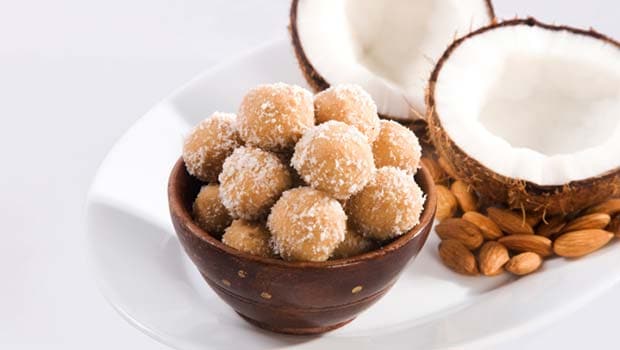
Winter ladoos sit at the intersection of food, season, and routine. Traditional Indian diets have long adjusted to colder months by introducing foods that generate internal warmth and sustain energy. Ingredients like ghee, jaggery, sesame, edible gum, and nuts are commonly used because they support digestion and help the body cope with lower temperatures. Ayurveda often links winter eating to strength-building foods, and ladoos fit naturally into this thinking. Beyond nutrition, these sweets are woven into cultural habits. They are prepared at home, shared during festivals like Makar Sankranti and Lohri, and stored carefully to last through the season. In many households, winter ladoos are less about indulgence and more about care.
6 Types Of Winter Ladoos To Keep You Warm
1. Gond Ke Ladoo

A familiar sight in many North Indian homes, gond ke ladoos are made using edible gum roasted in ghee, combined with nuts and jaggery. They have a gentle crunch and a deep, roasted flavour that feels especially satisfying on cold mornings.
Why they work in winter: Gond is known for generating warmth and boosting energy. These ladoos are often prepared during peak winter and are widely considered beneficial for bone strength and postpartum recovery.
2. Til Ladoo
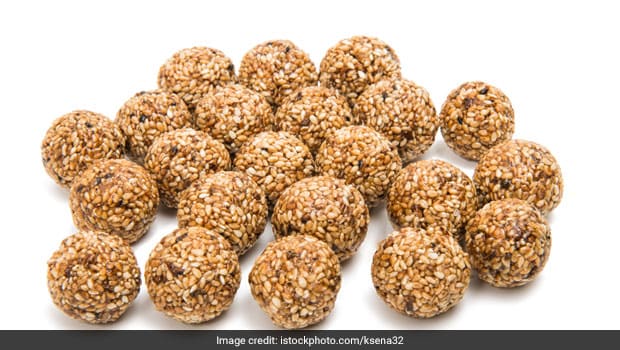
Til ladoos are among the most recognisable Indian winter sweets. Prepared with roasted sesame seeds and jaggery, they bring a nutty flavour and a natural warmth that suits the season perfectly.
Why they work in winter: Sesame seeds are rich in calcium and healthy fats, supporting joint health during colder months. Jaggery adds iron and aids digestion, making til ladoos a dependable winter staple.
3. Peanut Ladoo
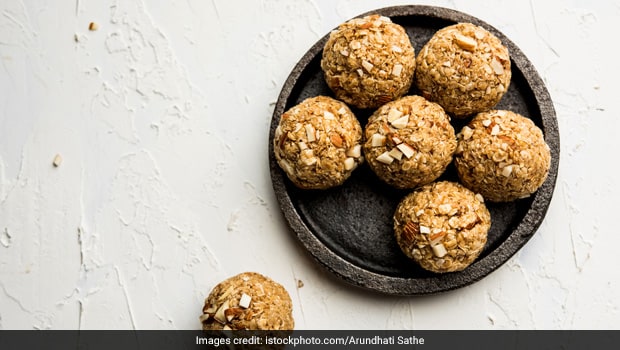
Simple in preparation but rich in taste, peanut ladoos are made using roasted peanuts and jaggery. As peanuts roast, they release natural oils, giving these ladoos a full-bodied flavour without the need for many ingredients.
Why they work in winter: Peanuts provide protein and healthy fats that offer sustained energy. Paired with jaggery, they create a filling and nourishing snack well-suited for chilly days.
4. Ragi Ladoo
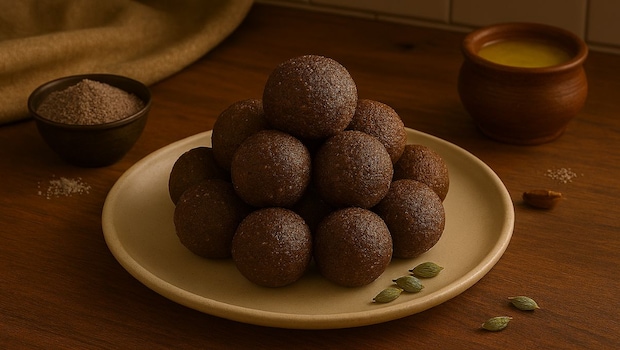
Ragi ladoos have an earthy flavour and a dense texture that feels hearty in winter. Made with ragi flour, ghee, and jaggery, they are less sweet and more grounding.
Why they work in winter: Ragi is rich in calcium and fibre, supporting bone health and digestion. These ladoos are ideal for those who prefer a wholesome winter sweet without excessive sweetness.
5. Dry Fruit Ladoo

Packed with almonds, cashews, dates, and sometimes figs, dry fruit ladoos are rich and dense, relying more on nuts than flour. They are often prepared for festive occasions or as winter energy bites.
Why they work in winter: Dry fruits are nutrient-dense and provide vitamins, minerals, and natural sugars. These ladoos offer quick energy and work well as a nourishing snack during cold mornings.
6. Besan Ladoo

Besan ladoos are made by slow-roasting gram flour in ghee until fragrant, then shaping the mixture with sugar or jaggery. Their soft texture and warm aroma make them a winter favourite across regions.
Why they work in winter: Gram flour is protein-rich and, when combined with ghee, offers warmth and satiety. These ladoos are both comforting and filling during the colder months.
Quick Guide: Which Winter Ladoo Does What
Ladoo | Key Ingredient | Why It Works In Winter | Typical Shelf Life |
| Gond ke ladoo | Edible gum | Generates warmth, boosts energy | 3 to 4 weeks |
| Til ladoo | Sesame seeds | Supports joints and immunity | 2 to 3 weeks |
| Peanut ladoo | Peanuts | Sustained energy and protein | 2 to 3 weeks |
| Ragi ladoo | Ragi flour | Bone health and digestion | 2 to 3 weeks |
| Dry fruit ladoo | Mixed nuts and dates | Nutrient-dense winter fuel | 3 to 4 weeks |
| Besan ladoo | Gram flour | Warmth and satiety | 2 to 3 weeks |
Tips For Making Winter Ladoos At Home
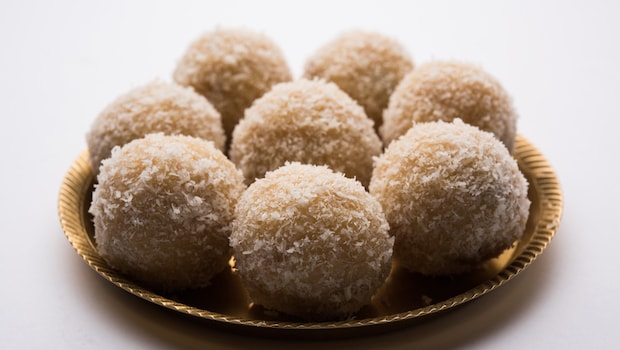
Making winter ladoos at home is simple, but attention to detail makes a difference.
- Roast ingredients slowly on low heat to bring out aroma and avoid bitterness.
- Use good-quality ghee for richness and a clean flavour.
- Choose jaggery over refined sugar for added warmth and minerals.
- Balance ghee and jaggery carefully to ensure proper binding.
- Shape ladoos while the mixture is warm for a smooth and firm finish.
How To Store Winter Ladoos Properly
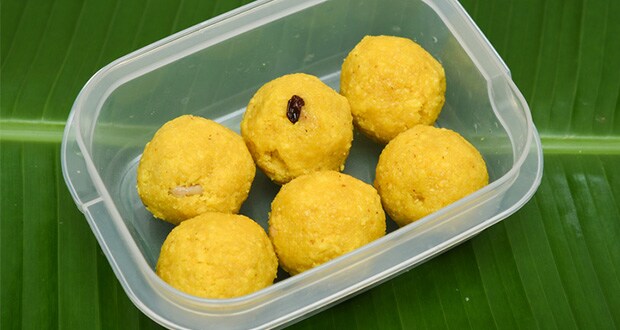
Correct storage helps maintain both flavour and shelf life.
- Store ladoos in airtight containers to prevent moisture.
- Keep them in a cool, dry place away from direct sunlight.
- Gond and dry fruit ladoos can last up to 3 to 4 weeks when stored well.
- Besan and ragi ladoos usually stay fresh for 2 to 3 weeks.
- Refrigeration should be avoided unless necessary, as it can affect texture.
Also Read: Pizza In A Kulhad? This Street Food Is Everywhere. Here's How To Make It
Winter ladoos are not about excess or celebration alone. They are about rhythm, routine, and care. Made once, eaten slowly, and shared often, they remain one of the simplest ways Indian kitchens respond to the cold.